16GB RAM is the New Baseline: How Budget Laptops Are Redefining Value
The sub-$600 laptop market is undergoing a profound re-evaluation of value, with 16GB of RAM becoming a baseline expectation for productive computing, fundamentally challenging the notion that premium build quality should always overshadow core performance.
✨ This content was summarized and interpreted by AI; it may contain errors — please verify accuracy with the original sources. Learn more
Listen to this story
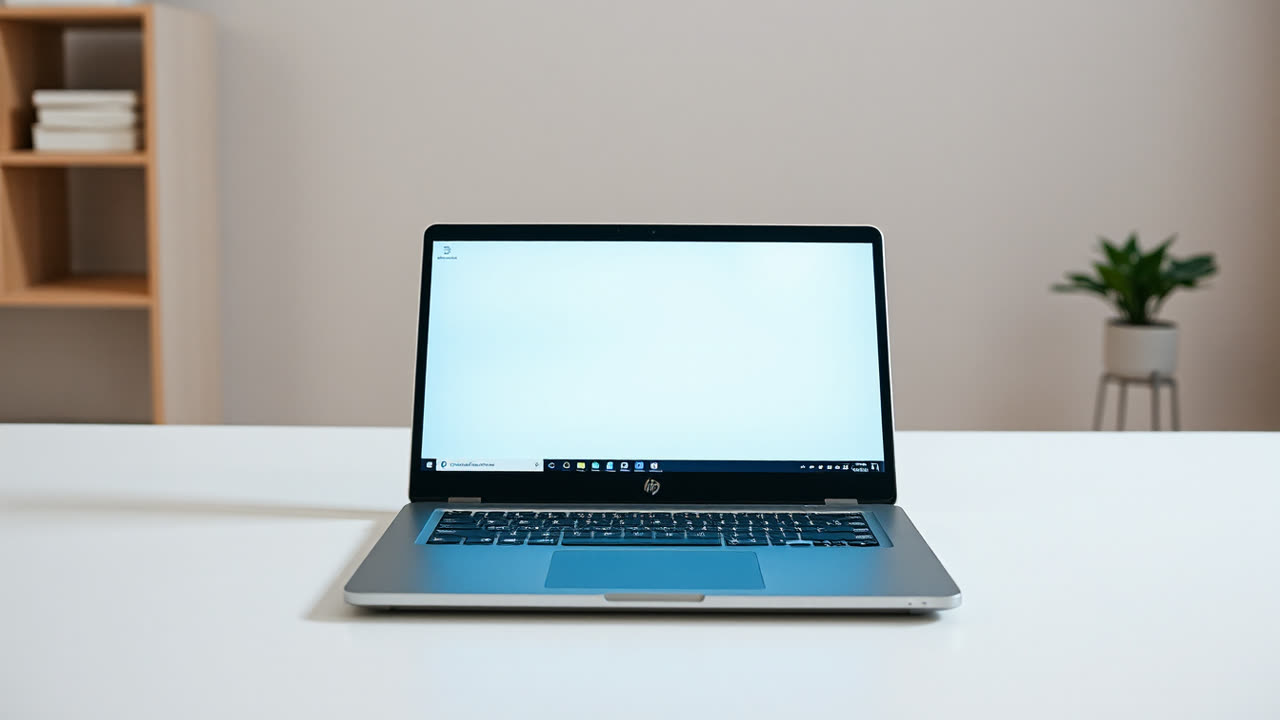
The sub-$600 laptop market, once a barren landscape of compromise, is undergoing a profound re-evaluation of value, exemplified by a growing availability of machines like the HP OmniBook, which, even at a modest $520, offers a crucial 16GB of RAM, fundamentally challenging the long-held notion that premium build quality should always overshadow core performance components. This shift indicates a market correction where practical utility, driven by sufficient memory, is finally being prioritized over merely aesthetic or superficial upgrades, exposing an "out of whack" pricing structure that previously undervalued essential specifications.
The core news isn't just about a single HP OmniBook model, but the broader trend it represents: 16GB of RAM, once a differentiator for mid-range or even high-end laptops, is now becoming a baseline expectation for genuinely productive computing, even in budget-friendly segments. Modern operating systems, web browsers with numerous tabs, and increasingly demanding applications, including nascent AI functionalities, routinely consume far more than 8GB of RAM, leading to frustrating slowdowns, constant disk swapping, and a diminished user experience on under-specced machines. A laptop with 8GB of RAM, regardless of its premium chassis or high-resolution display, frequently becomes a bottleneck for everyday multitasking, rendering it functionally inferior to a less aesthetically pleasing but better-equipped counterpart. This reality underscores a critical insight: for the vast majority of users, 16GB of RAM delivers a tangible, performance-enhancing benefit that far outweighs marginal improvements in CPU clock speed, storage capacity beyond a practical minimum, or superficial design elements.
This dynamic significantly impacts both users and the industry. For consumers, it signifies a long-overdue opportunity to acquire genuinely capable machines without breaking the bank. The ability to purchase a laptop for around $500-$600 that can comfortably handle contemporary workloads, including multiple browser tabs, video conferencing, and light content creation, represents a substantial improvement in accessibility and value. This empowers a wider demographic, from students to remote workers, to engage with modern digital tasks without constant performance frustrations. For the industry, this trend forces manufacturers to rethink their product segmentation and pricing strategies. Historically, companies often differentiated models by charging significant premiums for increased RAM, effectively forcing users into higher price tiers for what should be considered a fundamental requirement. The increasing availability of 16GB RAM in budget devices suggests that the cost of these components has fallen sufficiently to make this configuration economically viable at lower price points. This puts pressure on manufacturers to justify higher prices with genuinely innovative features, superior build materials, or advanced processing power, rather than merely withholding adequate memory. The market is increasingly rejecting the idea that a $900 laptop with 8GB RAM is "good" simply because of its brand or design, when a $520 machine offers double the essential memory.
Comparing this to prior generations, the landscape is starkly different. A few years ago, a $500 laptop often featured an entry-level Intel Core i3 or AMD Ryzen 3 processor, 8GB of DDR4 RAM, and a 256GB SSD, often paired with a low-resolution TN panel and a flimsy plastic chassis. While the CPU and SSD advancements have been incremental, the cost of RAM has plummeted, making 16GB configurations more accessible. For instance, the price of a 16GB DDR4 SODIMM kit has seen significant reductions over the past few years, eroding the justification for charging exorbitant premiums. Meanwhile, the advent of efficient ARM-based processors like the Snapdragon family, as potentially featured in the referenced HP OmniBook, offers another vector for cost-effective performance, challenging the x86 dominance and further diversifying the market. While not always directly comparable in raw CPU power to high-end x86 chips, these platforms often excel in power efficiency and integrated graphics, making them suitable for the general productivity tasks where 16GB RAM truly shines. The competitive pressure from these alternative architectures, combined with falling component costs, is ultimately benefiting the consumer by pushing essential specifications like RAM into lower price brackets.
Looking ahead, this trend is poised to accelerate, particularly with the burgeoning focus on "AI PCs." These next-generation devices, designed to handle on-device AI workloads, are expected to have even higher RAM requirements. Microsoft's Copilot+ PCs, for example, often recommend or require at least 16GB of RAM to fully leverage their AI capabilities, setting a new de facto standard for future-proof computing. This will further cement 16GB as the absolute minimum for any laptop aspiring to modern relevance, pushing 8GB configurations definitively into the realm of truly entry-level or niche devices. Manufacturers who continue to offer 8GB as standard in mid-range or even some "premium" offerings will find themselves increasingly out of step with market expectations and user needs. The informed outlook suggests that the laptop market will bifurcate more clearly: ultra-budget devices (below $400) might still offer 8GB, but the $500-$800 segment will increasingly standardize on 16GB RAM, with 32GB becoming common in the $900+ tier. This evolution promises a future where fundamental performance is no longer a luxury, but an accessible standard, finally aligning laptop pricing with genuine user value.