1X Neo Robot Unveils 'Most Advanced Robotic Hand' for Home Automation
The 1X Neo robot, backed by OpenAI, is set to redefine domestic automation with an unprecedented 22 degrees of actuated freedom in its 'most advanced robotic hand in history,' shipping to consumers in 2026.
✨ This content was summarized and interpreted by AI; it may contain errors — please verify accuracy with the original sources. Learn more
Listen to this story
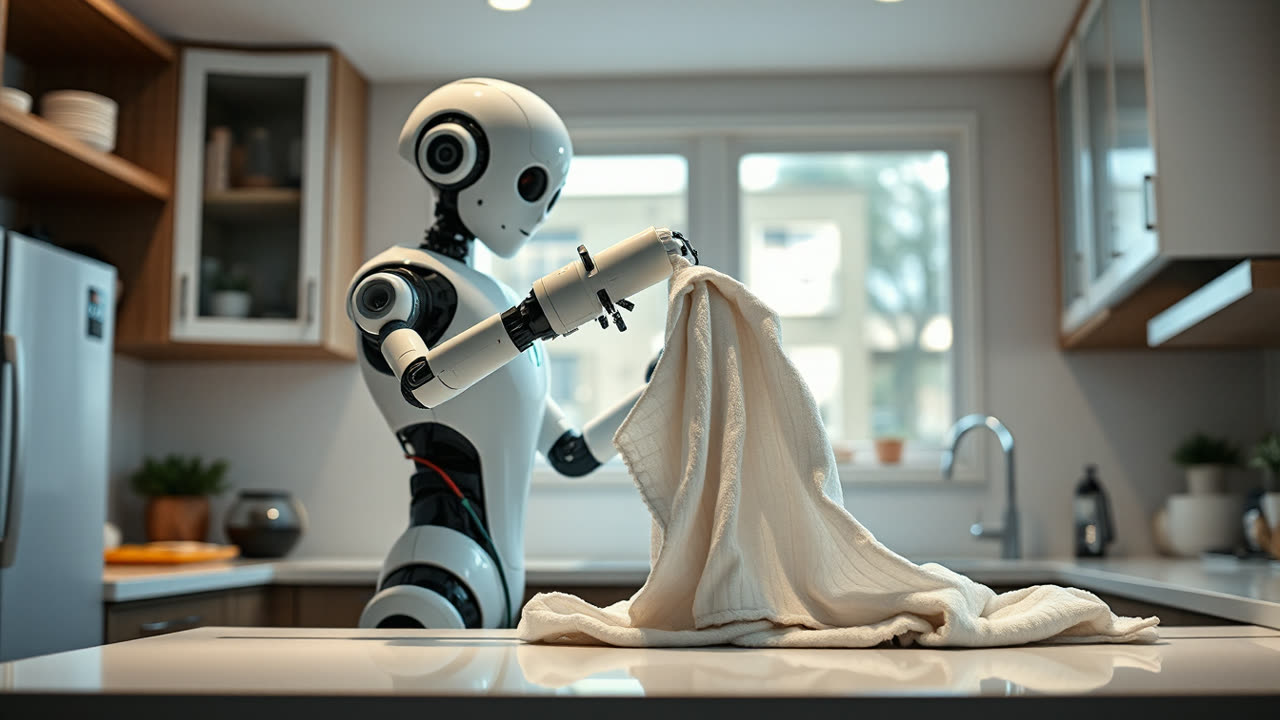
The 1X Neo robot is poised to redefine domestic automation with what its creators claim is "the most advanced robotic hand in history," featuring an unprecedented 22 degrees of actuated freedom. This critical distinction means every joint can be actively controlled, granting the humanoid a level of dexterity and speed previously unseen in consumer-ready robots.
Developed by 1X Technologies, with backing from OpenAI, the Neo is set to begin shipping to consumers in 2026, aiming to automate everyday household chores and provide personalized assistance. The advanced hands are central to its capabilities, allowing Neo to perform intricate tasks such as folding laundry, organizing shelves, handling delicate items, and even using human tools with remarkable precision. This agility is made possible by 1X’s proprietary tendon-drive system, which utilizes high-torque-density motors to pull flexible polymer tendons, resulting in gentle, precise, and notably quiet movements, operating at just 22 decibels—quieter than a modern refrigerator.
This breakthrough in tactile manipulation, combined with the robot's "World Model" AI, signifies a substantial leap for physical artificial intelligence. The AI learns from over a million hours of internet video data and real robot experience, enabling Neo to understand prompts and autonomously execute novel tasks through observation. While early models will offer 60-70% autonomy, a "scheduled Expert Mode" allows human operators to remotely supervise and guide the robot through unfamiliar scenarios, accelerating its learning curve.
The Neo's human-level dexterity marks a pivotal moment, addressing a long-standing bottleneck in humanoid robotics. While its initial $20,000 price tag or $499/month subscription positions it as an early adopter luxury, and full autonomy is an ongoing journey, the combination of advanced hands, AI learning, and a safety-first design (weighing just 66 lbs with a soft body) lays a robust foundation for a future where intelligent, adaptable robots seamlessly integrate into our homes.