2026 Gaming Laptops Redefine Portable Performance
The 2026 gaming laptop landscape is defined by an unprecedented convergence of raw processing power, intelligent thermal solutions, and display technologies that push the boundaries of immersion, with systems now routinely integrating next-generation silicon like NVIDIA's Blackwell-architecture mobile GPUs and AMD's Zen 6-based Ryzen processors.
✨ This content was summarized and interpreted by AI; it may contain errors — please verify accuracy with the original sources. Learn more
Listen to this story
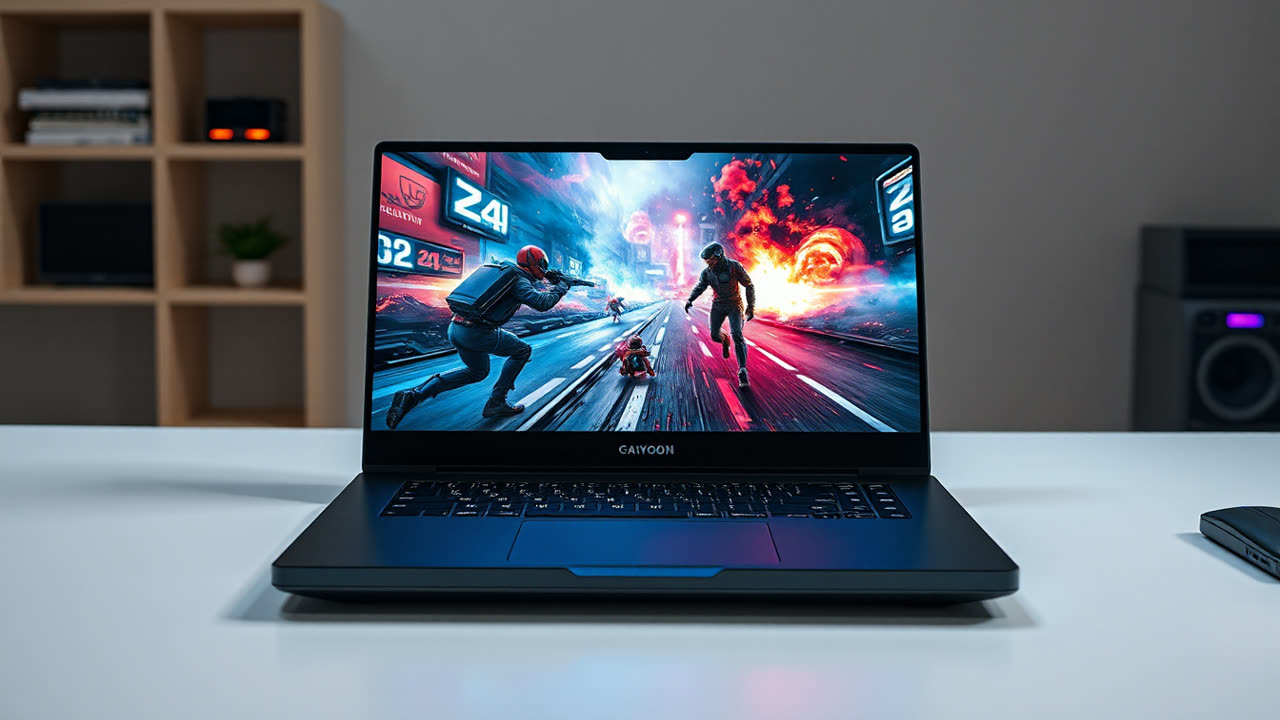
The 2026 gaming laptop landscape is defined by an unprecedented convergence of raw processing power, intelligent thermal solutions, and display technologies that push the boundaries of immersion, with systems now routinely integrating next-generation silicon like NVIDIA's Blackwell-architecture mobile GPUs and AMD's Zen 6-based Ryzen processors. This year, manufacturers like Razer, Asus, and Dell's Alienware division are not merely iterating on prior designs but are delivering machines that fundamentally redefine portable high-fidelity gaming, often blurring the lines between desktop and mobile performance.
The core of this year’s top-tier gaming laptops lies in their computational muscle. NVIDIA's latest mobile GPUs, potentially under the "GeForce RTX 50-series" moniker, built on the Blackwell architecture, offer significant generational leaps in ray tracing and AI acceleration, allowing for previously unattainable visual fidelity and frame rates in demanding titles. Complementing this, AMD's Ryzen processors, likely based on the Zen 6 architecture, are delivering superior multi-core performance and power efficiency, critical for sustained gaming sessions without thermal throttling. Intel, with its Arrow Lake or Lunar Lake successors, is also pushing competitive performance, particularly with integrated NPUs (Neural Processing Units) that offload AI workloads and enhance system responsiveness. These advancements are not just about higher numbers; they translate directly into smoother gameplay at 4K resolutions, more realistic lighting effects, and the ability to run future-proof titles with headroom.
This surge in component power necessitates equally sophisticated cooling systems. Vapor chambers, once a premium feature, are now standard in high-end models, often augmented by liquid metal thermal compounds and redesigned fan arrays that maximize airflow while minimizing acoustic profiles. For instance, Alienware's 2026 m18 models are rumored to feature multi-zone vapor chambers covering both CPU and GPU, coupled with quad-fan designs capable of dissipating over 250W of combined thermal design power (TDP). Asus ROG Strix Scar series laptops are employing advanced intelligent cooling algorithms that dynamically adjust power delivery based on real-time thermal data, ensuring optimal performance without premature throttling. Razer, known for its sleek designs, is integrating even more efficient micro-vapor chambers and larger surface area heatsinks into its thin Blade series, allowing these svelte machines to house desktop-class GPUs without sacrificing form factor.
Beyond raw performance, the user experience is dramatically enhanced by display technology. The era of high refresh rate OLED panels has fully arrived, with many premium 2026 gaming laptops offering 18-inch 4K OLED displays boasting refresh rates up to 240Hz, or QHD panels pushing 480Hz. These displays deliver unparalleled contrast, true blacks, and instantaneous response times, eliminating motion blur and ghosting that plagued earlier LCD panels. For competitive gamers, the near-instantaneous pixel response of OLED provides a tangible advantage, while for immersive single-player experiences, the vibrant colors and deep contrast are transformative. Furthermore, the integration of advanced variable refresh rate technologies (e.g., NVIDIA G-Sync Ultimate, AMD FreeSync Premium Pro) ensures tear-free gameplay across a wide range of frame rates.
The impact of these advancements on users is profound. Gamers are no longer forced to compromise significantly when choosing a portable platform. A 2026 top-tier gaming laptop can effectively replace a desktop PC for many, offering comparable performance in a movable package. This matters not just for enthusiasts but also for content creators, esports professionals, and those who demand high-performance computing on the go. The industry benefits from this push, as it drives innovation in component manufacturing, display technology, and thermal engineering, creating a virtuous cycle of improvement. The integration of dedicated AI accelerators (NPUs) in CPUs is also opening doors for AI-enhanced gaming features, such as intelligent upscaling, dynamic game asset generation, and more realistic NPC behaviors, although the full potential of this is still being explored.
Comparing these machines to their prior generations reveals a stark jump. A 2026 flagship gaming laptop often outperforms a 2024 model by 30-50% in raw graphical horsepower and offers significantly better thermal management, allowing for sustained peak performance that was previously elusive in portable form factors. Against rivals, the competition remains fierce, with each brand carving out its niche: Alienware often leads in sheer power and larger screen sizes, Asus ROG excels in performance-per-dollar and innovative cooling, while Razer maintains its premium aesthetic and build quality with impressive performance in thin chassis.
Looking ahead, the trajectory suggests even greater integration of AI into the gaming experience, not just for upscaling but for dynamic content creation and personalized gameplay. Battery technology will continue to be a key area of focus, as current high-performance components still demand substantial power, limiting unplugged gaming sessions. We can also anticipate the further maturation of haptic feedback systems, more advanced per-key RGB lighting with deeper integration into game states, and potentially even early implementations of modularity allowing for easier component upgrades, addressing a long-standing limitation of laptops. The convergence of gaming and professional workloads will also continue, with AI acceleration becoming a standard feature across all high-performance portable computing.