Aaeon's UP Xtreme PTL Edge Air: The First Intel Panther Lake Mini PC with Silent AirJet Cooling
Aaeon's new UP Xtreme PTL Edge Air is the first Intel Panther Lake mini PC to integrate solid-state AirJet cooling, achieving an ultra-low noise level of less than 21 dBA and redefining compact, high-performance computing for noise-sensitive environments.
✨ This content was summarized and interpreted by AI; it may contain errors — please verify accuracy with the original sources. Learn more
Listen to this story
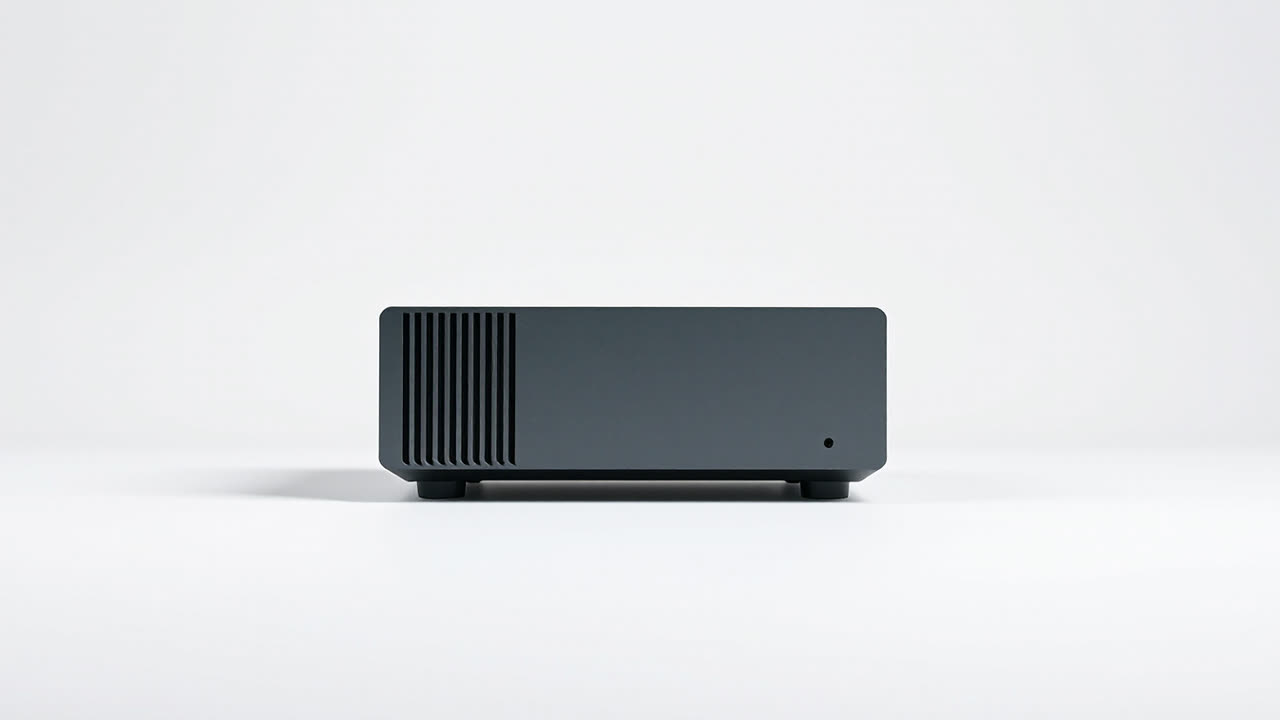
Aaeon's UP Xtreme PTL Edge Air, the first Intel Panther Lake mini PC to integrate solid-state AirJet cooling technology, achieves an ultra-low operational noise level of less than 21 dBA, a remarkable feat that fundamentally redefines the capabilities of compact, high-performance computing in noise-sensitive environments. This innovative design not only promises near-silent operation but also enables a slimmer, lighter form factor compared to many actively-cooled competitors, signaling a significant leap in thermal management for edge devices and embedded systems.
The integration of Frore Systems' AirJet Mini technology into the UP Xtreme PTL Edge Air is a pivotal development, leveraging arrays of tiny, vibrating membranes that generate high-velocity jets of air to pull heat away from components. Unlike traditional fans, AirJet modules are solid-state, meaning they have no moving parts in the conventional sense, eliminating the mechanical noise and wear associated with fan bearings and blades. This allows for superior thermal dissipation within a significantly reduced volume, with AirJet Mini modules measuring just 2.8mm thick and weighing 1 gram. This technological shift is particularly impactful for the upcoming Intel Panther Lake processors, which are expected to deliver substantial performance improvements, likely accompanied by increased power consumption and thermal output compared to prior generations. By effectively managing this heat in a compact, fanless-like manner, the UP Xtreme PTL Edge Air unlocks the full potential of Panther Lake in deployments where space and acoustics are critical constraints.
The implications for users and the industry are profound, extending beyond mere quietness. For industrial automation, medical imaging, and smart retail applications at the edge, the elimination of traditional fans drastically reduces ingress points for dust and moisture, enhancing reliability and longevity in harsh environments. This "fanless" characteristic, achieved through active solid-state cooling, offers the best of both worlds: the robust, sealed nature of passive cooling combined with the higher thermal capacity of active solutions. Furthermore, the reduced size and weight of the UP Xtreme PTL Edge Air, facilitated by AirJet technology, allow for greater flexibility in deployment, enabling its integration into tighter spaces or on mobile platforms where bulk is a disadvantage. In professional settings like recording studios, broadcast control rooms, or even high-end home office setups, the sub-21 dBA noise level translates directly into a more focused and productive environment, free from the distracting hum of traditional cooling systems.
Historically, compact mini PCs have faced a fundamental trade-off: either opt for passive cooling, which often limits processor choice to lower TDP chips and can lead to thermal throttling under sustained loads, or incorporate active fan cooling, introducing noise, potential points of failure, and larger chassis designs. The UP Xtreme PTL Edge Air, with its AirJet solution, effectively bypasses this dilemma. While specific comparative benchmarks against actively-cooled rivals are yet to be fully detailed, Aaeon's claim of a slimmer and lighter design suggests a significant advantage in physical footprint. For example, many passively cooled industrial mini PCs can be quite bulky due to large heatsinks, while actively cooled units struggle to get below 30 dBA under load without significant engineering effort. AirJet's ability to maintain high performance with minimal noise and a compact form factor positions the UP Xtreme PTL Edge Air as a compelling alternative to both extremes. Previous generations of Intel mini PCs, often relying on traditional fans, would struggle to offer the same performance in such a small, quiet package, making the Panther Lake and AirJet combination a significant generational leap.
Looking ahead, the successful deployment of AirJet technology in a mainstream mini PC like the UP Xtreme PTL Edge Air marks a critical validation point for solid-state cooling. This could catalyse wider adoption across various computing segments. We can anticipate more manufacturers exploring AirJet for gaming laptops, ultra-thin notebooks, and even high-performance tablets, where thermal management remains a bottleneck for achieving maximum performance in increasingly slender designs. The current focus on edge computing and AI inference at the edge, where powerful yet compact and reliable hardware is paramount, makes this technology particularly timely. As Intel continues to push the boundaries of performance with future processor generations, innovative cooling solutions like AirJet will become indispensable for maintaining optimal operating temperatures without compromising form factor or acoustic performance. The immediate impact will be a new standard for silent, high-performance mini PCs, but the long-term ripple effect could fundamentally alter how we design and cool a vast array of electronic devices, ushering in an era of truly fanless, yet actively cooled, computing.