Acer Swift Go 16 AI: Affordable AI PC with AMD's New Ryzen AI 300 Series
Acer's Swift Go 16 AI, powered by AMD's Ryzen AI 300 series "Gorgon Point" processors, emerges as a compelling contender in the burgeoning "AI PC" segment, particularly appealing to users seeking a large-screen, portable experience without breaking the bank, especially when available below its $1,000 threshold. This launch signifies a crucial step in democratizing access to advanced on-device AI capabilities, shifting processing power from cloud servers to the edge and setting a new baseline for mainstream consumer expectations in the AI PC era.
✨ This content was summarized and interpreted by AI; it may contain errors — please verify accuracy with the original sources. Learn more
Listen to this story
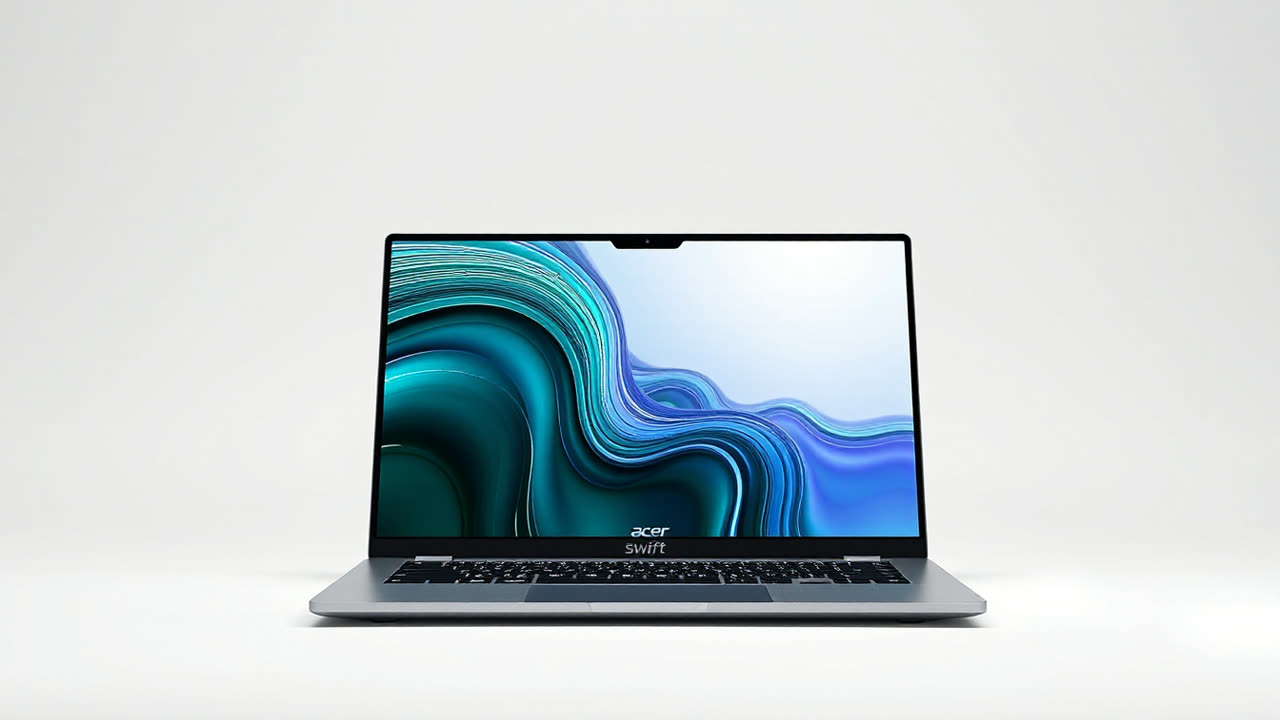
Acer's Swift Go 16 AI, powered by AMD's Ryzen AI 300 series "Gorgon Point" processors, emerges as a compelling contender in the burgeoning "AI PC" segment, particularly appealing to users seeking a large-screen, portable experience without breaking the bank, especially when available below its $1,000 threshold. This 16-inch laptop, characterized by its slim metal chassis and often a vibrant touchscreen, directly addresses the growing demand for on-device AI acceleration, positioning itself as a practical workhorse for productivity and light creative tasks, rather than a high-end gaming or professional workstation. The integration of AMD's latest NPU (Neural Processing Unit) architecture is the cornerstone of its "AI" branding, promising enhanced performance for AI-driven applications ranging from video conferencing effects to local large language model (LLM) inference, thereby offloading these computationally intensive tasks from the CPU and GPU.
The significance of the Swift Go 16 AI, and indeed the entire wave of AI PCs, lies in its potential to democratize access to advanced computational capabilities, shifting processing power from cloud servers to the edge device. For users, this translates into several tangible benefits: improved privacy due to local processing, reduced latency for AI tasks, and potentially lower power consumption as dedicated NPUs are generally more energy-efficient for AI workloads than general-purpose CPUs or GPUs. The "Gorgon Point" processors, part of the Ryzen AI 300 series, are designed to deliver significantly higher NPU performance compared to previous generations, with AMD claiming up to 50 TOPS (tera operations per second) of AI performance in some configurations. This level of NPU power is crucial for meeting Microsoft's "Copilot+" PC specifications, which mandate a minimum of 40 TOPS for optimal local AI experiences. While the Swift Go 16 AI's exact NPU TOPS will depend on the specific Ryzen AI 300 chip configured, its presence firmly places it in the next generation of AI-capable hardware.
Historically, dedicated NPUs in consumer laptops were either absent or offered minimal performance, relegating AI tasks predominantly to cloud services or less efficient CPU/GPU execution. The Swift Go 16 AI's arrival marks a clear departure, leveraging AMD's strategic pivot towards integrated AI acceleration. Compared to Intel's prior-generation Core Ultra "Meteor Lake" processors, which initiated the NPU trend but offered lower TOPS performance, the Ryzen AI 300 series aims to leapfrog in raw AI throughput. Rival offerings, such as those from Dell, HP, and Lenovo, also feature similar AMD or Intel Lunar Lake/Arrow Lake processors, indicating a broad industry shift. However, Acer's strength with the Swift Go 16 AI often lies in its aggressive pricing and feature set, frequently bundling a large, high-resolution display and a comfortable typing experience in a relatively svelte package for its class. Its metal construction further enhances its premium feel, often defying its mid-range price point.
The impact on the industry is multifaceted. Firstly, it accelerates the obsolescence of non-AI-enabled laptops, pushing manufacturers to rapidly integrate NPUs across their product lines. This creates a new battleground for silicon vendors, emphasizing AI performance as a key differentiator alongside traditional CPU and GPU metrics. Secondly, it fosters an ecosystem shift, encouraging software developers to optimize applications for on-device AI, potentially leading to a new wave of innovative, privacy-centric features. The emphasis on local AI processing could also reduce reliance on internet connectivity for certain smart features, enhancing usability in diverse environments. Acer's strategic positioning of the Swift Go 16 AI as an "affordable, big-screen portable" underscores a crucial market insight: the initial wave of AI PCs needs to be accessible to drive widespread adoption, rather than being confined to premium segments.
Looking ahead, the trajectory for the Acer Swift Go 16 AI, and AI PCs in general, appears robust. Future iterations will likely see further enhancements in NPU performance, pushing well beyond the current 50 TOPS benchmark. We can anticipate more sophisticated software integration, where AI becomes seamlessly woven into the operating system and everyday applications, moving beyond mere "features" to fundamental functionality. Battery life will remain a critical area of focus, as efficient NPU utilization can extend endurance by offloading power-hungry tasks. Furthermore, the competitive landscape will intensify, driving down prices and increasing the feature density of mid-range AI laptops. Acer, with its consistent focus on value and design in the Swift Go series, is well-positioned to capitalize on this evolution, offering increasingly capable AI PCs that continue to democratize access to cutting-edge technology. The sub-$1,000 price point for a machine with genuine AI capabilities and a premium build will likely become the new baseline expectation for mainstream consumers.