Adobe Premiere Pro Transforms Video Editing with Integrated Generative AI
Adobe Premiere Pro's new Generative Media tool allows editors to create video and sound effects directly within their project timelines, fundamentally transforming professional workflows.
✨ This content was summarized and interpreted by AI; it may contain errors — please verify accuracy with the original sources. Learn more
Listen to this story
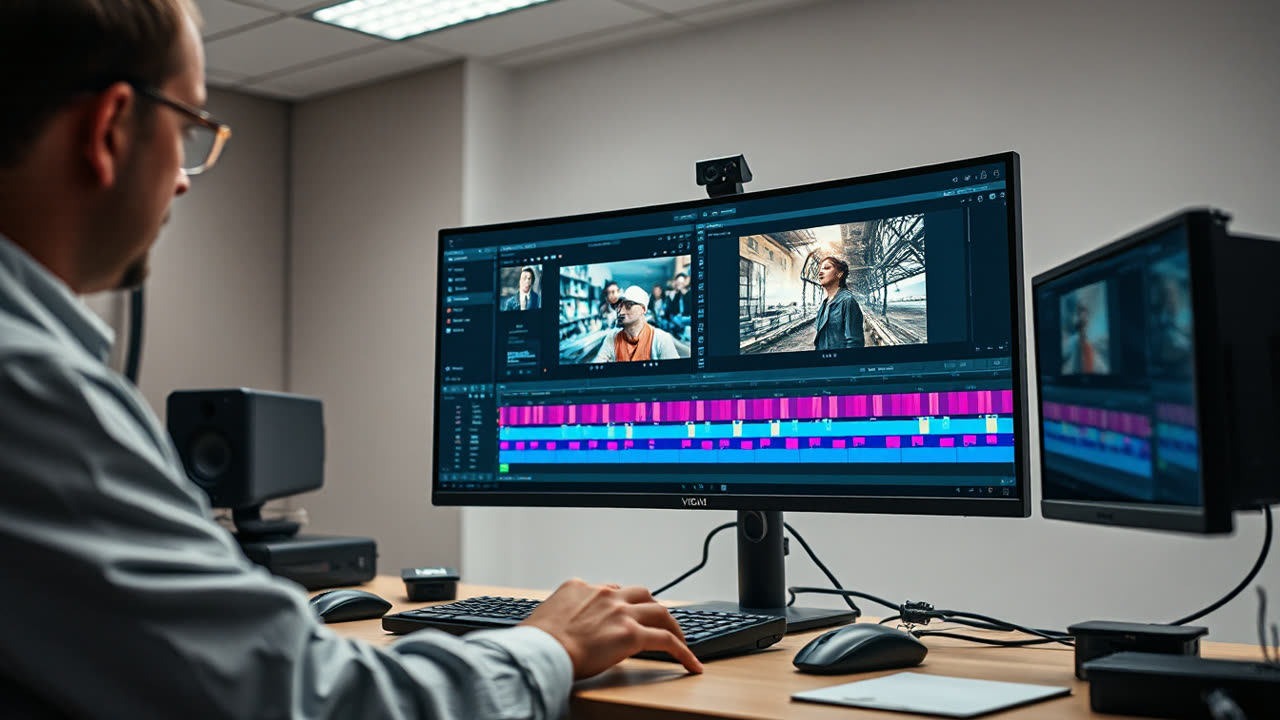
Adobe Premiere Pro is fundamentally transforming professional video editing workflows with the immediate availability of its new Generative Media tool, enabling editors to create video and sound effects directly within their project timelines without ever leaving the application. This crucial update, rolling out as of September 8, 2026, positions Adobe at the forefront of AI-driven creative acceleration, moving beyond simple automation to truly integrated generative capabilities. While music generation and soundscapes are currently in beta, the core video and sound effect generation are live, allowing users to select a timeline range, input a text prompt, and instantly generate relevant media.
This deep integration of generative AI within Premiere Pro represents a pivotal shift, designed to make complex media creation "idiot-proof" by eliminating the traditional, cumbersome export-to-browser-and-import workflow. Previously, editors would need to interrupt their creative flow to use external generative AI tools, then bring the assets back into their project. Now, the Generative Media tool, accessible directly from the toolbar, allows for on-the-fly creation of b-roll, cutaways, establishing shots, or even gap-filling video, leveraging Adobe Firefly and partner models such as Google Veo, Kling, and Luma. For audio, editors can describe desired sound effects, optionally using a voice recording to guide timing and intensity, and generate multiple variations that precisely match the selected duration, all powered by Adobe’s commercially safe Firefly models. This streamlined process dramatically accelerates content creation, with reports indicating a potential reduction in social media content turnaround time by nearly 40%.
The implications for users are profound. This update empowers solo creators and small production houses to achieve professional-grade content velocity previously reserved for larger teams, democratizing advanced editing capabilities and leveling the competitive playing field. The emphasis is on maintaining creative flow, allowing editors to focus on storytelling rather than the mechanical hurdles of asset acquisition. This builds on a foundation of existing AI tools within Premiere Pro, such as the AI-powered Object Masking introduced in January 2026 for precise subject tracking, and the Remix Tool from March 2026, which intelligently adjusts music length to fit video duration. The Adobe Creative Agent, launched in public beta in June 2026, further enhances this by organizing footage, generating transcripts, and assembling rough cuts from natural language prompts.
Adobe's generative AI features, collectively powered by Firefly, operate on a credit system, with pricing ranging from a free tier with daily generations to a Premium plan at $199.99 per month for 50,000 credits. Premium generations, such as video creation and sound effects, consume credits at a faster rate than standard text-to-image generations; for example, 2,000 credits might yield up to 40 five-second videos, while partner models can cost significantly more per second. This credit-based model ensures scalability but also introduces a new layer of resource management for editors and studios.
In the competitive landscape, Adobe’s move intensifies the AI arms race. Rivals like RunwayML have already established a strong presence with browser-based generative video tools such as Gen-4.5 and Aleph, which not only generate video from text but also allow for in-context editing of existing footage with prompts. RunwayML offers native Premiere Pro plugins, highlighting the industry's shift towards interoperability. DaVinci Resolve, with its Neural Engine, also offers AI-driven features for analysis and suggested edits, though direct in-timeline generative media creation hasn't been as centrally highlighted in its recent updates. Beyond these giants, a burgeoning ecosystem of third-party AI plugins for Premiere Pro, like AutoEdit and FireCut, focuses on automating specific tasks such as music video editing, silence removal, and captioning. Adobe's strategy is to integrate these capabilities natively, making them seamless parts of the core application rather than add-ons.
Looking ahead, the trajectory for video editing is clear: AI will evolve from a task automation tool to a collaborative creative partner. We can anticipate even more sophisticated AI assistants that can analyze narrative structure, suggest complex B-roll sequences, automate advanced color grading, and generate increasingly refined rough cuts, allowing human editors to assume a directorial role over the AI. The emphasis on cloud-native workflows and real-time collaboration will grow, facilitating global teamwork and cross-device continuity. Ethical considerations will remain paramount, with Adobe continuing to champion responsible AI development through initiatives like Content Credentials, which label AI-generated content to maintain transparency and combat misinformation. The skills required of future editors will pivot from mere technical execution to expert prompt engineering, creative direction, and a keen understanding of narrative, with "taste" becoming the most valuable and scarce commodity in a world of abundant AI-generated content.