Aftermarket Wireless Android Auto Adapters See Massive Surge, Transforming In-Car Connectivity
The aftermarket for wireless Android Auto adapters has seen a significant surge, with leading models like the Motorola MA1 and the AAWireless dongle consistently ranking as top sellers, transforming the in-car experience for millions by eliminating the perennial tether of a USB cable.
✨ This content was summarized and interpreted by AI; it may contain errors — please verify accuracy with the original sources. Learn more
Listen to this story
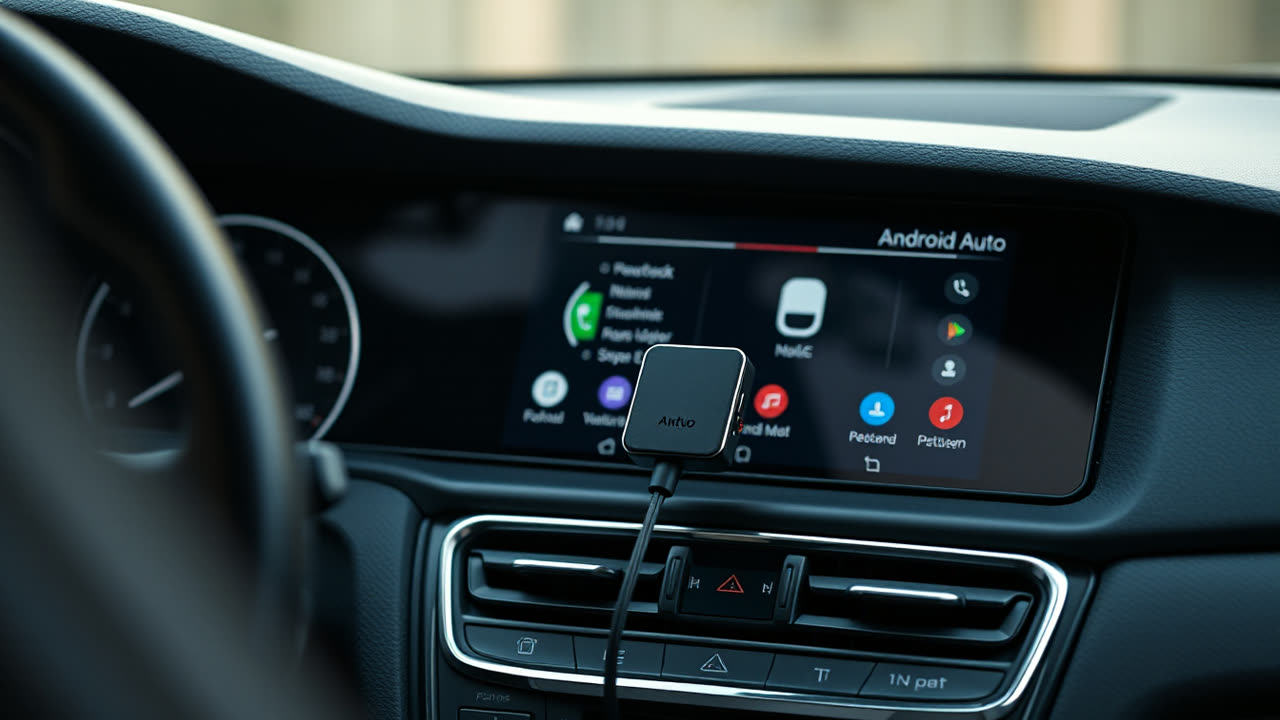
The aftermarket for wireless Android Auto adapters has seen a significant surge, with leading models like the Motorola MA1 and the AAWireless dongle consistently ranking as top sellers, transforming the in-car experience for millions by eliminating the perennial tether of a USB cable. These compact devices, typically priced between $70 and $100, bridge the gap between older vehicle infotainment systems, which predominantly require a wired connection for Android Auto, and the burgeoning demand for seamless wireless integration. This seemingly minor convenience upgrade carries substantial implications for user interaction, vehicle design, and the broader automotive technology landscape, extending beyond mere tidiness to impact safety, user experience, and even the lifecycle of in-car electronics.
The core appeal lies in the immediate, automatic connection. Upon entering the vehicle, the adapter, once paired via Bluetooth and then maintaining a Wi-Fi connection, automatically launches Android Auto on the car's display, allowing drivers to access navigation, music, and communication apps without ever removing their phone from their pocket or bag. This obviates the fumbling for cables, particularly beneficial for short trips or shared vehicles, and reduces wear and tear on phone charging ports. Critically, it also enhances safety by minimizing driver distraction, as users are less inclined to interact physically with their phone or the car's USB port while driving. The industry impact is twofold: a vibrant aftermarket accessory segment has emerged, catering to the vast installed base of vehicles lacking native wireless Android Auto, and it pressures original equipment manufacturers (OEMs) to accelerate the adoption of wireless capabilities in new models. While many newer vehicles, particularly those from 2022 onwards, increasingly offer native wireless Android Auto, the adapters remain highly relevant for the millions of cars sold in the preceding decade.
Technologically, these adapters function as a proxy, converting the wired Android Auto protocol into a wireless one. They connect to the vehicle's USB port, mimicking an Android phone, while simultaneously establishing a Bluetooth connection with the user's actual smartphone for initial pairing and then a 5GHz Wi-Fi direct connection for high-bandwidth data transfer. This dedicated Wi-Fi channel is crucial for maintaining the low latency and high data rates required for smooth navigation, audio streaming, and responsive touchscreen interaction, mirroring the performance of a direct wired connection. Early iterations of in-car connectivity often struggled with reliability or proprietary interfaces, but Android Auto, both wired and wireless, leverages the robust processing power and app ecosystem of the smartphone itself, effectively projecting a tailored interface onto the car's screen. This contrasts sharply with some older integrated systems that relied on less powerful, often outdated, embedded hardware. Compared to the prior generation of in-car tech, which might have offered basic Bluetooth audio or rudimentary proprietary navigation, wireless Android Auto represents a paradigm shift towards smartphone-centric, regularly updated functionality. Apple CarPlay, Android Auto's primary rival, has similarly seen a strong market for wireless adapters, operating on a very similar technological principle.
However, the widespread adoption of these adapters also highlights certain industry challenges and opportunities. While convenient, the constant Wi-Fi connection and active Android Auto usage can accelerate smartphone battery drain, necessitating in-car wireless charging solutions or readily accessible power outlets. This creates an ancillary market for advanced charging accessories. Furthermore, while generally reliable, compatibility issues can arise with specific car models or phone versions, leading to a fragmented user experience for a minority. The manufacturers of these adapters, such as AAWireless, Ottocast, and CarlinKit, are in a constant race to update firmware and expand compatibility, demonstrating the dynamic nature of this niche.
Looking ahead, the trajectory for wireless Android Auto is clear: increasing native integration by OEMs. As vehicle architectures become more software-defined and capable of over-the-air updates, the distinction between wired and wireless connectivity will likely vanish, with wireless becoming the default. Google continues to refine Android Auto's interface and capabilities, including deeper integration with car functions like climate control and instrument clusters through Android Automotive OS, an embedded system that runs directly on the car's hardware rather than mirroring a phone. While Android Automotive OS represents the long-term vision for some manufacturers, the vast existing fleet of vehicles will continue to rely on Android Auto, ensuring a sustained, albeit gradually shrinking, demand for wireless adapters. The next evolution might see these adapters become even smaller, more integrated directly into vehicle USB hubs, or offer additional functionalities like built-in storage or advanced diagnostic capabilities, further blurring the line between aftermarket convenience and OEM-level integration. The ultimate goal remains a completely seamless, intuitive, and safe digital experience behind the wheel, where the smartphone's power is harnessed without any physical tether.