AI Chatbots End Siri's Monopoly in Apple CarPlay
Major AI chatbot applications like Google Assistant and ChatGPT have cemented their presence within Apple CarPlay, fundamentally shifting the automotive infotainment landscape and ending Siri's uncontested reign as the default voice interface for millions of drivers.
✨ This content was summarized and interpreted by AI; it may contain errors — please verify accuracy with the original sources. Learn more
Listen to this story
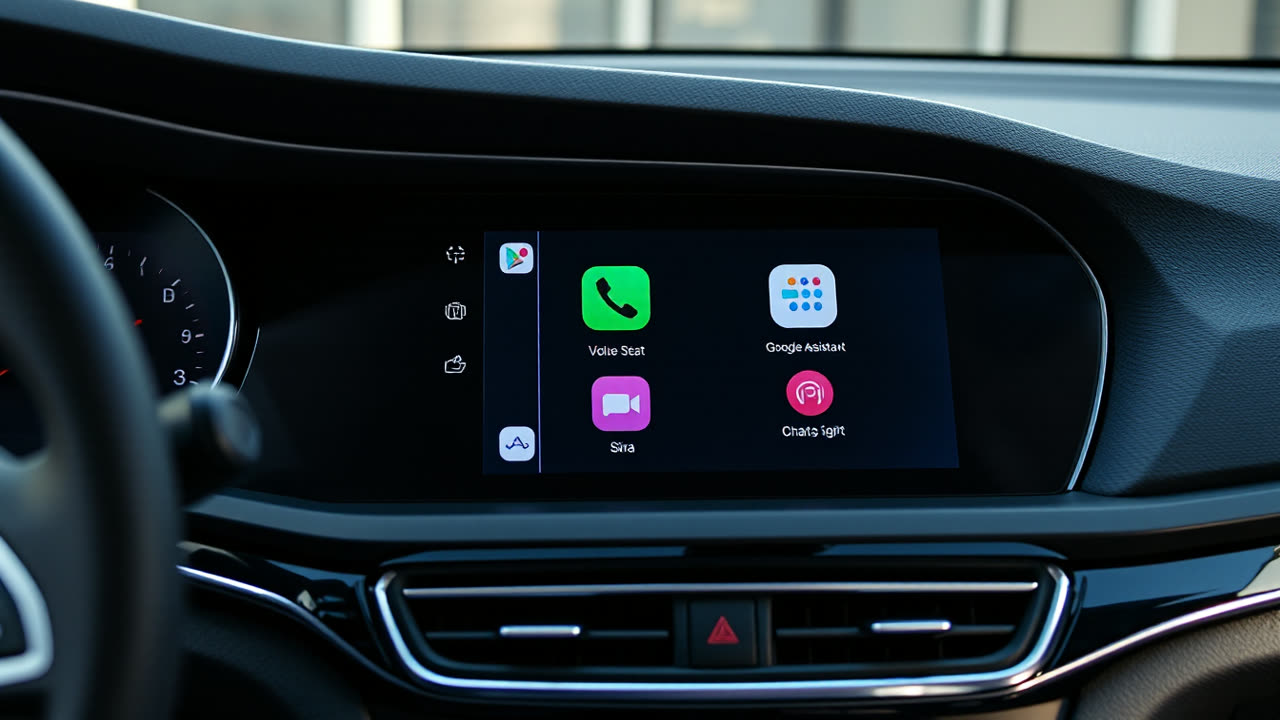
The automotive infotainment landscape has fundamentally shifted, as major AI chatbot applications like Google Assistant, ChatGPT, and even specialized automotive AI platforms have cemented their presence within Apple CarPlay, effectively ending Siri's uncontested reign as the default voice interface for millions of drivers. This expansion, particularly prominent since late 2024 and solidifying through 2026, allows users unprecedented choice and functionality, moving beyond Siri's often-criticized limitations to offer more nuanced conversations, deeper integration with personal productivity tools, and access to real-time, context-aware information directly through their vehicle's display. The core news is not just that these apps are *compatible*, but that their integration has evolved to a point where they can often serve as primary voice assistants, responding to "Hey Google" or custom wake words even when CarPlay is active, providing a seamless, multi-AI environment that was once unthinkable within Apple's tightly controlled ecosystem.
This proliferation of advanced AI within CarPlay matters immensely because it democratizes the in-car digital experience and forces Apple to innovate more aggressively with Siri. For users, the impact is immediate and tangible: drivers are no longer confined to Siri's often rigid command structure and limited domain knowledge, which historically struggled with complex queries, multi-step tasks, or highly current information beyond basic navigation and media control. With ChatGPT's natural language understanding, for instance, a driver can now inquire about the nuances of a recent news event, brainstorm ideas, or even dictate lengthy emails with far greater accuracy and contextual awareness than Siri typically provides, all while keeping their hands on the wheel and eyes on the road. Google Assistant's deep integration with personal calendars, email, and smart home devices extends the connected lifestyle directly into the car, allowing drivers to manage their day, adjust home thermostats, or reply to messages using a familiar, robust interface. This shift significantly enhances productivity and reduces driver frustration, transforming the car from a mere transport device into a true extension of one's digital life.
The background to this development lies in the growing maturity of large language models (LLMs) and Apple's strategic decision, albeit a gradual one, to open up CarPlay to third-party voice assistants. For years, Siri remained the sole voice interface, a position that, while maintaining Apple's ecosystem control, often led to user dissatisfaction due to its perceived lack of sophistication compared to rivals. Google Assistant, with its broader knowledge graph and more flexible conversational capabilities, began offering limited CarPlay integration for specific functions years ago, but the true paradigm shift occurred as AI models like OpenAI's GPT series demonstrated superior conversational depth and general knowledge. This compelled Apple to broaden its support, recognizing that user demand for more powerful in-car AI could no longer be ignored without risking CarPlay's overall appeal. Compared to the prior generation where Siri was the only option, today's CarPlay environment allows users to set a preferred default assistant for certain functions, or easily invoke specific apps directly, creating a far more competitive and user-centric experience. While automakers like Mercedes-Benz and BMW have also been developing their own sophisticated in-car AI assistants, the ubiquity of CarPlay means that advanced AI capabilities are now accessible across a vast range of vehicles without requiring proprietary manufacturer systems.
Looking ahead, the trajectory suggests an even deeper integration and personalization of AI within CarPlay. We can anticipate more seamless handoffs between different AI assistants, allowing users to leverage the strengths of each without explicit switching. For example, a driver might ask Siri to play music, then seamlessly transition to ChatGPT for a complex problem-solving query, and then use Google Assistant to update their calendar, all within the same driving session. The next phase will likely involve multimodal AI, where the car's cameras and sensors feed contextual data to the AI, allowing it to proactively offer assistance—suggesting a coffee stop based on driving patterns and calendar appointments, or warning about traffic changes based on real-time road conditions and personal preferences. Furthermore, the increasing sophistication of AI could lead to hyper-personalized in-car environments, where the AI learns individual habits, preferences, and even moods, adjusting cabin temperature, lighting, music, and navigation routes accordingly. This will inevitably lead to new monetization opportunities for AI developers, potentially through premium subscription tiers for enhanced features or exclusive content access, further solidifying the car as a critical node in the evolving AI-driven personal ecosystem. The competition among AI providers to offer the most intuitive, intelligent, and integrated CarPlay experience will only intensify, pushing the boundaries of what's possible for in-car technology.