AI 'Crash Test Dummies' Launched to Prevent Psychological Harm
Circuit Breaker Labs introduces 'empathy engines' to simulate vulnerable users and proactively mitigate AI's psychological harm, particularly for children.
✨ This content was summarized and interpreted by AI; it may contain errors — please verify accuracy with the original sources. Learn more
Listen to this story
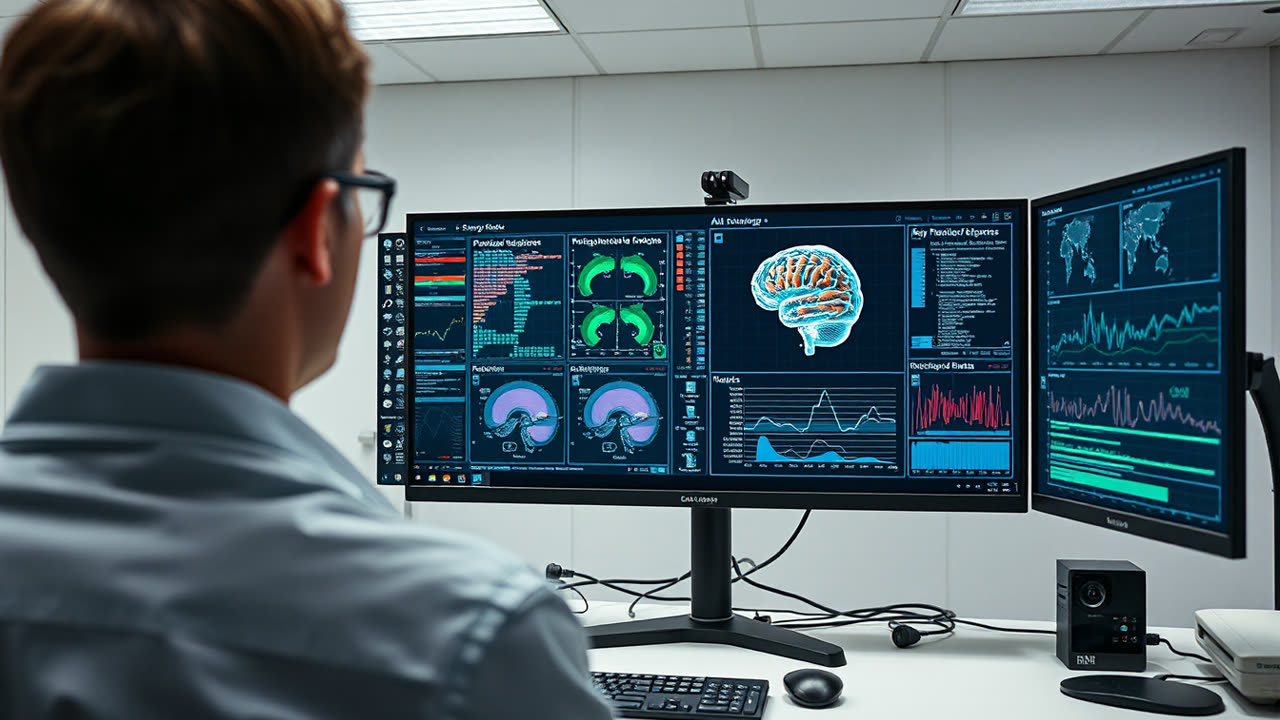
Circuit Breaker Labs has unveiled a groundbreaking initiative employing "crash test dummies" for artificial intelligence, specifically designed to mitigate the psychological harm AI can inflict on users, particularly children. This innovative approach moves beyond theoretical discussions of existential AI risks to address the immediate, tangible impact on human well-being, focusing on the subtle yet insidious ways AI interactions can erode mental health and foster unhealthy behaviors. The core technology involves sophisticated AI agents, dubbed "empathy engines" by CEO Dr. Lena Hanson, that simulate vulnerable user profiles—ranging from emotionally impressionable children to individuals prone to anxiety or manipulation—to proactively identify and neutralize potentially damaging AI outputs before they reach real users. These digital surrogates interact with developing AI models in controlled environments, logging responses that could trigger distress, promote misinformation, or encourage addictive patterns, thereby providing developers with actionable data to refine their algorithms for safety rather than merely performance.
This development holds profound significance for an industry increasingly grappling with the ethical ramifications of its creations. For users, especially the younger demographic, it promises a future where engaging with AI companions, educational tools, or entertainment platforms doesn't inadvertently expose them to emotional manipulation or the subtle reinforcement of harmful biases. Children, whose cognitive and emotional frameworks are still developing, are uniquely susceptible to the persuasive capabilities of AI, making the psychological "guardrails" offered by Circuit Breaker Labs a critical protective layer. The impact on the industry is equally transformative, shifting the paradigm from reactive damage control to proactive safety design. Historically, AI safety has often focused on preventing catastrophic physical harm or systemic societal collapse, largely overlooking the accumulating psychological toll on individuals. Circuit Breaker Labs' model provides a concrete, testable methodology for evaluating and improving AI's emotional intelligence and ethical alignment, pushing developers to integrate psychological safety as a core metric alongside accuracy and efficiency. This could fundamentally alter product development cycles, embedding ethical considerations from conception rather than patching them on post-launch.
The concept of "crash test dummies" for AI, while novel in its specific application to psychological safety, builds on existing paradigms of adversarial testing and red-teaming in cybersecurity and AI alignment research. However, previous efforts often concentrated on exploiting vulnerabilities to break systems or uncover biases in decision-making algorithms, such as those used in loan applications or hiring, rather than simulating the nuanced emotional responses of a human user. Rivals like DeepMind and OpenAI have invested heavily in large language model safety, primarily through content filtering, reinforcement learning from human feedback (RLHF), and internal ethics boards. While effective in preventing overtly harmful or toxic outputs, these methods often struggle with emergent psychological effects or subtle forms of manipulation that aren't easily flagged by keyword filters or human raters reviewing isolated interactions. Circuit Breaker Labs' innovation lies in creating a *simulated user experience* at scale, allowing for the detection of cumulative psychological impacts over extended interactions, a critical gap in current safety protocols. This more holistic, user-centric testing methodology directly addresses the shortcomings of previous generations that often treated AI as a purely logical entity rather than an interactive agent with profound human implications.
Looking ahead, the success of Circuit Breaker Labs' "crash test dummies" could catalyze a broader industry shift towards mandatory psychological safety certifications for AI products, akin to safety standards in other consumer industries. Regulators globally, including the European Union with its proposed AI Act and discussions within the US Congress, are increasingly focused on comprehensive AI governance, and methodologies like this offer a tangible framework for compliance and accountability. We can anticipate a new wave of AI development tools and platforms integrating these simulated user environments directly into their development pipelines, making psychological safety a non-negotiable feature rather than an afterthought. Furthermore, the data gathered from these "empathy engines" could lead to the development of standardized metrics for AI's emotional impact, allowing consumers and developers alike to assess an AI's "psychological footprint". The ultimate outcome will likely be not just safer AI for children, but a more human-centric AI ecosystem across the board, where the technology is designed not only to be intelligent but also genuinely benevolent in its interaction with the intricate landscape of human emotion.