AI Demand Fuels Global DRAM Price Surge, Impacting Tech Sector
Global DRAM contract prices for DDR5 modules have reportedly increased by 15-20% quarter-over-quarter in Q2 2026, driven by insatiable AI demand and a strategic shift by manufacturers towards specialized, more profitable memory production.
✨ This content was summarized and interpreted by AI; it may contain errors — please verify accuracy with the original sources. Learn more
Listen to this story
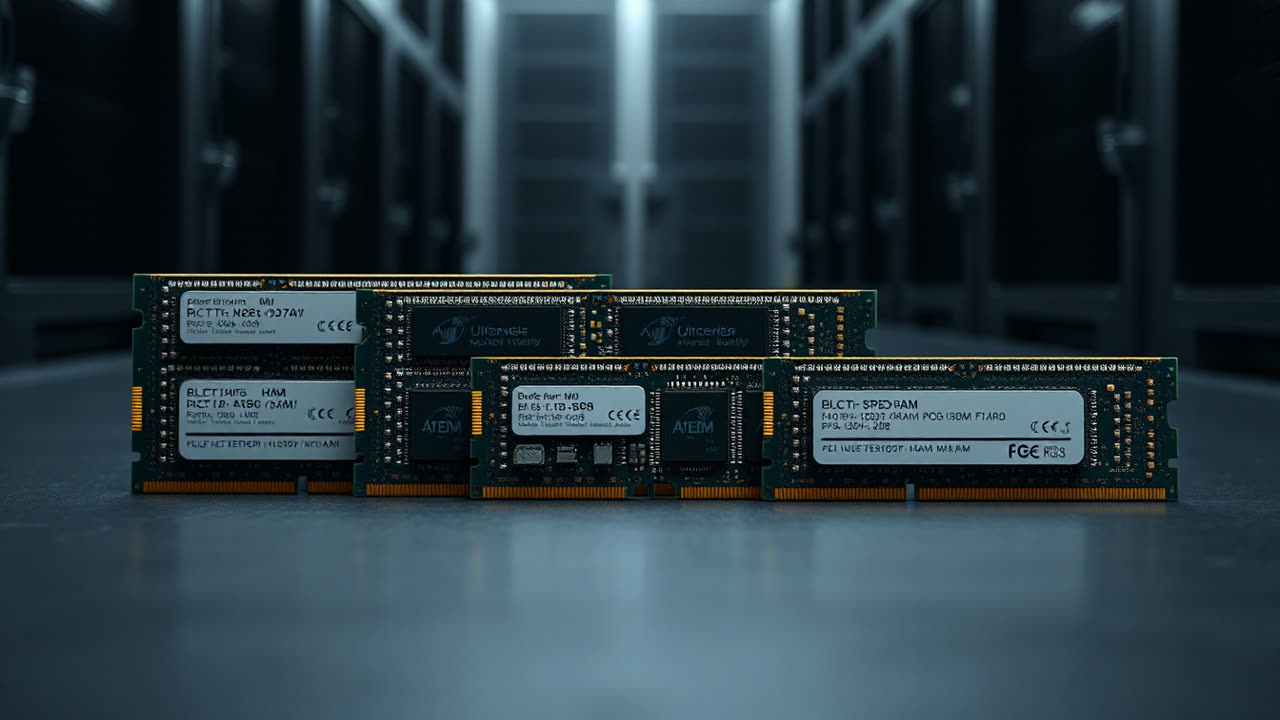
The global memory market is experiencing a significant surge in DRAM prices, with contract prices for DDR5 modules reportedly increasing by 15-20% quarter-over-quarter in Q2 2026, marking a continuation of an upward trend observed since late 2024. This latest hike is primarily driven by an insatiable demand from the burgeoning artificial intelligence sector, which requires vast quantities of high-bandwidth memory (HBM) and, by extension, standard DRAM for supporting infrastructure, alongside a strategic shift by major manufacturers towards more profitable, specialized memory production. The ripple effect of this AI-driven demand is profoundly impacting mainstream PC builders, server operators, and even smartphone manufacturers, who are now grappling with substantially higher component costs that inevitably translate to increased end-user prices and tighter profit margins.
The current pricing environment is a complex confluence of factors, moving beyond the typical cyclical nature of the memory market. While the industry experienced a downturn in 2023, leading to production cuts by key players like Samsung, SK Hynix, and Micron, the subsequent recovery has been far more aggressive and sustained than many analysts predicted. The pivot to HBM, essential for AI accelerators, consumes a disproportionate share of advanced fabrication capacity and R&D resources, inherently reducing the available capacity for conventional DRAM. For instance, the production of HBM3 and its successors, which are crucial for AI GPUs, involves more complex manufacturing processes and lower yields, making them significantly more expensive to produce and driving manufacturers to prioritize these lucrative segments. This strategic shift, while profitable for memory makers, creates a supply bottleneck for standard DDR5 and even older DDR4 modules, exacerbating the price pressure across the board.
The impact on consumers and the broader industry is multifaceted and concerning. For PC enthusiasts and gamers, building or upgrading systems has become a more expensive proposition, with memory modules now representing a larger percentage of total build costs. This could potentially stifle demand in the consumer PC market, which has already seen fluctuating sales post-pandemic. Enterprise and data center operators face even greater challenges, as the scaling of cloud services and internal IT infrastructure relies heavily on affordable and readily available high-capacity DRAM. The increased cost of server memory directly impacts operational expenditures and can slow down expansion plans, particularly for smaller cloud providers or businesses without the deep pockets of hyperscalers. Furthermore, the automotive sector, increasingly reliant on advanced infotainment and ADAS systems that require robust memory solutions, also feels the pinch, potentially pushing up vehicle production costs.
Historically, the memory market has been characterized by boom-and-bust cycles, with periods of oversupply leading to price crashes, followed by undersupply and price hikes. However, the current situation differs due to the structural shift induced by AI. Previous generations saw price volatility driven largely by PC and smartphone demand fluctuations. Today, AI's relentless need for specialized memory creates a new, powerful demand vector that is less susceptible to traditional market corrections. Compared to the DDR4 era, where prices peaked due to consolidation and demand from data centers, the current DDR5 surge is amplified by the technological complexity and specialized nature of HBM, which uses a different packaging and stacking methodology than conventional DRAM. While DDR4 prices also saw significant increases in past cycles, the magnitude and underlying drivers of the current DDR5 spike, particularly for high-density modules, appear more entrenched.
Looking ahead, the consensus among industry analysts suggests that high RAM prices are likely to persist well into 2027, with some forecasts indicating continued increases throughout 2026. While major manufacturers are investing heavily in expanding HBM production capacity, these new fabs and production lines take time to come online, typically several quarters or even years. For example, Samsung and SK Hynix have announced significant capital expenditures to boost HBM production, but the fruits of these investments will not be fully realized in the immediate term. Moreover, the demand for AI memory is projected to continue its exponential growth, potentially outpacing even the planned supply increases. Unless there is a significant slowdown in AI development or a dramatic increase in conventional DRAM output that doesn't cannibalize HBM capacity, consumers and businesses should brace for sustained elevated memory costs. The market may only see a meaningful stabilization or decrease in prices once the supply of both HBM and standard DRAM catches up with the unprecedented demand, a scenario unlikely to materialize before late 2027 at the earliest.