AI Demand Reverses Two Decades of Memory Price Declines
The insatiable demand from the artificial intelligence sector has astonishingly reverted per-gigabyte memory prices to 2007 levels, undoing twenty years of exponential decline.
✨ This content was summarized and interpreted by AI; it may contain errors — please verify accuracy with the original sources. Learn more
Listen to this story
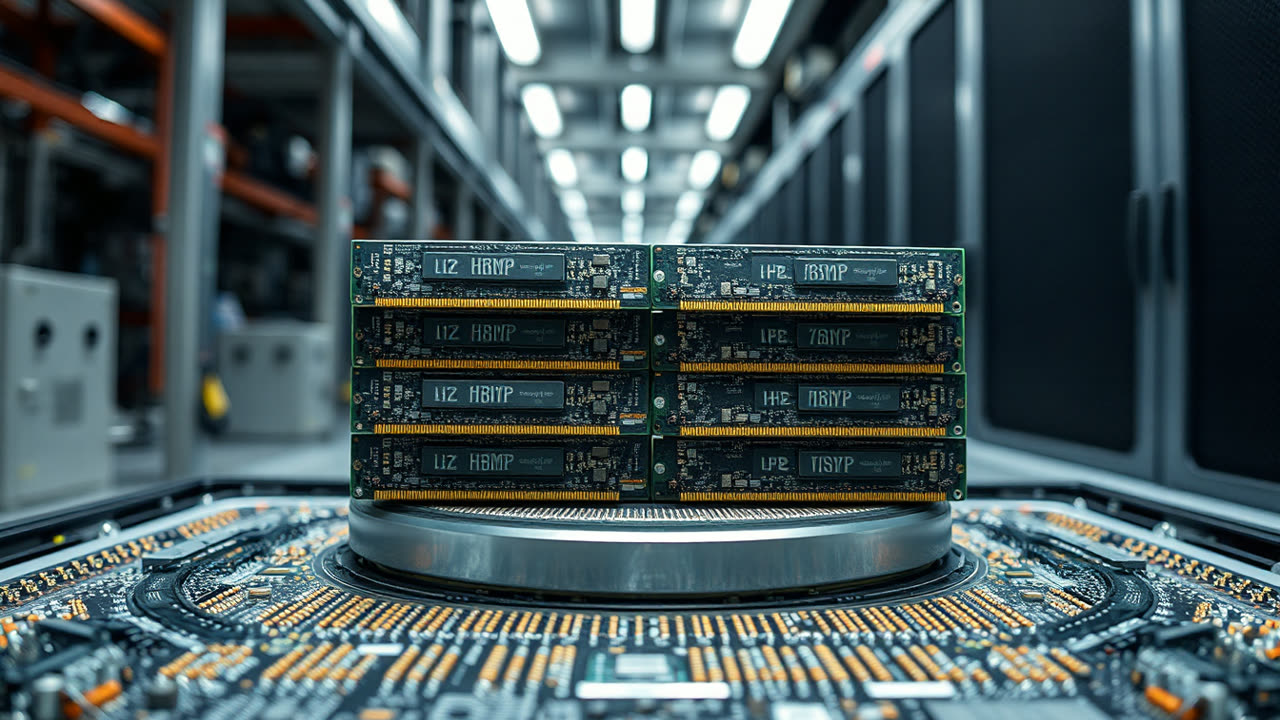
The per-gigabyte price of memory modules has astonishingly reverted to 2007 levels, effectively undoing two decades of exponential price declines in a matter of months, a phenomenon directly attributed to the insatiable demand from the artificial intelligence sector. This unprecedented reversal, highlighted by scientist Paul Lemire, marks the first time in modern tech history that a fundamental component's price has surged so dramatically, disrupting a long-established trajectory of increasing affordability. The core of this dramatic shift lies in the specialized, high-performance memory crucial for AI training and inference, particularly High Bandwidth Memory (HBM), which commands a significant premium and strains existing fabrication capacities.
This abrupt price escalation carries profound implications across the entire technology ecosystem, far beyond the immediate financial hit to consumers and businesses. For the average consumer building or upgrading a PC, the cost of DDR5 RAM has seen a noticeable uptick, making high-capacity configurations less accessible and potentially delaying upgrade cycles. While not as dramatic as the HBM surge, general-purpose DRAM prices are indirectly affected as manufacturers prioritize more lucrative AI-centric memory production. Crucially, the real pinch is felt by data centers, cloud service providers, and AI startups, which require vast quantities of high-density, high-speed memory. Their operational costs are skyrocketing, potentially slowing down the deployment of new AI infrastructure and increasing the barrier to entry for smaller players. This could consolidate power among larger, well-capitalized tech giants who can absorb these elevated costs, thereby stifling innovation and competition within the burgeoning AI landscape. The industry faces a critical juncture where the very technology driving the next wave of computing is simultaneously creating a supply-side bottleneck that threatens its widespread adoption.
Historically, memory prices have followed a consistent downward trend, often expressed by Moore's Law, with costs per bit falling exponentially as manufacturing processes advanced and economies of scale kicked in. For decades, consumers have grown accustomed to getting more memory for less money with each successive generation, from DDR2 to the current DDR5 standards. This consistent deflation made high-performance computing increasingly accessible. The current situation, however, is fundamentally different from past cyclical price fluctuations driven by oversupply or undersupply in the PC or smartphone markets. The AI boom introduces a new, non-cyclical demand driver for a specific type of memory (HBM) that is far more complex and expensive to produce than conventional DRAM. HBM, with its stacked die architecture and wide interfaces, offers significantly higher bandwidth, which is critical for feeding the massive computational demands of AI accelerators like GPUs. Its manufacturing process involves advanced packaging techniques, such as through-silicon vias (TSVs), which are more complex and yield-sensitive than traditional planar DRAM production, inherently limiting supply and increasing cost. This specialized demand means that simply ramping up general DRAM production is insufficient to alleviate the HBM shortage.
Looking ahead, the memory market faces a multi-faceted challenge requiring strategic investment and innovation. Memory manufacturers like Samsung, SK Hynix, and Micron are aggressively increasing their HBM production capacities, with significant capital expenditures planned for new fabrication facilities and advanced packaging technologies. SK Hynix, for instance, has been particularly aggressive in its HBM roadmap, aiming to maintain its leadership in the HBM3 and upcoming HBM4 generations. However, these investments have long lead times, often taking years to translate into substantial output increases. In the interim, the supply-demand imbalance is likely to persist, keeping prices elevated. Furthermore, the industry is exploring alternatives and optimizations, including advancements in memory compression techniques, more efficient data transfer protocols, and even novel memory architectures that might reduce the reliance on ultra-high bandwidth HBM for certain AI workloads. Cloud providers might also begin to offer tiered AI services, differentiating based on the type and quantity of memory available, potentially leading to more expensive "premium" AI compute instances. Ultimately, the long-term resolution will hinge on a combination of increased HBM production, technological innovation in memory design and utilization, and potentially a slight moderation in the explosive growth of AI model sizes if efficiency gains become paramount. Without a concerted effort, the current pricing anomaly could evolve into a sustained structural shift, fundamentally reshaping the economics of AI development and deployment for years to come.