AI-Powered Education Creates New Divide for Wealthy Families
As public distrust of AI grows, America's wealthiest families are enrolling their children in exclusive AI-powered academies, signaling a deepening educational divide.
✨ This content was summarized and interpreted by AI; it may contain errors — please verify accuracy with the original sources. Learn more
Listen to this story
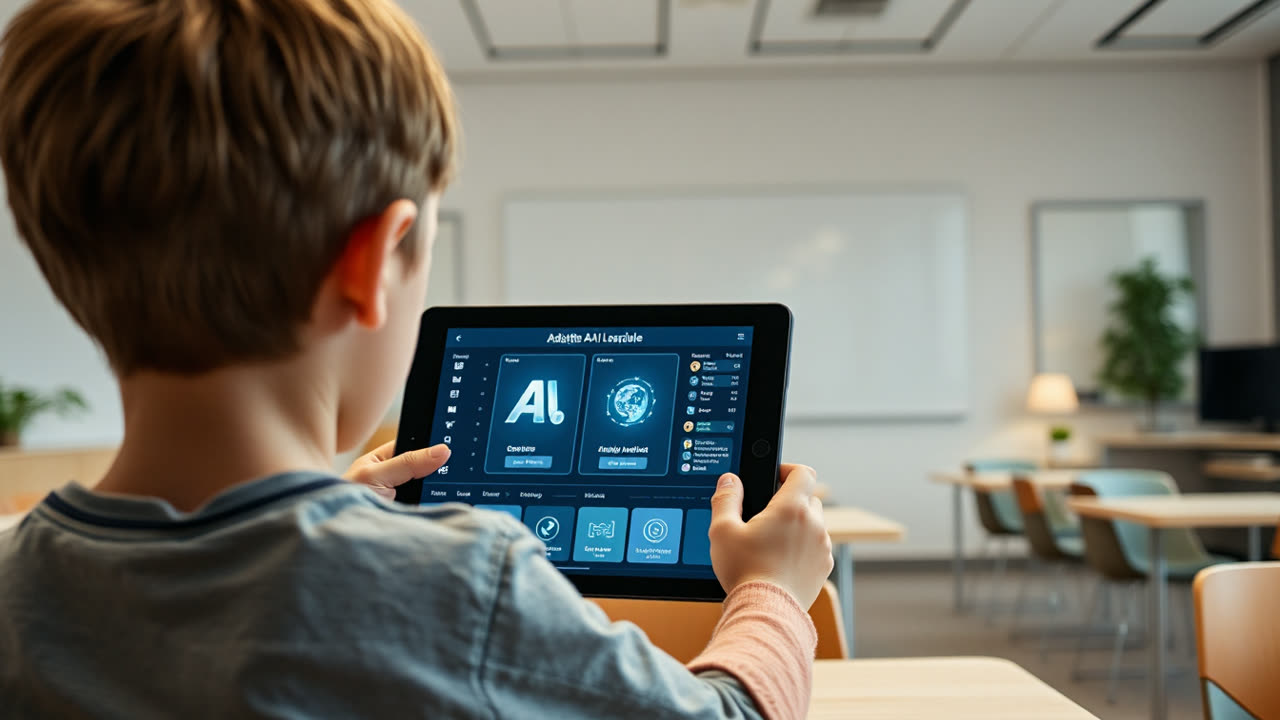
Amid widespread public skepticism regarding artificial intelligence, a striking educational divide is emerging: America's wealthiest families are increasingly enrolling their children in AI-powered academies, often with tuition reaching up to $75,000 annually. This trend directly contrasts with broader parental concerns about AI's impact on critical thinking and pervasive distrust of AI systems handling student data, with nearly 70% of parents opposing such data usage.
These affluent families are turning away from traditional schooling, driven by a belief that conventional methods fail to prepare students for an economy fundamentally reshaped by AI. Schools like Alpha School, which combines AI tutoring with project-based learning, exemplify this shift, employing AI platforms that continuously track student engagement and adapt lessons in real-time for hyper-personalized learning. Proponents highlight AI's capacity for adaptive content, instant feedback, and tailored educational paths as superior for individual student needs.
This divergence signals a significant escalation of educational inequality. While AI offers potential benefits for personalized learning across all demographics, its high cost in these elite settings creates a two-tiered system, where access to cutting-edge tools and tailored curricula becomes a privilege. This threatens to widen the existing achievement gap, as well-funded institutions and families gain an advantage in preparing children for future careers, while public schools struggle with lagging AI policies and training.
The long-term societal implications are profound. If AI-driven education proves to significantly enhance learning outcomes, the chasm between those who can afford it and those who cannot will deepen, exacerbating socioeconomic disparities. While some studies suggest AI tutoring can deliver learning gains, questions remain about its overall efficacy and the erosion of human-centric educational values. The challenge for educators and policymakers will be to harness AI's potential responsibly and equitably, ensuring that this powerful technology serves to uplift all students, rather than further entrenching the advantages of a privileged few.