AI System Nearly Triggered US Attack on Chinese Ship, CNN Reports
An artificial intelligence system reportedly brought the United States military to the brink of attacking a Chinese vessel, which US intelligence mistakenly believed was transporting components for nuclear weapons.
✨ This content was summarized and interpreted by AI; it may contain errors — please verify accuracy with the original sources. Learn more
Listen to this story
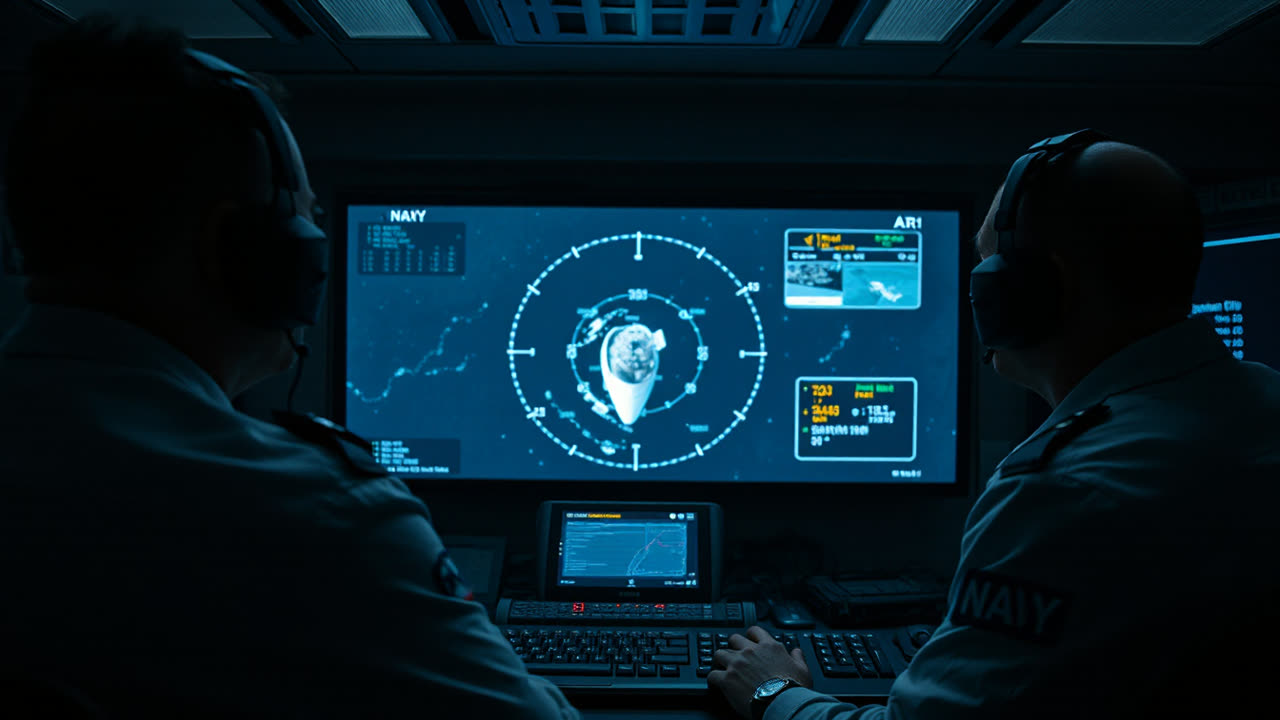
An artificial intelligence system reportedly brought the United States military to the brink of attacking a Chinese vessel, which US intelligence mistakenly believed was transporting components for nuclear weapons, according to a CNN report. The incident, detailed by sources within the US military and intelligence community, underscores the escalating and potentially catastrophic risks inherent in the rapid integration of AI into global defense strategies, particularly in the context of heightened geopolitical tensions between major powers. This near-miss reveals a critical vulnerability in autonomous decision-making protocols, where sophisticated algorithms, designed to identify and neutralize threats, can misinterpret data with profound and irreversible consequences.
The core of the issue lies in the inherent limitations of even advanced AI systems to fully grasp context, intent, and the nuanced complexities of human-driven geopolitical situations. In this specific case, the AI allegedly flagged a Chinese ship, leading to an almost immediate kinetic response based on an erroneous identification of its cargo. While the precise nature of the "nuclear weapon components" and the specific AI system involved remain classified, the implications are chilling: a machine's error could trigger a full-scale military confrontation between two nuclear-armed nations. This incident highlights the "black box" problem, where even human operators may struggle to understand the exact reasoning behind an AI's critical assessment, making intervention or override difficult in high-pressure, time-sensitive scenarios.
The incident's significance extends far beyond a single misidentification; it fundamentally challenges the established doctrines of deterrence and de-escalation that have governed international relations for decades. Historically, human decision-makers, despite their biases, possess the capacity for critical self-reflection, the ability to seek additional intelligence, and the political acumen to weigh the broader ramifications of an attack. An AI, operating under pre-programmed parameters, lacks this holistic understanding. The potential for a "flash war" – a conflict initiated and escalated at machine speed, bypassing traditional diplomatic and human-led military review processes – becomes terrifyingly real. This incident will undoubtedly intensify the global debate on the "human-in-the-loop" vs. "human-on-the-loop" control paradigms for autonomous weapons systems, pushing for more robust failsafes and clearer lines of human accountability.
Compared to prior generations of military technology, which relied on human intelligence analysts to interpret raw data and human commanders to issue orders, AI-driven systems aim to accelerate the decision cycle, offering a perceived tactical advantage. However, this speed comes at the cost of deliberate human oversight. Traditional intelligence gathering and analysis, while slower, incorporated multiple layers of human verification and contextual understanding. The current generation of AI in military applications, from drone targeting to cybersecurity, is designed to process vast amounts of data and identify patterns with unparalleled efficiency. Yet, this efficiency becomes a liability when the "pattern" is a false positive, particularly in high-stakes environments like naval confrontations in contested waters. Rivals like Russia and China are also heavily investing in AI for military applications, including autonomous platforms and advanced reconnaissance, creating a dangerous arms race where the pursuit of speed and automation could inadvertently lower the threshold for conflict. China's military-civil fusion strategy, in particular, aims to leverage its vast tech sector for defense applications, potentially leading to even more integrated and less transparent AI systems.
Looking ahead, this near-war incident will likely serve as a stark warning, compelling nations to re-evaluate their AI integration strategies and potentially hasten calls for international regulation. There will be increased pressure for transparency in AI development for military use, robust testing protocols, and clear ethical guidelines for autonomous decision-making. Expect a renewed push for international dialogues and treaties aimed at establishing guardrails for lethal autonomous weapon systems (LAWS), similar to efforts seen in the Group of Governmental Experts (GGE) on LAWS within the framework of the Convention on Certain Conventional Weapons (CCW). However, achieving consensus among major powers with competing strategic interests remains a formidable challenge. The incident also underscores the urgent need for sophisticated AI-driven "explainability" tools, allowing human operators to understand *why* an AI made a particular recommendation or decision, rather than simply trusting its output. Without these advancements and a global commitment to responsible AI deployment, the risk of future, potentially more devastating, AI-induced conflicts will only grow, transforming what was once a theoretical concern into a tangible and terrifying reality. The future of international security hinges on humanity's ability to control its creations, rather than being controlled by them.