AI 'Tells Detection' Tool Transforms World Series of Poker Broadcasts
ESPN's new AI system analyzes players' micro-expressions and betting patterns in real-time, sparking debate over the future of professional poker.
✨ This content was summarized and interpreted by AI; it may contain errors — please verify accuracy with the original sources. Learn more
Listen to this story
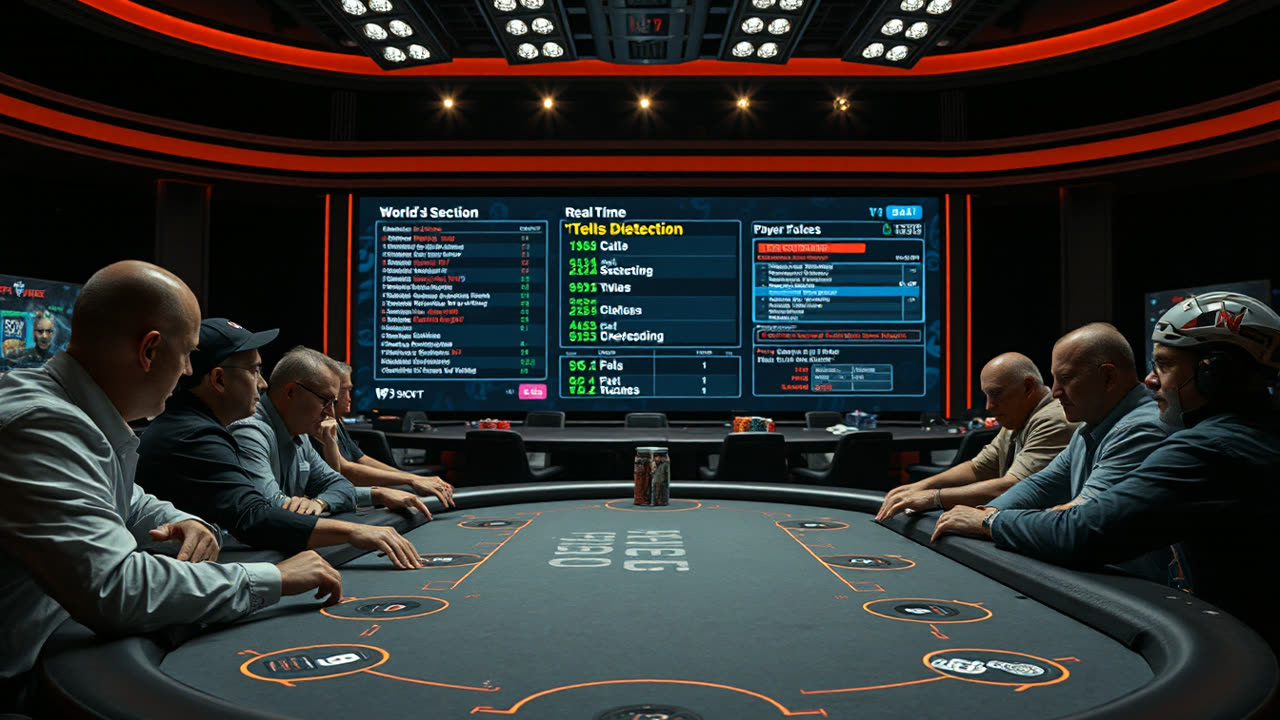
The 2026 World Series of Poker broadcast on ESPN unveiled a sophisticated AI “tells detection” tool, instantly transforming the viewer experience and igniting a fierce debate about the very essence of poker. This groundbreaking system, leveraging advanced machine learning algorithms, analyzed players’ micro-expressions, body language, betting patterns, and even subtle physiological changes in real-time, displaying probabilities of bluffs or strong hands directly on screen for the audience. The technology, reportedly developed by a consortium of AI researchers and sports analytics experts, marked a significant leap beyond traditional poker analysis, providing an unprecedented window into the psychological warfare at the felt.
The immediate impact on users, both viewers and professional players, is profound. For viewers, the AI tool elevates the broadcast from a mere game of cards to a high-stakes psychological drama, offering insights that even seasoned commentators might miss. It democratizes the understanding of complex poker strategy, making the game more accessible and engaging for a wider audience by demystifying the subtle art of "reading" opponents. The thrill of watching a high-stakes hand is amplified by the AI's real-time predictions, creating a new layer of suspense and analytical depth. However, for professional players, this innovation presents an existential challenge. Poker has always been a game of incomplete information, where the ability to mask one’s intentions and discern those of others is paramount. An AI capable of reliably detecting tells threatens to erode this fundamental aspect, potentially leveling the playing field in a way that disadvantages those who have honed their "reading" skills over decades. The strategic landscape shifts dramatically; players might be forced to adopt even more stoic personas or develop new, counter-intuitive tells to deceive the machine, fundamentally altering the game's human element.
Historically, the art of tell detection has been a cornerstone of professional poker, relying on human observation, intuition, and pattern recognition built over countless hours at the table. Legendary players like Doyle Brunson and Daniel Negreanu have famously attributed a significant portion of their success to their ability to pick up on subtle cues from opponents. While previous attempts at using technology in poker primarily focused on statistical analysis of hand ranges or odds calculation, this AI represents a quantum leap by delving into the realm of human behavior. It moves beyond purely mathematical probabilities to interpret the non-verbal communication that underpins much of high-level poker. Unlike earlier AI poker bots like Libratus or Pluribus, which excelled at playing optimal game theory strategies against human opponents, ESPN's tool is not playing the game itself but rather *analyzing* the human players' internal states. This distinction is crucial; it’s not about beating humans at poker, but about exposing their vulnerabilities *to* humans (the audience), and implicitly, to other players who might adapt their strategies based on the AI's insights.
Looking ahead, the implications for the poker industry are multifaceted. While ESPN's AI tool could boost viewership and attract new fans, it also risks alienating traditionalists and professional players who perceive it as an unfair intrusion. The World Series of Poker, as the pinnacle of competitive poker, might need to consider rule adjustments to address the presence of such advanced analytical tools, perhaps even restricting their use in live broadcasts or mandating delays. Furthermore, the technology’s evolution is inevitable. We could see more sophisticated versions that not only detect tells but also predict optimal counter-strategies against specific opponents based on their detected patterns. This could lead to a future where players train not just against other humans or traditional bots, but against AI "tell-detectors" to hone their poker face and psychological resilience. Beyond poker, this technology signals a broader trend in sports broadcasting and analytics, where AI could be deployed to analyze athlete performance, emotional states, and strategic intentions in real-time across various competitive disciplines, from chess to esports. The ethical considerations are paramount: balancing entertainment value with the integrity of the game and the privacy of competitors will be a continuous challenge. Ultimately, while the AI tell detection tool is a neat computer-powered innovation that undoubtedly enhances the viewing experience, it also represents a tangible threat to the traditional skill set of professional poker players, pushing the game towards an uncertain, hyper-analytical future.