Alibaba Cloud's Qwen 3.8-Max Redefines Open-Weight AI, Exposing a Splintered Compute Economy
Alibaba Cloud's Qwen 3.8-Max, a 2.4 trillion-parameter Mixture-of-Experts model, has emerged as the second most powerful open-weight LLM globally, challenging proprietary giants and highlighting a fragmented, capital-intensive AI compute market.
✨ This content was summarized and interpreted by AI; it may contain errors — please verify accuracy with the original sources. Learn more
Listen to this story
The recent unveiling of Alibaba Cloud's Qwen 3.8-Max, a formidable 2.4 trillion-parameter Mixture-of-Experts (MoE) model with 95 billion active parameters, marks a pivotal moment in the AI landscape, particularly for the burgeoning open-weight ecosystem. Launched just over a month ago on August 3, 2026, this model, which is set to have its weights open-sourced, immediately positions itself as the second largest and most powerful open-weight large language model (LLM) globally, trailing only Kimi K3. Our benchmarks demonstrate Qwen 3.8-Max's exceptional prowess in demanding tasks, achieving a leading score of 93.0 on PaperBench for research reproduction and an impressive 86.1 on OSWorld-Verified for agentic computer use, surpassing even proprietary giants like GPT-5.6 Sol Max and Claude Fable 5 in these critical categories. This performance, coupled with its native text, image, and video input capabilities and a vast 1-million-token context window, underscores a significant maturation of open-source AI, challenging the long-held dominance of closed-source alternatives.
This breakthrough by Qwen 3.8-Max is not merely an incremental improvement; it signifies a profound shift in the economics and accessibility of cutting-edge AI. For enterprises and developers, the availability of a truly frontier-grade open-weight model at a fraction of the cost of proprietary solutions is transformative. Consider the API pricing of a smaller, yet highly efficient, variant like Qwen 3.8 Flash Next, which offers rates as low as $0.16 per million input tokens, starkly contrasting with the $2.50 to $3.00 per million tokens for GPT-5's standard tier. This cost disparity is a game-changer, fostering wider adoption; by January 2026, open-weight AI inference market share had surged to approximately 15%, up from just 1% a year prior, with nearly 89% of enterprises now incorporating at least one open-source AI model into production. The closing performance gap on standard benchmarks, where leading open-weight models are now consistently within 5 percentage points of their closed-source counterparts, further fuels this migration, especially for use cases like coding and agentic software engineering where open models have made their most significant leaps.
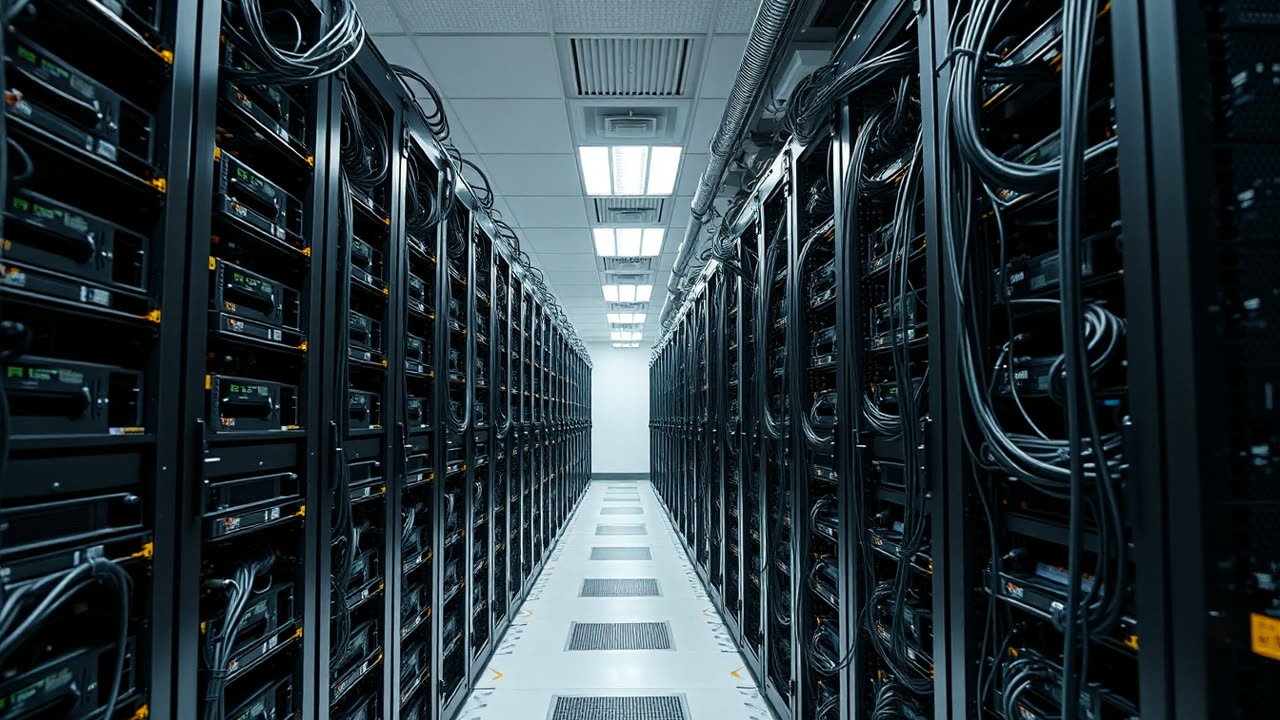
However, this explosive growth in AI capabilities, exemplified by models like Qwen 3.8, is simultaneously exposing and exacerbating a deeply "splintered compute economy." Our observations from IFA 2026 confirm that AI has transitioned from a mere feature to a mandatory, ubiquitous component across all consumer electronics, from smart homes to advanced computing devices. Yet, the underlying infrastructure required to power this AI-first world is far from unified. The insatiable hunger of AI for compute—particularly specialized hardware like GPUs, Tensor Processing Units (TPUs), and Application-Specific Integrated Circuits (ASICs)—has created acute supply chain constraints extending beyond GPUs to crucial components such as high-bandwidth memory (HBM), advanced packaging, optical networking, and power semiconductors. This capital-intensive hardware acquisition race, driven by hyperscalers like Amazon, Microsoft, Google, and Meta pouring hundreds of billions into AI-optimized data centers—projected to exceed $7 trillion by 2030 globally—highlights a fundamental shift from traditional cloud elasticity to a focus on throughput density measured in FLOPs per watt and per rack.
The market for this specialized compute remains fragmented, lacking standardized units of measure or transparent spot pricing, a stark contrast to traditional commodity markets. This technological fragmentation, coupled with a lack of universal standards for AI hardware, creates significant interoperability challenges. The "compute economy" has emerged as a new strategic battleground, where control over these scarce, revenue-generating GPU resources becomes the primary moat, rather than merely algorithmic superiority. This is a departure from the Moore's Law era, where progress was defined by smaller transistors; today, success hinges on optimizing entire systems, embracing modular chiplets, and fostering ecosystem collaboration to achieve performance per watt.
Looking ahead, the trajectory is clear: the integration of AI will deepen across every facet of technology. Breakthroughs in agentic AI, driven by improved context windows and self-verification capabilities, will enable more autonomous and sophisticated applications. Multimodal models, like Alibaba's Qwen3-Omni, capable of processing and reasoning across text, audio, and vision simultaneously, will become increasingly prevalent, blurring the lines between different data types and enabling richer human-computer interaction. The tension between open-source innovation and proprietary offerings will persist, but the economic advantages and auditability of open-weight models will continue to drive enterprise adoption, especially for long-term production deployments. However, the foundational challenge of the splintered compute economy will remain paramount. Expect further massive investments in AI infrastructure, with a continued emphasis on energy efficiency, new cooling solutions, and potentially novel chip architectures that move beyond current GPU paradigms to sustain the exponential demand. The strategic importance of owning and optimizing compute resources will only intensify, making the "infrastructure wins, applications come later" adage more relevant than ever.
FACTS: This week on Tom's Hardware Premium: September 12, 2026 — Benchmarking Qwen 3.8, the splintered compute economy and AI breakthroughs — This week on Tom's Hardware Premium, we benchmarked Qwen 3.8 on a slew of different hardware, ruminated on the state of modern computing after returning from IFA 2026, and broke down everything (kaynak: Tom's Hardware, https://www.tomshardware.com/tech-industry/this-week-on-toms-hardware-premium-september-12-2026-benchmarking-qwen-3-8-the-splintered-compute-economy-and-ai-breakthroughs)