ALSO's TM-B E-Bikes Hit Roads for Demos Amidst Customer Delivery Delays
Rivian's micromobility spin-off, ALSO, is showcasing its advanced TM-B electric bikes on a national "Test Spin Fall Tour" while thousands of pre-order customers face continued delivery delays, highlighting critical challenges in hardware production and consumer trust.
✨ This content was summarized and interpreted by AI; it may contain errors — please verify accuracy with the original sources. Learn more
Listen to this story
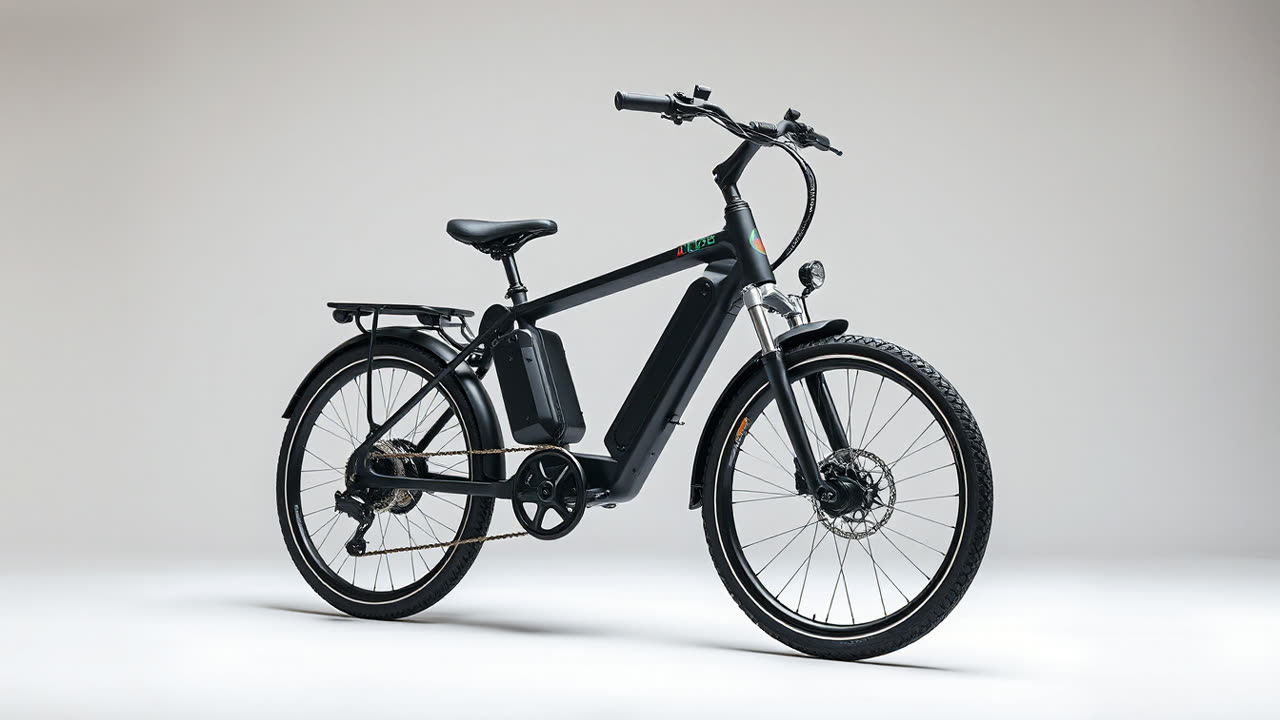
ALSO, the micromobility spin-off from electric vehicle giant Rivian, has begun deploying its highly anticipated TM-B electric bikes across the United States, not to the garages of its earliest customers, but onto a "Test Spin Fall Tour". This traveling demo program, running from September through November 2026, allows prospective new buyers to experience the high-tech TM-B firsthand in cities like Portland, Philadelphia, and Dallas, even as thousands of customers who placed pre-orders nearly a year ago remain in limbo.
The move underscores a critical tension between innovation, production realities, and customer expectations in the burgeoning, yet volatile, micromobility sector. Customers who paid $4,500 for the Launch Edition TM-B, initially promised for delivery in spring 2026, have faced a cascade of delays, with the latest communication pushing shipments to "waves between now and early November" for Launch Edition units, and even later for other reservation holders. This repeated postponement has fueled significant frustration and a perceived lack of communication among early adopters on social media platforms like Reddit, with some customers reporting cancellations. Saul Leiken, ALSO's Head of Product, publicly attributed the delays to complex supply-chain issues impacting raw materials for printed circuit boards and integrated circuits, compounded by the rigorous safety certification process for the TM-B's innovative pedal-by-wire system.
This situation is more than a simple product delay; it highlights the profound challenges facing ambitious hardware startups, particularly those attempting to fuse automotive-grade software and electronics with consumer products. While ALSO has secured substantial funding, including $105 million from Eclipse Ventures in March 2025 and an additional $200 million from Greenoaks Capital in July 2025, valuing the company at $1 billion, and a recent $150 million Series D financing in August 2026, these capital injections do not automatically solve the intricate problems of manufacturing and logistics. The e-bike market itself is cooling, with several companies like Juiced Bikes filing for bankruptcy in 2024 and even Porsche scrapping its e-bike plans due to market conditions. Launching a premium, technologically complex product into such an environment, coupled with delivery missteps, risks eroding consumer trust and damaging brand reputation, especially given ALSO's close association with Rivian.
ALSO emerged from a "stealth program" within Rivian in 2022, officially spinning off in March 2025 with Rivian founder and CEO RJ Scaringe serving as chairman of ALSO's board. The company's vision, spearheaded by co-founder and president Chris Yu (formerly of Specialized and NASA), was to translate the "modern car-like experience" of Rivian's EVs – characterized by vertical integration, sophisticated software, and over-the-air (OTA) updates – into smaller, more accessible mobility solutions. The TM-B, unveiled in October 2025, embodies this ambition with a unique "pedal-by-wire" system that eliminates the mechanical connection between pedals and the rear wheel, instead using pedals to power a generator that feeds the battery. This Class 3 e-bike offers pedal-assisted speeds up to 28 mph and a throttle for up to 20 mph. Its modular design allows users to swap top frames for different uses, from a solo seat to a cargo hauler capable of carrying up to 77 lbs (35 kg), while an integrated 2.75-inch touchscreen provides GPS, Wi-Fi, Bluetooth, and supports OTA updates. The removable battery, offering up to 100 miles of range, also functions as a 240W USB-C power bank. This holistic, software-defined approach distinguishes the TM-B from many traditional e-bikes that rely on off-the-shelf components, but also introduces significant manufacturing and regulatory hurdles.
Beyond direct-to-consumer sales, ALSO has strategically diversified into the business-to-business (B2B) sector, recognizing the growing demand for commercial micromobility solutions. The company developed the TM-Q, a four-wheeled pedal-assist electric quad designed for logistics. This commercial focus is evident in multi-year partnerships with Amazon, announced in October 2025, to deploy thousands of custom TM-Q delivery vehicles across its micromobility hubs in the U.S. and Europe. Additionally, in March 2026, ALSO partnered with DoorDash to jointly develop and deploy autonomous delivery solutions. This dual strategy is critical, as B2B-driven fleets are projected to account for the majority of shared micromobility demand in 2026, offering a potentially more stable revenue stream compared to the fluctuating consumer market.
Looking ahead, ALSO's "Test Spin Fall Tour" serves as a crucial, albeit belated, opportunity to rebuild consumer confidence by allowing hands-on experience with the product, potentially generating new orders while existing ones are slowly fulfilled. The company’s continued success hinges on its ability to swiftly overcome the persistent supply chain bottlenecks and efficiently scale production for both its consumer TM-B and its commercial TM-Q vehicles. While design accolades, such as the Red Dot Award for Product Design in September 2026 and the Core77 Design Award in June 2026, validate the TM-B's innovative design, sustained investor confidence and market penetration will ultimately depend on consistent delivery and positive customer experiences. The long-term viability of ALSO, and indeed other automotive-backed micromobility ventures, may increasingly rely on the stability offered by large-scale B2B partnerships as a hedge against the inherent unpredictability of the direct-to-consumer market for cutting-edge, premium electric vehicles.