Amazon Alexa Now Verifies Suspicious Messages with AI
Amazon's new AI-powered feature for Alexa for Shopping allows users to instantly verify the authenticity of suspicious communications claiming to be from the retailer, directly addressing a major consumer pain point.
✨ This content was summarized and interpreted by AI; it may contain errors — please verify accuracy with the original sources. Learn more
Listen to this story
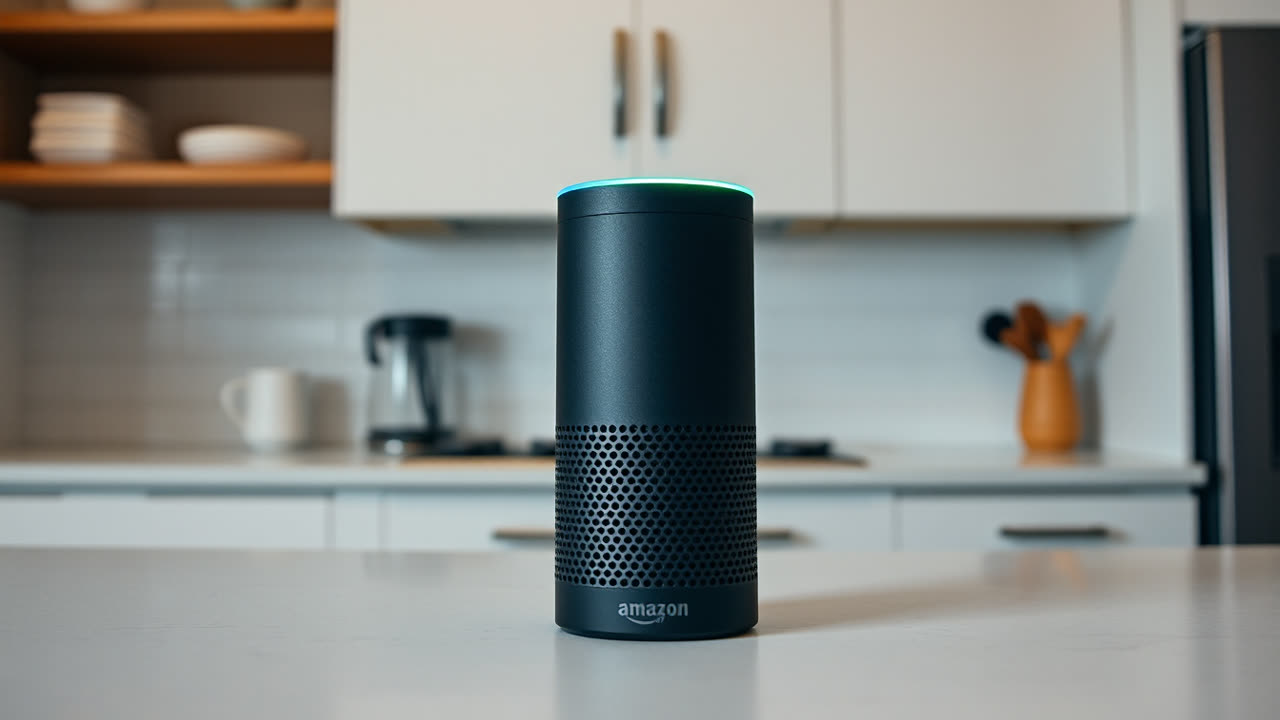
Amazon is rolling out a new scam-detection feature for Alexa for Shopping, enabling users to verify the authenticity of suspicious messages, emails, texts, or phone calls claiming to be from the retailer. Launched for U.S. customers, this AI-powered tool allows individuals to simply ask their Alexa for Shopping assistant if a communication is legitimate, receiving a clear answer in seconds. This initiative directly addresses a significant consumer pain point, as approximately 360,000 customers annually contact Amazon's customer service with this exact question.
The core functionality of this new Alexa feature hinges on its unique access to Amazon's vast internal records. Unlike general scam detection tools that analyze suspicious URLs or common scam language, Alexa can compare the received communication against a catalog of billions of messages Amazon has sent globally. This comparison involves analyzing the sender, content, timestamp, and formatting of the message. The tool provides confirmation only when it is "completely certain" of the message's origin, and if it cannot verify a message, it guides the user to report it and offers additional safety tips. Every verification request is automatically reported to Amazon, feeding intelligence to combat bad actors and refine protection strategies. This proactive reporting mechanism is crucial in an environment where AI is increasingly used by scammers to create highly convincing fake websites, personalized phishing emails, and even voice clones, making traditional detection methods less effective.
This development is particularly significant given the escalating threat of online scams. Americans are projected to lose an estimated $148.2 billion annually to online scams, a 21.93% increase since 2024, with the true cost estimated at $1,009 per U.S. household. Impersonation scams remain the most frequent form of fraud worldwide, often leveraging trusted brands like Amazon. In 2025 alone, online purchase scams accounted for roughly 30% of reports to the Better Business Bureau Scam Tracker, with nearly 90% of victims losing money. The financial impact extends beyond direct losses, as U.S. merchants lose an average of $4.61 for every $1 of fraud, factoring in fees, labor, and lost merchandise. The rise of generative AI has lowered the "production cost of a convincing fake to nearly zero," enabling fraudsters to create realistic logos, website layouts, and impersonation messages that are difficult to distinguish from genuine communications.
Amazon's new Alexa feature builds upon its broader, multi-layered AI strategy to combat fraud and enhance customer trust. Earlier in 2026, Amazon launched "verify@amazon.com," an email address allowing anyone to forward suspicious messages for verification, and a dedicated verification form on its customer service pages, both providing instant results. The company also introduced SENTRIX in 2025, an AI technology that proactively identifies and removes malicious websites, analyzing over 50,000 suspicious URLs weekly and increasing successful phishing URL takedowns by more than 10% in 2025. SENTRIX uses advanced data monitoring, an LLM-powered phishing detection model, and sophisticated risk assessment that analyzes both textual and visual elements of flagged URLs, continuously learning from past detections. These efforts are part of Amazon's commitment to investing "more than a billion dollars" and employing thousands of experts, including machine learning scientists, to protect its global store from counterfeits, fraud, and other abuse.
While Amazon has been a frequent target for impersonation scams, with nearly 7,000 fake Amazon-themed domains registered in the six months leading up to Prime Day 2026 alone, the integration of scam detection into Alexa for Shopping represents a significant leap in consumer-facing protection. Previous Alexa-related scams primarily involved manipulating search results to direct users to fraudulent tech support numbers or malicious setup apps. This new feature, however, leverages Alexa's ubiquitous presence in smart homes to provide real-time, on-demand verification, turning a common consumer device into a powerful security tool. This contrasts with more general fraud detection solutions like SEON, Riskified, and Forter, which offer AI-driven platforms for businesses to analyze transaction patterns, user behavior, and digital footprints. While these enterprise-level tools are crucial for merchants, Amazon's move brings a direct, user-initiated verification capability to the individual consumer, uniquely leveraging its proprietary data to offer definitive answers about its own communications.
Looking ahead, this integration could set a new industry standard for consumer protection in e-commerce. As AI-driven fraud continues to evolve, with account takeover attempts surging 78% and card-testing attacks rising 175% in early 2026, direct, verifiable communication channels will become indispensable. The success of this Alexa feature may prompt other major retailers and service providers to develop similar AI-powered verification tools, particularly those with established voice assistants or messaging platforms. Furthermore, the continuous feedback loop from user reports will enhance Amazon's AI models, potentially leading to even more sophisticated and predictive scam detection capabilities across its ecosystem. This move not only fortifies Amazon's brand trust but also empowers consumers with an immediate defense against increasingly sophisticated digital threats, shifting the burden of verification from a manual, often uncertain process to an instant, AI-backed assurance.