Amazon Alexa Transforms with Expansive New Voices and Personalities
Amazon's Alexa now offers a significantly expanded range of vocal identities, celebrity personas, and emotive styles, fundamentally altering the human-AI auditory relationship.
✨ This content was summarized and interpreted by AI; it may contain errors — please verify accuracy with the original sources. Learn more
Listen to this story
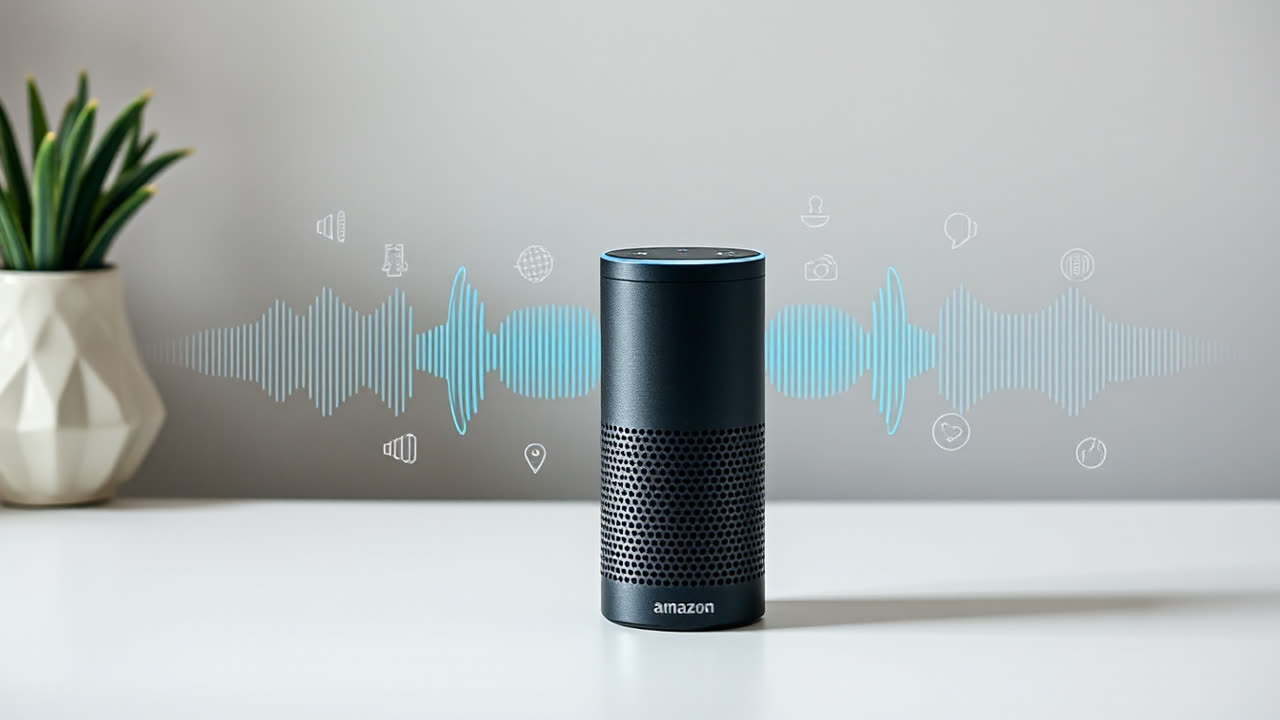
Amazon Alexa now offers users a significantly expanded palette of vocal identities and expressive styles, moving beyond its iconic default female voice to embrace celebrity personas, regional accents, and even a more emotive delivery, fundamentally altering the long-standing auditory relationship between human and AI. This evolution allows for a deeper level of personalization, enabling users to swap Alexa's standard voice for options like the male "Ziggy" voice, a range of celebrity voices such as those of Shaquille O'Neal or Melissa McCarthy, or even a "multilingual mode" that fluidly switches between languages like English and Spanish within a single interaction. The process for changing these settings is streamlined through the Alexa app, typically found under device settings or directly within a specific Echo device's configuration, where users can select a new voice from available options. Beyond mere vocal timbre, Amazon has also introduced "personality" adjustments, allowing Alexa to adopt different expressive styles, such as a "cheery" or "sleepy" tone, for certain interactions, adding a layer of emotional nuance to its responses.
This shift from a singular, universally recognized voice to a customizable auditory experience represents a pivotal moment for Amazon and the broader voice assistant industry, signaling a recognition that user engagement is increasingly tied to the perceived "humanity" and adaptability of AI. For users, the immediate impact is a more tailored and potentially less monotonous interaction. The ability to choose a voice that resonates more personally, whether for novelty or comfort, could lead to greater adoption and sustained use of Alexa-enabled devices. A celebrity voice, for instance, injects a playful, often humorous element into mundane tasks like setting timers or checking the weather, transforming a utility into an entertainment feature. Furthermore, the introduction of varied emotional tones could make Alexa feel more empathetic and less robotic, particularly in contexts like news delivery or storytelling, where inflection carries significant meaning. This personalization strategy aims to embed Alexa more deeply into daily routines by making its presence less generic and more akin to a chosen companion.
Industrially, this move intensifies the competition among smart assistant providers, pushing rivals like Google Assistant and Apple's Siri to further enhance their own customization options. While Google Assistant has offered several voice options, including male and female variants, for some time, and Siri allows for different accents and genders, Amazon's aggressive expansion into celebrity voices and emotive styles sets a new benchmark for personalization depth. Earlier generations of Alexa were defined by their uniformity, with the default female voice becoming synonymous with the brand. This new direction acknowledges that a one-size-fits-all approach to AI personality is no longer sufficient in a market craving bespoke digital experiences. It also highlights the growing trend of generative AI in creating more natural and diverse speech patterns, moving beyond pre-recorded samples to synthesize voices that can adapt to context and user preference. The technical sophistication required to maintain natural language understanding and generation across multiple distinct vocal identities is substantial, encompassing advanced text-to-speech models and robust voice recognition systems that can accurately process commands regardless of the chosen Alexa persona.
Looking ahead, the trajectory for Alexa's voice and personality features points towards even greater sophistication and perhaps a more dynamic, context-aware adaptation. We can anticipate the integration of more advanced generative AI models that allow Alexa to not only switch between pre-defined voices but potentially to learn and mimic user-preferred vocal characteristics or even generate unique voices on demand. Imagine an Alexa that could subtly adjust its tone based on the user's emotional state, detected through vocal cues, or one that could seamlessly adopt the voice of a family member for specific interactions, blurring the lines between AI and human presence. Further expansion into regional dialects and specialized language styles, perhaps even historical or fictional personas, could broaden its appeal significantly. The monetization of premium voices, similar to how app stores operate, also presents a viable future pathway, where users might subscribe to exclusive celebrity voices or unique AI personalities. Ultimately, Amazon's strategic pivot towards a more vocally diverse and emotionally expressive Alexa is not just about superficial changes; it's a foundational step towards an AI that is less of a tool and more of a chameleon-like digital entity, capable of adapting its very essence to fit the unique preferences of each individual user, thereby fostering a deeper, more personalized, and ultimately more indispensable relationship.