Amazon Rolls Out Adaptive Display for Fire TVs, Enhancing Accessibility
Amazon's new Adaptive Display feature for Fire TVs dynamically resizes text and UI elements for optimal readability, setting a new benchmark for accessibility in smart TV interfaces.
✨ This content was summarized and interpreted by AI; it may contain errors — please verify accuracy with the original sources. Learn more
Listen to this story
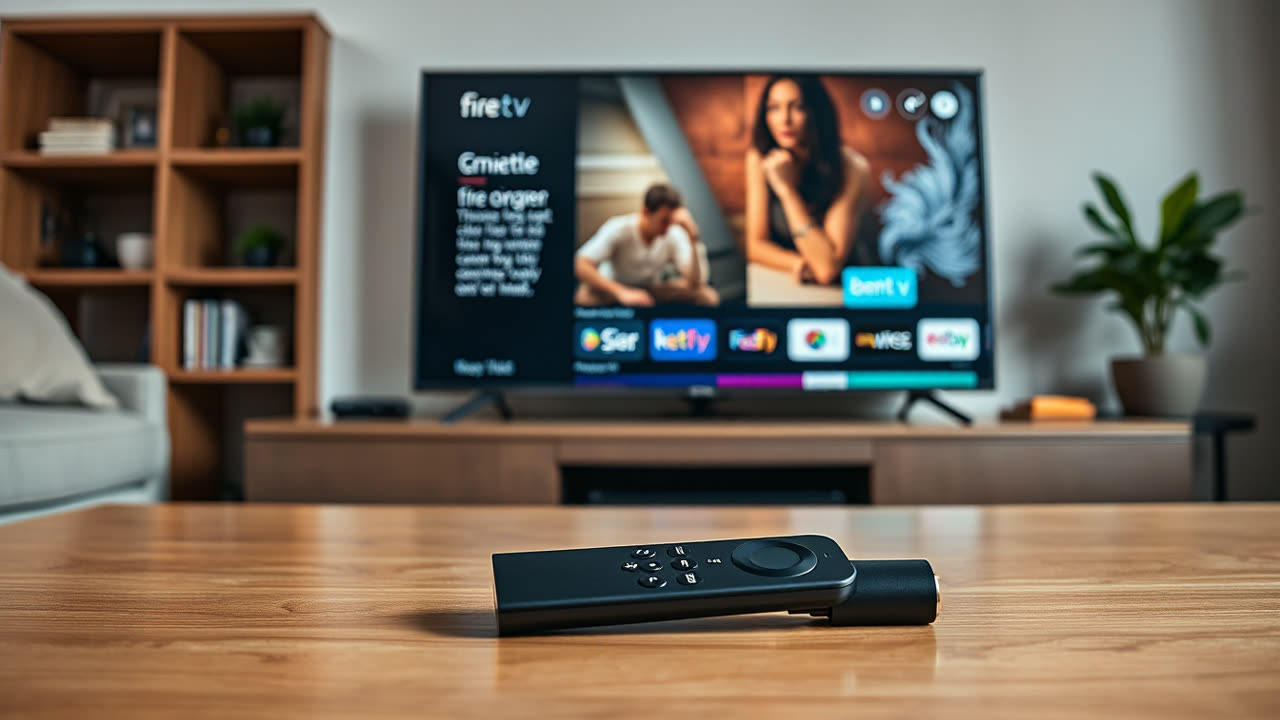
Amazon's Adaptive Display accessibility feature for Fire TVs officially commenced its rollout on July 20, 2026, for the latest Fire TV Stick HD model, following its preview in April of the same year. This new setting significantly enhances usability by dynamically resizing text and user interface elements for optimal readability, while ensuring that images and key art remain proportionally scaled. Users are provided with multiple sizing options, allowing for a personalized visual experience tailored to individual needs and preferences.
The introduction of Adaptive Display represents a crucial evolution in Amazon's commitment to inclusive design, building on over a decade of accessibility innovations for its Fire TV platform. This feature directly addresses a prevalent issue in modern streaming interfaces: the often-small text and cluttered menus that can impede navigation for users with varying visual acuity, including older adults, individuals with visual impairments, or those watching in diverse lighting conditions. By intelligently enlarging critical interface components while preserving the integrity of content visuals, Adaptive Display avoids the distortion commonly associated with basic zoom functions, offering a more harmonious and accessible on-screen layout. This is particularly relevant given Amazon's comprehensive overhaul of the Fire TV user interface, which was first showcased at CES 2026 and began rolling out in February 2026, aiming to streamline content discovery but potentially presenting new challenges for visual navigation.
The significance of Adaptive Display extends beyond individual user comfort; it sets a new benchmark for accessibility in the competitive smart TV industry. While rival platforms like Google TV, Apple TV, Roku, Samsung Tizen, and LG webOS offer a range of accessibility features, Amazon's approach with Adaptive Display is distinct in its dynamic and proportional scaling of UI elements. For instance, Apple TV 4K includes features like Zoom for magnification and Hover Text to enlarge selected text, alongside options for bold text and contrast adjustments. Google TV and Samsung Smart TVs provide features such as grayscale mode to reduce eye strain and options to enlarge text and menus, with Samsung specifically offering a "Zoom menus and text" feature that magnifies an area when hovered over. However, Adaptive Display's ability to resize *both* text and UI elements while maintaining proportional scaling of artwork offers a more integrated and less disruptive user experience compared to simple magnification or static text size adjustments.
Amazon's Fire TV ecosystem already boasts a robust suite of accessibility tools, including VoiceView, a screen reader that provides spoken feedback for on-screen elements; Dialogue Boost, which clarifies spoken audio; Audio Descriptions for visually impaired viewers; and High Contrast Text, which sharpens lettering. The Fire TV Stick HD, the initial recipient of Adaptive Display, is a popular and affordable streaming device, making this advanced accessibility feature available to a broad user base. This strategic rollout on an entry-level device underscores Amazon's dedication to making its technology inclusive across its product spectrum.
Looking ahead, the rollout of Adaptive Display is likely to spur further innovation in smart TV accessibility. Competitors will be compelled to match or exceed Amazon's offering, potentially leading to more sophisticated, context-aware display adjustments that go beyond static settings. We can anticipate future iterations of Adaptive Display to incorporate more granular control, perhaps leveraging AI to automatically detect optimal display settings based on ambient light, viewer distance, or even individual user profiles. Furthermore, the integration of such features could extend to Amazon's broader smart home ecosystem, ensuring a consistent and accessible user experience across various devices. The trend towards personalized and adaptive interfaces is clear, and Amazon's Adaptive Display is a significant step in making home entertainment truly accessible for everyone.