Amazon's Color Kindle 'Kaleido' Series Reshapes E-Reader Market
Amazon introduces its 'Kaleido' Kindles with vibrant color E Ink displays and enhanced durability, marking the most significant hardware innovation in its e-reader lineup since 2022 and fundamentally altering user expectations for digital reading.
✨ This content was summarized and interpreted by AI; it may contain errors — please verify accuracy with the original sources. Learn more
Listen to this story
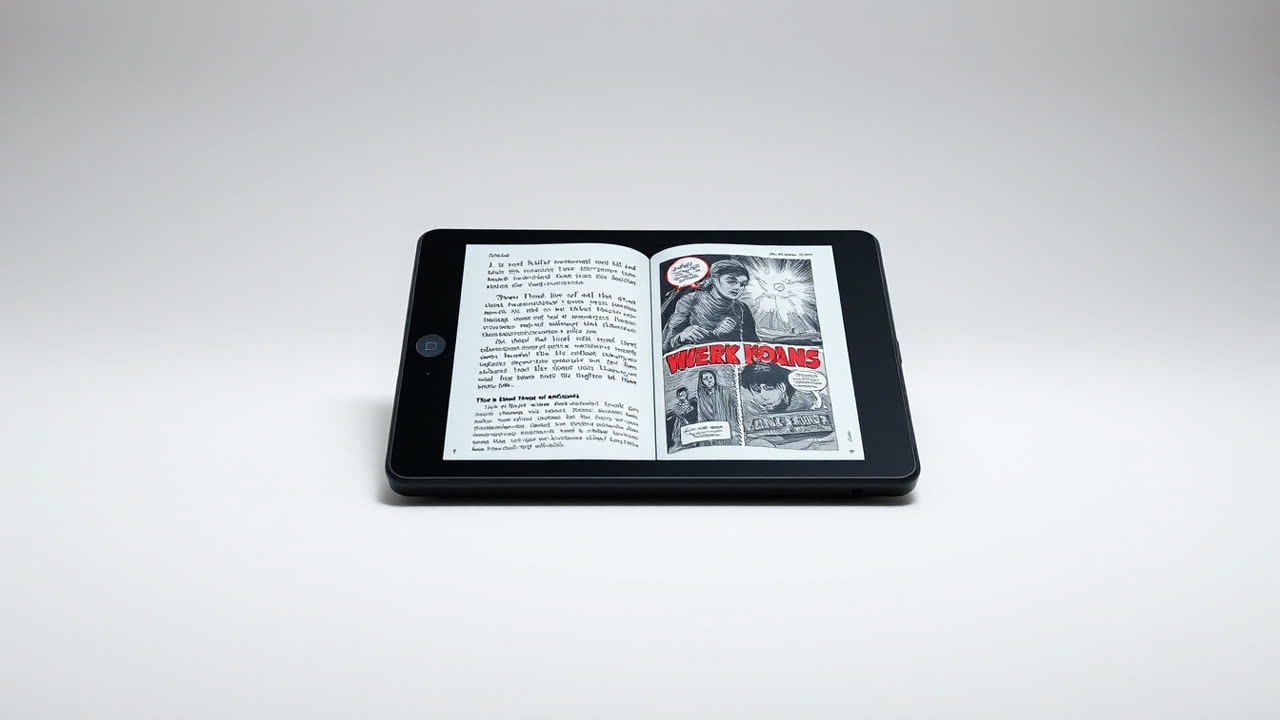
Amazon's recent introduction of its "Kaleido" series of Kindles, featuring vibrant color E Ink displays and enhanced durability, marks a pivotal shift in the e-reader market, moving beyond the monochromatic limitations that have defined the category for decades. These new devices, reportedly launched in late 2024 and early 2025, represent Amazon's most significant hardware innovation in the Kindle lineup since the introduction of the Kindle Scribe in 2022, directly addressing a long-standing user desire for a more visually engaging reading experience. The core innovation lies in the integration of E Ink's latest Kaleido 3 (and potentially Kaleido 3 Plus) display technology, allowing for the rendering of up to 4,096 colors at a resolution of 150 pixels per inch (ppi) for color content and maintaining a crisp 300 ppi for black and white text, effectively bridging the gap between traditional e-readers and tablet functionality without sacrificing battery life or outdoor readability. Prices for these new color Kindles reportedly start around $189.99 for the entry-level model, positioning them competitively against existing premium e-readers and lower-end tablets.
This strategic pivot matters immensely, not just for Amazon but for the entire digital publishing and e-reading industry, fundamentally altering user expectations and opening new content monetization avenues. For users, the introduction of color transforms the experience of reading graphic novels, children's books, magazines, educational textbooks, and even cookbooks, which were previously suboptimal on grayscale E Ink screens. The ability to view maps, charts, and illustrations in their intended hues significantly enhances comprehension and engagement, potentially attracting a broader demographic of readers who found monochrome e-readers too restrictive. Furthermore, the reported improvements in durability, including enhanced water and scratch resistance, address common consumer pain points, making the devices more resilient to everyday wear and tear and broadening their appeal for travel and outdoor use. For the industry, this move could catalyze a resurgence in digital content creation, encouraging publishers to invest more in rich, multimedia-enhanced e-books and interactive educational materials designed specifically for color e-readers. It also poses a direct challenge to budget tablets, which often compromise on eye comfort and battery life for the sake of color, positioning the Kindle Kaleido as a superior dedicated reading device for a wider range of content.
Historically, Amazon's Kindles have dominated the e-reader market through a combination of accessible pricing, a vast content ecosystem, and reliable performance. Previous generations, while excelling in text-based reading, consistently faced criticism for their lack of color, a feature long available on tablets and rival e-readers from companies like Kobo and PocketBook. While competitors have experimented with color E Ink for several years, notably with devices using Kaleido 2 and Kaleido 3 technology, Amazon's entry with its substantial market share and content library lends significant mainstream validation to the technology. The Kindle Scribe, launched in late 2022, introduced writing capabilities to the Kindle family, but it remained a monochrome device, highlighting the persistent demand for color. The new "Kaleido" Kindles directly compete with devices like the Kobo Libra Colour and PocketBook InkPad Color 3, which have offered color E Ink for some time, often at premium price points. Amazon's strength lies in its ecosystem integration, potentially offering exclusive color-optimized content and a more seamless user experience that could outpace rivals, despite similar underlying display technology. The reported "sturdy" design also positions these new Kindles against the perceived fragility of some earlier color E Ink devices, aiming for a more robust user experience.
Looking ahead, the introduction of colorful and sturdy Kindles is merely the beginning of a broader evolution in the e-reader landscape. The immediate impact will likely be a significant increase in the adoption of color e-readers, driven by Amazon's marketing power and brand recognition. This will put pressure on competitors to innovate further, potentially leading to faster refresh rates, higher color resolutions, and more advanced interaction methods on their own devices. We can anticipate an acceleration in the development of E Ink technology itself, with future iterations offering even more vibrant colors, reduced ghosting, and potentially flexible or even foldable color e-paper displays. Furthermore, the enhanced capabilities of these Kindles could spur Amazon to integrate more interactive features, potentially blurring the lines between e-readers and educational tablets for specific use cases. The long-term outlook suggests a shift in how digital content is consumed, with a greater emphasis on visually rich and interactive formats across all genres, ultimately benefiting both content creators and readers by making digital reading a more engaging and accessible experience than ever before. This move solidifies Amazon's position at the forefront of the e-reading revolution, ensuring the Kindle remains relevant in an increasingly visual digital world.
Amazon’s colorful and sturdy new Kindles.