Amazon's Default AI Training on Twitch Streamer Content Sparks Backlash
Twitch's new policy automatically enrolls streamers into an AI training program using their content, requiring an opt-out and igniting a fierce debate over intellectual property and creator rights.
✨ This content was summarized and interpreted by AI; it may contain errors — please verify accuracy with the original sources. Learn more
Listen to this story
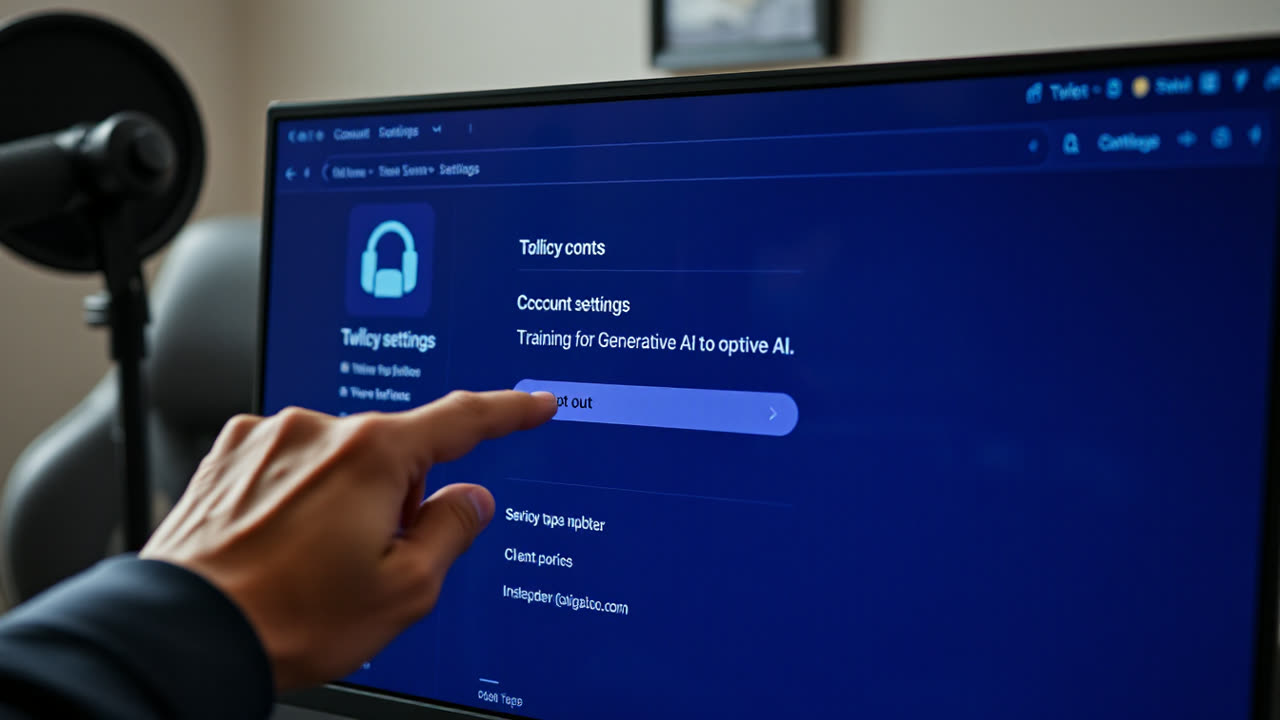
Amazon's decision to automatically enroll Twitch streamers into a program that trains the company's generative AI models on their content, requiring an opt-out rather than explicit consent, has sparked immediate backlash and raised profound questions about intellectual property, compensation, and the future of the creator economy. Twitch Chief Product Officer Mike Minton's candid admission during a livestream, "If this was opt-in, nobody would opt in. That's honestly the answer," underscores the platform's understanding of its creators' likely resistance and highlights a growing tension between platforms' AI ambitions and creator rights.
This new policy, effective immediately, encompasses a vast array of streamer content, including live streams, videos on demand (VODs), clips, highlights, chat logs, and any associated text or images on a channel. When a streamer opts out, their content will not be used for *future* training of Amazon models designed to generate or synthesize text, audio, images, or video. However, this opt-out does not cover all AI or machine learning uses on Twitch; features like AutoMod for chat moderation or AI-supported captions will continue to process content, as Twitch argues these are essential for community safety and platform functionality. A particularly contentious detail is that if a streamer has opted out, but participates in another streamer's chat who has *not* opted out, their messages within that chat can still be used for AI training. The opt-out setting, labeled "Training for Generative AI," is located within the "Security and Privacy" section of Twitch account settings, requiring users to actively navigate to it to disable the default.
The implications for users and the broader industry are substantial. For streamers, the core concern revolves around the loss of control over their creative output and intellectual property. Content creators invest significant time and effort into building their brands and communities, and the idea of their unique style, voice, and persona being absorbed to train AI models that could eventually generate synthetic content or even compete with them is deeply unsettling. This move could erode trust between Twitch and its creator base, potentially leading to a migration of talent to platforms with more transparent or creator-friendly AI policies. The user reception has already been "overwhelmingly negative," with a prominent thread on Twitch's User Voice website advocating for all AI features to be opt-out by default garnering over 13,000 votes.
From an industry perspective, Amazon's aggressive default-opt-in strategy signals a powerful push to secure vast datasets, a critical resource in the generative AI arms race. Training AI models on diverse, real-world human interaction data, such as that found on Twitch, can significantly enhance their capabilities in generating human-like text, audio, images, and video. This could give Amazon a competitive edge in developing advanced AI for various applications, not just within Twitch but across its broader ecosystem. However, this strategy carries significant risks, including potential regulatory scrutiny, particularly in regions with robust data privacy laws like the EU's GDPR, which requires a lawful basis for processing personal data, even if publicly available. The EU AI Act, applicable from August 2026, mandates that general-purpose AI model providers maintain and publish summaries of training data, including identification of any opt-outs.
This isn't an isolated incident but rather reflects a broader trend among major tech platforms leveraging user-generated content for AI training. Meta, for instance, has also updated its privacy policies to use public posts and interactions for AI training, with users in the US having fewer opt-out options than those in the EU and UK. TikTok, while offering an array of AI tools for creators and automatically labeling some AI-generated content, also faces scrutiny over its data usage for AI training, with some studies suggesting its opt-out process can be difficult. YouTube has focused on rewarding creators who use AI to enhance storytelling rather than mass-produce generic content, and has expanded AI likeness-detection tools. The key differentiator with Twitch's approach is the explicit acknowledgement by a CPO that an opt-in model would fail, starkly revealing the perceived value of this data and the platform's willingness to prioritize data acquisition over explicit user consent.
Looking ahead, the fallout from Twitch's decision could precipitate several outcomes. Streamers may increasingly demand clearer intellectual property rights and potentially explore decentralized platforms or alternative monetization models that offer greater control over their content. We might see increased pressure for legislative action, such as the proposed U.S. "TRAIN Act" (Transparency and Responsibility for Artificial Intelligence Networks Act), introduced in January 2026, which aims to provide copyright holders with mechanisms to obtain information about AI training data. Regulators, especially in Europe, are likely to intensify their investigations into the legal basis and transparency of AI training data collection. Ultimately, this move by Amazon-owned Twitch could serve as a critical inflection point, forcing a more robust industry-wide dialogue and potentially new standards around consent, compensation, and ethical AI development within the creator economy. The battle for digital rights in an AI-driven world is just beginning, and the default setting has become its newest, most contentious frontier.