Amazon's Delivery Driver Smart Glasses: A New Era of Pervasive Surveillance
Amazon's new smart glasses for delivery drivers, designed to constantly capture images of people and private property, are raising profound concerns about pervasive surveillance and individual privacy.
✨ This content was summarized and interpreted by AI; it may contain errors — please verify accuracy with the original sources. Learn more
Listen to this story
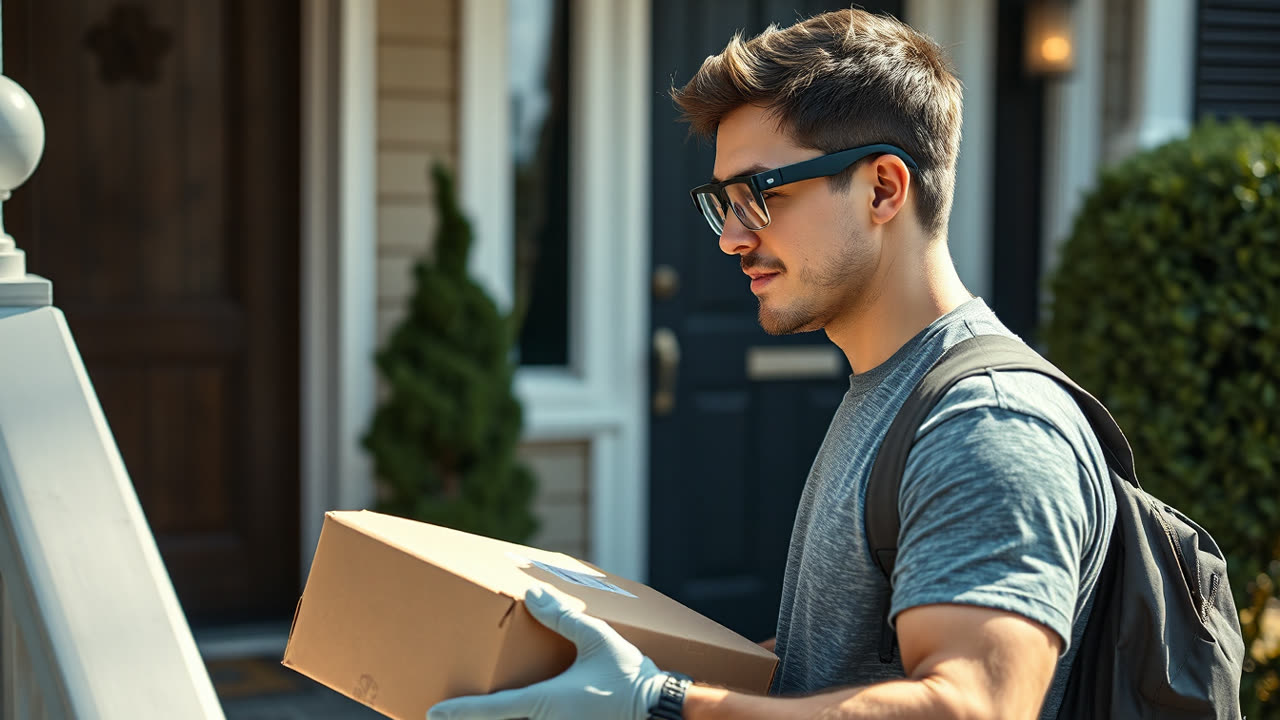
Amazon's reported deployment of smart glasses for its delivery drivers, capable of "almost constantly" snapping photos of everything in their field of view, including people and private property, signals a profound escalation in pervasive surveillance, pushing the boundaries of corporate oversight and individual privacy. This initiative, initially highlighted by Bloomberg and subsequently detailed by The Verge, suggests a future where every doorstep interaction and street-side moment during a delivery could be logged and analyzed, moving beyond traditional vehicle telematics or even dashboard cameras. The underlying technology, likely leveraging advanced computer vision and artificial intelligence, aims to optimize delivery routes, identify package placement, and potentially document proof of delivery or even perceived security threats.
The implications for users and the broader industry are multifaceted and deeply concerning. For customers, the notion that a delivery driver's eyewear could be capturing images of their homes, families, and personal spaces without explicit consent introduces an unprecedented level of unease. While Amazon's Ring doorbells already gather extensive visual data from external property areas, these smart glasses extend that reach directly to the human agent, capturing dynamic, first-person perspectives that could include sensitive interior views if a door is open, or detailed facial recognition data of individuals present. This shift from stationary, user-installed cameras to mobile, company-controlled devices worn by employees fundamentally alters the privacy calculus, presenting a significant erosion of the expectation of privacy in and around one's home. The potential for data misuse, security breaches, or even the aggregation of vast personal datasets without clear consent models a dystopian future where convenience comes at the cost of constant, passive observation.
Within the logistics industry, this move represents a significant technological leap in driver monitoring, surpassing the current standard of GPS tracking, in-cab cameras focused on the driver, or even exterior vehicle cameras. While companies like UPS and FedEx utilize sophisticated tracking and route optimization software, Amazon's proposed smart glasses introduce a granular, real-time visual data stream directly from the point of delivery. This could theoretically offer unparalleled insights into operational efficiencies, package handling protocols, and even safety compliance. However, it also raises substantial ethical questions regarding employee surveillance and autonomy. Drivers, already subject to stringent performance metrics and often under immense pressure, would now operate under constant visual scrutiny, potentially leading to increased stress, decreased job satisfaction, and a chilling effect on personal expression or behavior during working hours. The data collected could be used not only for operational improvements but also for performance evaluations, disciplinary actions, or even shared with law enforcement, further blurring the lines between work monitoring and personal privacy. This level of surveillance also sets a new, potentially unwelcome, precedent for other gig economy and logistics companies, prompting a race to adopt similar technologies in the name of efficiency or accountability, regardless of the human cost.
Amazon's history with surveillance technology, particularly through its Ring division and Alexa-enabled devices, provides crucial context. The company has consistently pushed the boundaries of data collection in consumer spaces, often facing criticism for privacy practices and data sharing with law enforcement. The smart glasses for delivery drivers extend this philosophy from the consumer's doorstep to the public and semi-private spaces traversed by its workforce. This move also draws parallels to broader developments in smart glasses technology, which, despite significant investment from companies like Meta (with Ray-Ban Stories) and Google (with Glass), have largely struggled to gain mainstream consumer adoption due to privacy concerns and social stigma. Amazon's approach, by integrating the technology into a corporate-controlled, mandatory work tool, bypasses consumer choice, effectively normalizing pervasive visual capture in a professional context. This contrasts sharply with rivals who, while investing in automation and data analytics, have not yet publicly pursued such direct, individual-level visual surveillance for their human delivery personnel.
Looking ahead, the deployment of such technology will undoubtedly spark intense debate among privacy advocates, labor unions, and regulatory bodies worldwide. The immediate future will likely see legal challenges regarding data protection, consent, and employee rights, particularly in jurisdictions with robust privacy laws like the European Union's GDPR or California's CCPA. Amazon will need to articulate clear, transparent policies regarding data collection, storage, usage, and retention, as well as robust security measures to prevent breaches. The success or failure of this initiative will hinge not just on its technological efficacy but on public acceptance and regulatory tolerance. If successful, it could herald a new era of "eyes-on" logistics, fundamentally reshaping the dynamics between companies, their employees, and the public. Conversely, significant backlash could force Amazon to recalibrate, highlighting the persistent tension between technological innovation, corporate ambition, and the fundamental right to privacy in an increasingly digitized world. The real test will be whether the perceived operational benefits can outweigh the undeniable societal costs of ubiquitous, involuntary surveillance.