Amazon's Dramatic Price Hikes Signal New Era for Consumer Electronics
Amazon's 2022 decision to increase prices on its Echo, Fire TV, and Kindle lines by up to 60% marked a fundamental shift in its hardware strategy, moving away from aggressive subsidization and reshaping consumer expectations for affordable entry points.
✨ This content was summarized and interpreted by AI; it may contain errors — please verify accuracy with the original sources. Learn more
Listen to this story
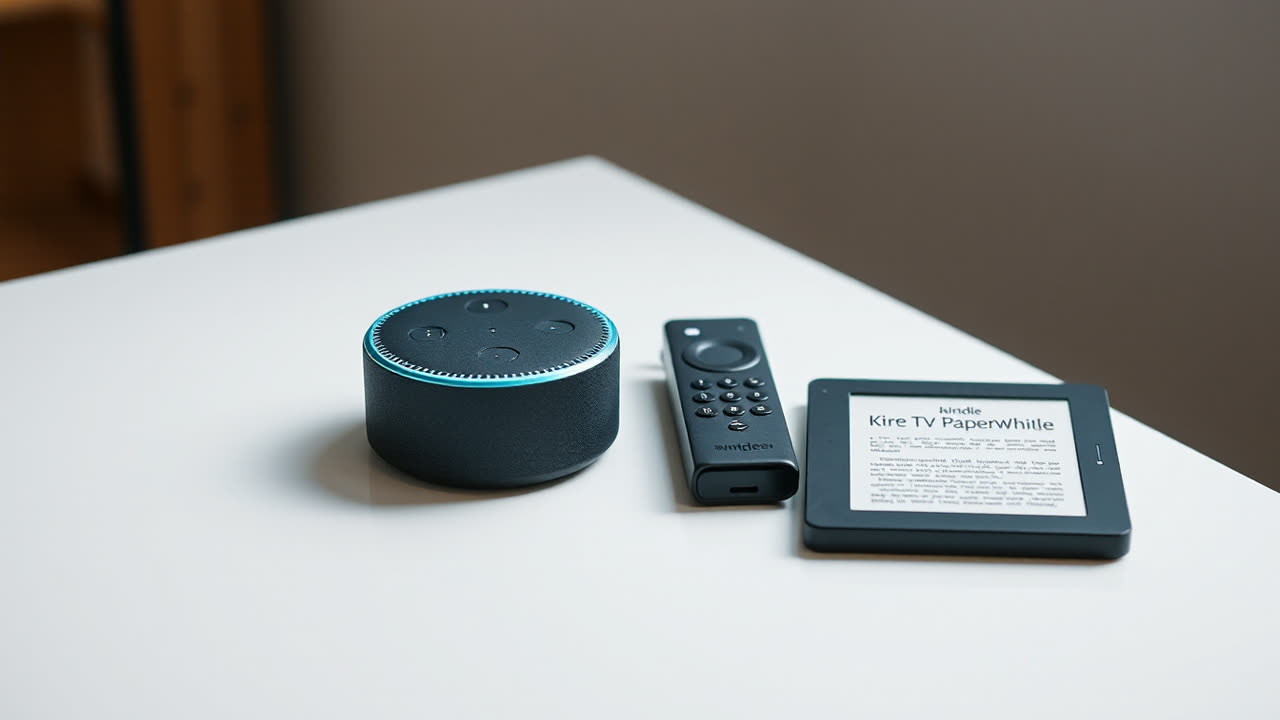
Amazon's dramatic price increases of up to 60 percent on its Echo, Fire TV, and Kindle product lines in 2022, explicitly attributed to "significant increases in memory and storage component costs," marked a pivotal shift in the company's long-standing strategy of aggressive hardware pricing, signaling a new era for its consumer electronics division. This move, which saw the cheapest products in Amazon's lineup bear the brunt of the hikes, fundamentally reshaped consumer expectations for affordable entry points into the Amazon ecosystem and reverberated through the competitive landscape of smart home, streaming, and e-reader markets.
The rationale provided by Amazon—escalating component costs—was a transparent acknowledgment of broader macroeconomic pressures that continue to challenge the consumer electronics industry into 2026. While Amazon had historically subsidized its hardware, using low device prices as a funnel to drive subscriptions, content consumption, and data collection, the 2022 hikes suggested a breaking point where the profitability of the hardware itself became a more pressing concern. For instance, certain Echo Dot models saw their prices jump by over 40%, while some Fire TV Sticks and Kindle models experienced similar substantial increases, moving them out of impulse-buy territory for many consumers. This strategic pivot indicated a re-evaluation of the long-term value proposition of these devices, forcing Amazon to balance ecosystem growth with the immediate financial realities of manufacturing.
For users, the impact has been multifaceted. The initial allure of ultra-affordable smart speakers and streaming sticks, which allowed widespread adoption, diminished considerably. New entrants to the smart home market, previously drawn by the low barrier to entry, now faced a higher initial investment, potentially slowing the expansion of Amazon's device footprint in new households. Existing users, accustomed to a steady stream of budget-friendly upgrades, might have found themselves delaying replacements or exploring alternatives from competitors. The price sensitivity of the lower-end market segments, where Amazon had previously dominated, meant that even a 20-30% increase could deter purchases, let alone the reported 60% on some models. This shift effectively raised the floor price for accessing Amazon's voice assistant, Alexa, and its streaming platform, Fire TV, potentially pushing budget-conscious consumers towards rival ecosystems or delaying their entry into connected home technology.
Industrially, Amazon's 2022 price adjustments sent a clear signal that even tech giants are not immune to supply chain pressures and inflationary component costs. This move likely emboldened competitors like Google (with its Nest and Chromecast lines) and Apple (with HomePod mini and Apple TV) to maintain or even slightly increase their own pricing without fear of being severely undercut by Amazon's previous aggressive tactics. While Amazon's devices still often represent a strong value proposition compared to premium alternatives, the gap narrowed. For example, a Fire TV Stick 4K Max, while still more affordable than an Apple TV 4K, saw its relative cost increase, making the feature disparity less forgiving for consumers. In the e-reader space, while Kindle still dominates, the higher entry price for basic models could theoretically open a small window for niche competitors offering feature-rich alternatives at a perceived better value, though Amazon's content ecosystem remains a formidable moat. The move also highlighted the fragility of business models heavily reliant on hardware subsidies in volatile economic environments, prompting other companies to scrutinize their own hardware pricing strategies.
Looking ahead to 2026, Amazon's strategy appears to be one of cautious optimization rather than a return to aggressive price wars. While component costs have somewhat stabilized compared to their 2022 peaks, the memory and storage markets remain susceptible to demand fluctuations and geopolitical events. Amazon is unlikely to revert to its pre-2022 pricing on core devices unless a significant technological breakthrough drastically reduces manufacturing costs or intense competitive pressure forces a reconsideration. Instead, the company is focusing on enhancing the value proposition of its devices through software updates, deeper integration with its services, and expanding the utility of Alexa and Fire OS. We can anticipate Amazon pushing higher-margin, premium versions of its devices, such as the Echo Show line with advanced displays and improved audio, or Fire TV devices with more robust processing power for gaming and AI features, to offset the thinner margins on its entry-level products. The company will likely continue to leverage bundles and promotional discounts, particularly around key shopping events, as a primary mechanism to drive sales, rather than permanent price reductions. Furthermore, with the smart home market maturing, Amazon's focus will increasingly shift from pure device sales to fostering long-term engagement and recurring revenue through subscriptions and expanded service offerings, where the device acts as an intelligent gateway rather than a loss leader.