Amazon Unveils Colorsoft Kindle and Tactile Page-Turn Buttons, Redefining E-Reading
Amazon's unveiling of a new generation of Kindles, including a "Kindle Colorsoft" and a redesigned accessory case featuring physical page-turn buttons, marks a significant, albeit subtle, evolution in the e-reader landscape, challenging the long-held monochrome paradigm and prioritizing tactile user experience.
✨ This content was summarized and interpreted by AI; it may contain errors — please verify accuracy with the original sources. Learn more
Listen to this story
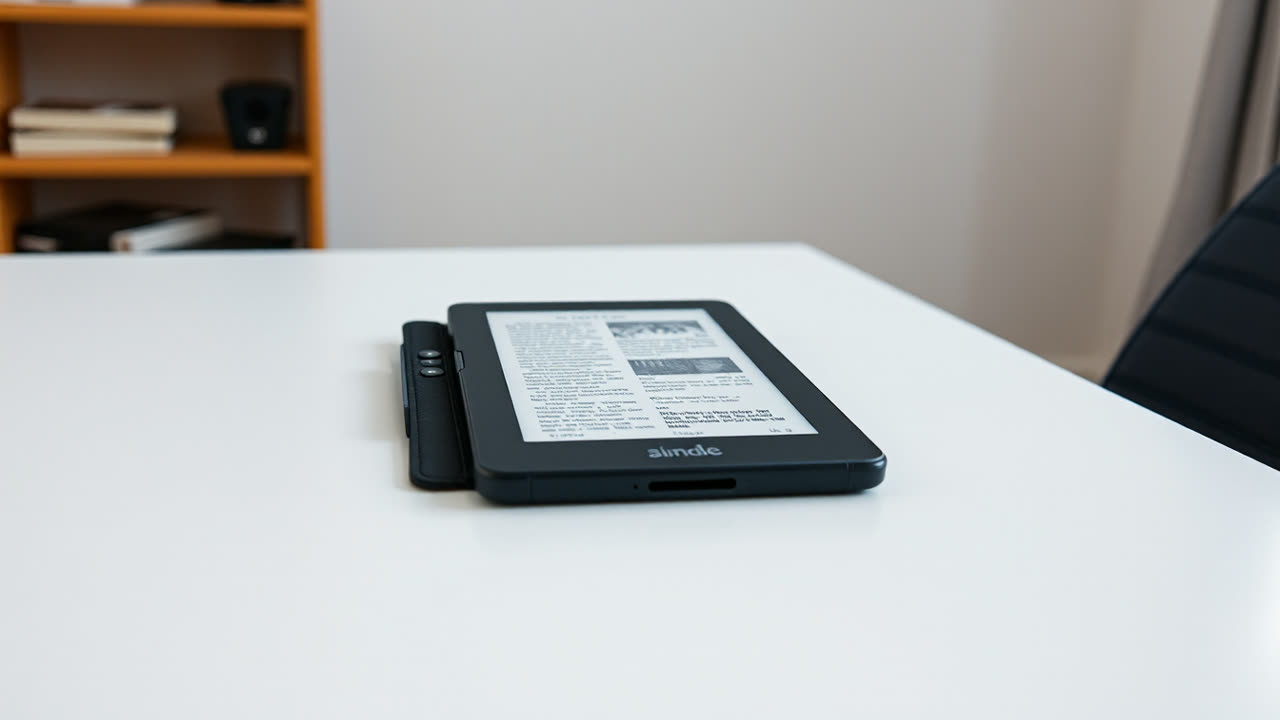
Amazon's unveiling of a new generation of Kindles, including a "Kindle Colorsoft" and a redesigned accessory case featuring physical page-turn buttons, marks a significant, albeit subtle, evolution in the e-reader landscape, challenging the long-held monochrome paradigm and prioritizing tactile user experience. This refresh, encompassing the base Kindle, Kindle Paperwhite, and the new Colorsoft model, introduces devices that are reportedly a millimeter thinner and boast a 30% improvement in an unspecified core performance metric, likely display responsiveness or battery efficiency, aiming to make digital reading feel more natural and engaging than ever before.
The introduction of the "Kindle Colorsoft" is arguably the most impactful development, signaling Amazon's serious entry into the color e-ink arena, a space previously dominated by competitors like Kobo and various smaller brands leveraging Kaleido or Gallery 3 color e-paper technology. While details on its specific color capabilities remain to be fully benchmarked, a significant leap in color saturation and refresh rates would broaden the Kindle's appeal beyond text-heavy books to magazines, comic books, and educational materials where visual fidelity is crucial. This move could dramatically expand the e-reader market by attracting users who previously found monochrome screens limiting for certain content types, directly challenging the perception that e-readers are only for novels. For users, this means a richer, more versatile reading experience, potentially bridging the gap between dedicated e-readers and tablets, without sacrificing the eye-comfort and battery life advantages of e-ink. The industry, in turn, will likely see intensified innovation in color e-paper technology and content adaptation, pushing rivals to accelerate their own color offerings and display advancements.
The accompanying case with physical page-turn buttons, while seemingly a minor accessory, addresses a persistent user demand and represents a strategic nod to the tactile satisfaction that many readers miss from physical books or even earlier Kindle models like the Kindle Oasis. The Kindle Oasis, first introduced in 2016 and subsequently updated, has long been Amazon's premium offering with physical page-turn buttons, a feature appreciated for its ergonomic benefits and reliability. Extending this functionality through an accessory for the base Kindle and Paperwhite democratizes a premium feature, allowing a wider segment of users to choose between touch-screen navigation and the satisfying click of a button. This not only enhances user comfort, especially during long reading sessions, but also subtly reinforces the e-reader's identity as a dedicated reading device, distinct from a multi-purpose tablet. This contrasts sharply with the purely touch-based interface of many budget e-readers and even some premium tablets, offering a deliberate choice for those prioritizing a book-like interaction.
Comparing this new lineup to its predecessors, the consistent drive towards thinner designs and improved performance metrics, such as the reported 30% boost, underscores Amazon's commitment to incremental refinement. The prior generation of Kindles, while robust, often faced criticism for their somewhat dated designs and lack of innovation beyond display resolution bumps. The base Kindle, last updated in 2022, brought USB-C and a higher resolution display, while the Paperwhite, refreshed in 2021, introduced a larger screen and faster page turns. These new models, however, focus on a more holistic enhancement of the "feel" of the device, both physically and in terms of interaction. Against rivals like Kobo, which has consistently offered competitive hardware and more open file format support, or Onyx Boox, which integrates Android for broader app compatibility, Amazon’s strength has always been its vast content ecosystem. The "Colorsoft" and physical buttons aim to bolster the hardware appeal, making the Kindle ecosystem even stickier.
Looking ahead, the launch of the Kindle Colorsoft strongly suggests a future where color e-ink becomes standard across Amazon's e-reader lineup, eventually replacing monochrome displays even in the base models. The initial iteration of Colorsoft will likely serve as a testing ground for user adoption and technological maturity, with subsequent generations boasting even better color fidelity, faster refresh rates, and potentially lower price points as manufacturing scales. We can anticipate deeper integration with Amazon's broader content offerings beyond books, such as Prime Reading's magazine selections and Comixology titles, optimized specifically for the color display. Furthermore, the success of the physical page-turn button case could lead to its integration into future device designs, potentially bringing back a physical button option to the main Paperwhite line or even a successor to the Oasis, which has seen less frequent updates. The e-reader market, far from stagnating, is poised for a vibrant new chapter driven by improved color technology and a renewed focus on tactile user experience, solidifying the e-reader’s place as a distinct and valuable device in a tablet-dominated world.