AMD's 'Medusa Point' APU Shatters Single-Core Performance Records
A leaked SKU of AMD's forthcoming 10-core 'Medusa Point' APU has demonstrably outperformed all current x86 mobile chips in single-core Geekbench tests, signaling a major shift in mobile computing performance.
✨ This content was summarized and interpreted by AI; it may contain errors — please verify accuracy with the original sources. Learn more
Listen to this story
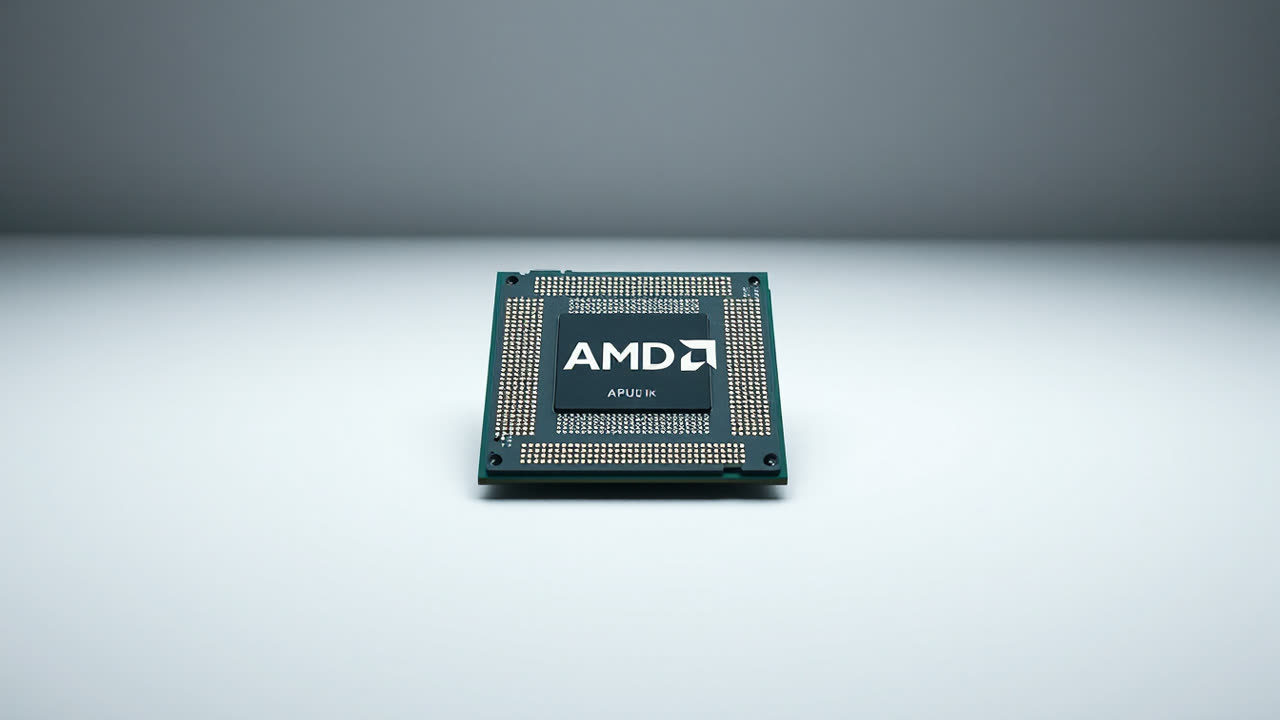
AMD's forthcoming 10-core 'Medusa Point' APU has shattered single-core performance expectations on Geekbench, with a leaked SKU demonstrably outperforming every other x86 mobile chip currently available, marking a significant inflection point for mobile computing. This latest benchmark appearance, showcasing its best score to date, solidifies early indications that 'Medusa Point' – presumed to be a Zen 5-based design – represents a substantial leap over its predecessors, 'Gorgon Point' and 'Strix Point', and sets a new competitive bar for the fiercely contested laptop CPU market. The specific Geekbench 6.3 run, attributed to an engineering sample, reportedly registered a single-core score exceeding 3,000 points, a figure that places it comfortably ahead of even Intel's most potent current-generation mobile offerings, which typically hover in the 2,700-2,900 range for their top SKUs. While multi-core performance details remain less clear, the single-core dominance signals a profound improvement in Instructions Per Cycle (IPC) and clock speed efficiency.
This unprecedented single-core lead is crucial because it directly translates to a snappier, more responsive user experience across a vast array of common applications, from web browsing and office productivity suites to lightly threaded professional software and gaming titles that heavily rely on individual core performance. For consumers, this means laptops powered by 'Medusa Point' could offer a noticeable boost in everyday fluidity, faster application launch times, and smoother multitasking, even in thinner and lighter form factors. Historically, while AMD has often excelled in multi-core performance, Intel has frequently held an edge in single-core benchmarks, a perception that 'Medusa Point' now comprehensively challenges. This shift could significantly influence purchasing decisions, particularly for users prioritizing raw responsiveness over sheer core count, or those who demand top-tier performance without the bulk of a desktop replacement machine.
For the industry, 'Medusa Point' represents a potent weapon in AMD's ongoing campaign against Intel's long-held dominance in the mobile segment. The immediate impact will be felt by laptop manufacturers (OEMs), who will likely view this APU as a compelling option to differentiate their premium and high-performance notebooks. A truly class-leading single-core performance, coupled with AMD's integrated Radeon graphics, which typically outperform Intel's integrated solutions, creates a formidable all-in-one package. This could lead to increased market share for AMD in high-margin segments and potentially force Intel to accelerate its own roadmap, particularly with its upcoming Lunar Lake and Arrow Lake mobile processors. The battle for the next generation of "AI PCs" also heats up significantly; while specific NPU (Neural Processing Unit) performance figures for 'Medusa Point' are not yet public, strong overall CPU performance will be critical for enabling sophisticated on-device AI capabilities without relying solely on the NPU, offering a more robust and versatile platform for AI workloads.
Looking back, AMD's APU strategy has consistently aimed at delivering a balanced blend of CPU and GPU performance within a single chip. The 'Strix Point' series, based on Zen 4 and RDNA 3.5 architectures, offered a strong competitive showing, particularly in integrated graphics and multi-core tasks. 'Gorgon Point', another codename associated with Zen 5, has also shown promising, albeit less definitive, early benchmark results. 'Medusa Point' appears to be a more advanced or higher-tier variant within the Zen 5 mobile family, potentially leveraging higher clock speeds, refined core designs, or a more optimized manufacturing process to achieve its benchmark supremacy. This iterative improvement underscores AMD's aggressive architectural development, with Zen 5 expected to bring significant IPC gains over Zen 4, alongside advancements in power efficiency. The single-core leap suggests that AMD has successfully addressed past architectural bottlenecks or optimized its core design to extract maximum performance per thread.
Moving forward, the arrival of 'Medusa Point' could usher in a new era of ultra-powerful, yet efficient, mobile computing. We can anticipate AMD to strategically position this APU across various segments, from high-end ultrabooks to gaming laptops, challenging Intel across the entire spectrum. The competitive pressure will undoubtedly benefit consumers, driving innovation in processor design, power efficiency, and integrated features like NPUs. OEMs will be keen to integrate 'Medusa Point' into their flagship products, potentially leading to a wave of new laptops offering unprecedented performance for their form factors. The true test will come with sustained performance, thermal management, and, crucially, battery life under real-world workloads, but these initial Geekbench results indicate that AMD's 'Medusa Point' is poised to redefine expectations for what a mobile processor can achieve. The market is now set for a compelling showdown as Intel prepares its counter-punch with Lunar Lake and Arrow Lake, ensuring that 2025 will be a pivotal year for mobile CPU innovation.