AMD's Ryzen 7 7700X3D: A Promising Yet Perplexing Entry
AMD's new Ryzen 7 7700X3D CPU offers 3D V-Cache gaming performance at a lower price, but its market positioning creates a challenging dilemma against its own siblings.
✨ This content was summarized and interpreted by AI; it may contain errors — please verify accuracy with the original sources. Learn more
Listen to this story
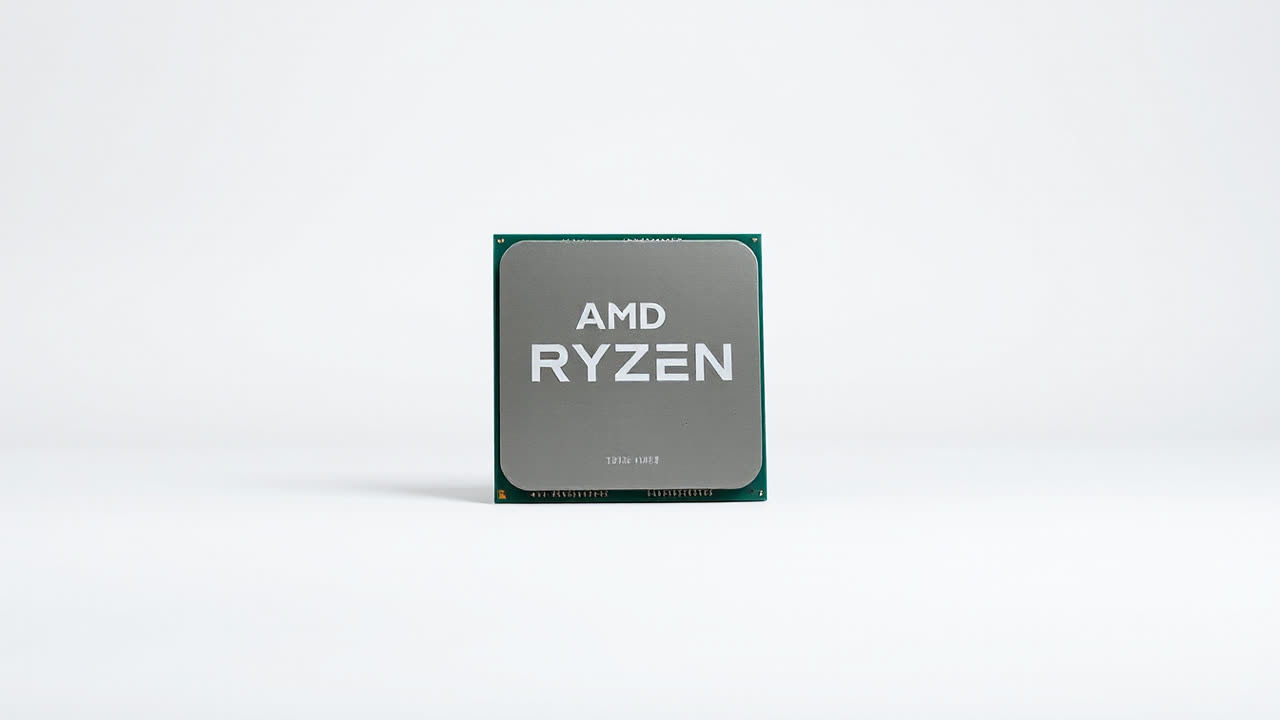
AMD's latest entry into the Zen 4 X3D lineup, the Ryzen 7 7700X3D, launched on July 16, 2026, at an MSRP of $329, positioning itself as a more affordable alternative to the established Ryzen 7 7800X3D, which debuted in April 2023 at $449 but now often retails around $340 to $389. This new eight-core, sixteen-thread processor, built on TSMC's 5nm process and sharing the Zen 4 architecture with its sibling, aims to bring AMD's celebrated 3D V-Cache technology to a wider audience on the AM5 platform. However, its launch creates a fascinating dilemma for consumers, as its performance and pricing carve out a narrow, sometimes questionable, niche within AMD's own product stack.
The core differentiator between the 7700X3D and the 7800X3D lies primarily in clock speeds, as both CPUs feature an identical 96MB of 3D V-Cache-enabled L3 cache, totaling 104MB with L2 cache, and share the same 120W TDP. The 7700X3D operates with a 4.0 GHz base clock and a 4.5 GHz boost clock, a notable reduction compared to the 7800X3D's 4.2 GHz base and higher 5.0 GHz boost clock. This clock speed difference translates to a modest but consistent performance gap in gaming. Benchmarks show the Ryzen 7 7800X3D leading the 7700X3D by an average of 4.3% in a 16-game FPS geomean, with a slightly wider 5% lead in 1% lows when tested with a high-end GPU like the GeForce RTX 5090. For instance, in *Rainbow Six Siege X*, the 7700X3D was 8% slower than the 7800X3D. While the 7700X3D achieves impressive gaming frame rates, it essentially offers performance akin to the Ryzen 5 7600X3D in many titles, which is often available at a lower price point, sometimes $90-$100 less than the 7700X3D.
The significance of AMD's 3D V-Cache technology cannot be overstated for gaming. It involves vertically stacking an additional layer of L3 cache directly onto the Core Complex Die (CCD), dramatically increasing cache capacity and bandwidth. This larger, faster-accessed cache reduces the need for the CPU to fetch data from slower system RAM, a bottleneck particularly acute in many modern games. However, the 7700X3D's lower clock speeds, a consequence of AMD repackaging silicon that couldn't hit the 7800X3D's higher frequencies, means it doesn't fully exploit the V-Cache's potential in scenarios where raw clock speed is also critical. Despite sharing a 120W TDP, the 7700X3D often demonstrates lower actual power draw, averaging just 74W in multi-threaded Cinebench 2024 tests and exhibiting excellent gaming efficiency, sometimes surpassing the 7800X3D in performance per watt. This makes it a compelling option for builders prioritizing lower heat output and power consumption, especially in compact systems, where it runs cool enough for modest air coolers.
Compared to its non-X3D Zen 4 counterpart, the Ryzen 7 7700X, the 7800X3D is significantly faster in gaming, often by 22% on average across numerous titles, despite the 7700X having higher base (4.5 GHz vs 4.2 GHz) and boost (5.4 GHz vs 5.0 GHz) clocks. This stark difference underscores the power of 3D V-Cache. However, the 7700X can sometimes outperform the 7700X3D in aggregate performance scores, albeit by a small 7%, and boasts a 14% lower power consumption in some workloads due to its different architecture without the stacked cache. Against Intel's current generation, the Ryzen 7 7800X3D generally remains superior for gaming, often being up to 24% faster on average across 100+ games than the Core i7-14700K and significantly more power-efficient. The i7-14700K, however, excels in multi-core applications with significantly higher performance, sometimes over 70% above the 7800X3D, making it a better choice for content creators and professional users. The 7700X3D's direct competitor from Intel, the Core Ultra 7 270K Plus, offers similar gaming performance but twice the multi-threaded performance and approximately 40% faster single-core performance at a comparable price.
The immediate outlook for the 7700X3D is challenging due to its market positioning. At its launch price of $329, it was difficult to recommend when the superior 7800X3D could be found for only a $20-$60 premium. A price cut, such as the temporary drop to $279.99 witnessed after launch, significantly enhances its value proposition, making it a smart gaming buy for those focused on value-oriented AM5 builds. However, without consistent aggressive pricing, the 7700X3D struggles to carve out a compelling niche between the slightly more expensive but faster 7800X3D and the more affordable Ryzen 5 7600X3D. Looking ahead, AMD's Zen 5 X3D chips, such as the Ryzen 7 9800X3D, which arrived at $479, represent the true next generation. These Zen 5 parts feature a second-generation cache design that places the cache *under* the compute die, allowing for higher sustained clocks and full overclocking support, delivering an 8-10% performance lead over the 7800X3D. This technological evolution suggests that while the Zen 4 X3D chips remain potent, AMD's future gaming dominance will hinge on continued refinements to its 3D V-Cache implementation, pushing both cache efficiency and raw clock speeds in tandem. The 7700X3D, therefore, serves as a useful, albeit imperfect, bridge product, offering a taste of X3D performance at a lower entry point, but its long-term relevance will depend heavily on sustained market adjustments and its ability to consistently undercut its faster, albeit aging, sibling.