Anthropic Launches Claude Fable 5.1 and Mythos 5.1 with Breakthrough Scientific Accuracy and 75% Cost Reduction
Anthropic has launched Claude Fable 5.1 and Claude Mythos 5.1, achieving a reported 52.6% accuracy on the challenging Terminal-Bench-Science benchmark and a dramatic 75% reduction in cache read costs.
✨ This content was summarized and interpreted by AI; it may contain errors — please verify accuracy with the original sources. Learn more
Listen to this story
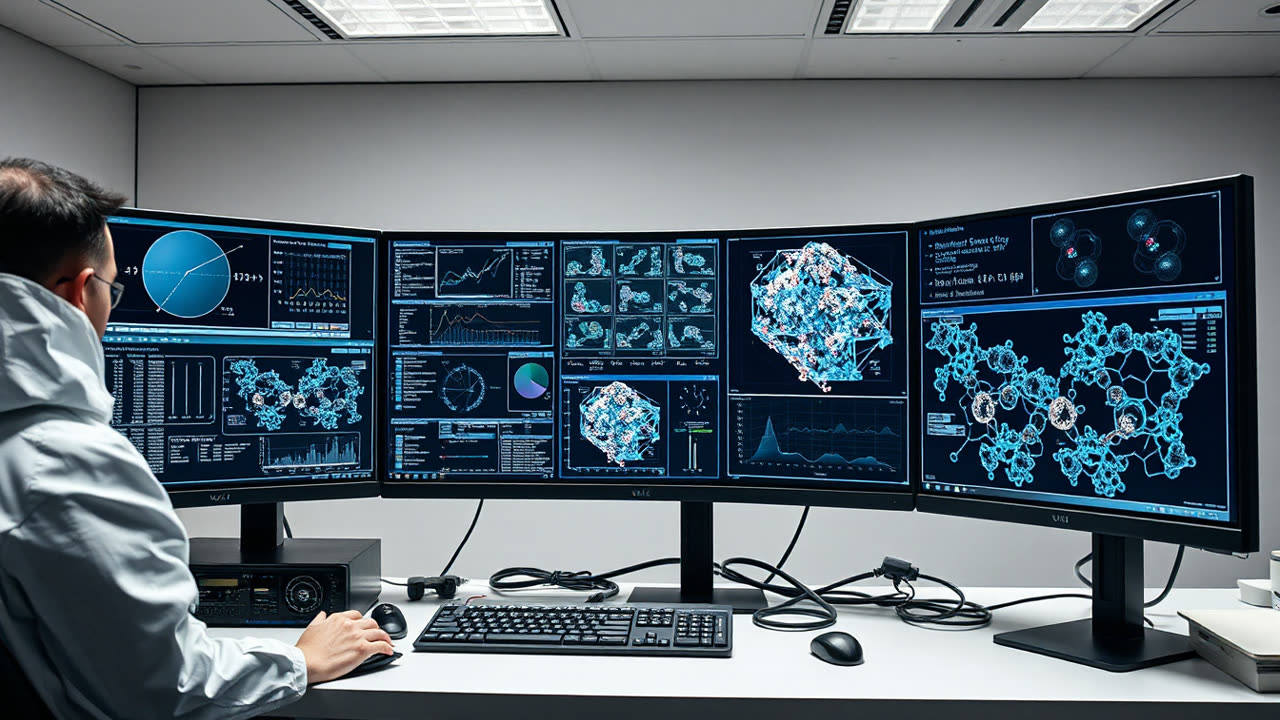
Anthropic has launched Claude Fable 5.1 and Claude Mythos 5.1, marking a significant stride in large language model (LLM) capabilities with a reported 52.6% accuracy on the challenging Terminal-Bench-Science benchmark and a dramatic 75% reduction in cache read costs. This dual release introduces the same underlying model architecture differentiated by distinct safeguard layers, with Fable 5.1 now generally available across the Claude API, AWS, Google Cloud, and Microsoft Foundry, while Mythos 5.1 remains under restricted access. The immediate availability of Fable 5.1 across major cloud platforms democratizes access to a new tier of performance, offering developers and enterprises enhanced reasoning and efficiency for complex scientific and analytical tasks.
The core innovation lies not just in raw performance but in the strategic differentiation of safeguard layers. Claude Fable 5.1 is designed for broad commercial deployment, incorporating Anthropic's established safety protocols to ensure responsible AI usage in diverse applications. Mythos 5.1, by contrast, suggests a more experimental or highly specialized deployment, likely featuring advanced, potentially more stringent, or even customizable safety mechanisms for sensitive research or high-stakes environments where extreme caution is paramount. This dual-layer approach underscores Anthropic's persistent commitment to AI safety and alignment, offering a spectrum of control that acknowledges varying risk tolerances across different use cases. The restriction of Mythos 5.1 indicates ongoing refinement or a deliberate, phased rollout to specific partners or researchers who can contribute to its responsible development and application in highly controlled settings.
The 52.6% score on Terminal-Bench-Science is particularly noteworthy. While exact details of the benchmark's composition are critical for full context, "Terminal-Bench-Science" typically evaluates an LLM's ability to engage in complex scientific reasoning, problem-solving, and knowledge synthesis, often requiring deep understanding of various scientific domains and the ability to perform multi-step logical deductions. This performance metric positions Fable 5.1 as a formidable tool for scientific research, drug discovery, materials science, and complex data analysis, potentially accelerating innovation in fields heavily reliant on intricate information processing and hypothesis generation. For users, this translates to more reliable and accurate outputs for highly technical queries, reducing the need for extensive post-processing or human intervention in scientific workflows.
Perhaps even more impactful than the performance uplift is the 75% reduction in cache read costs. In the realm of LLMs, cache reads are fundamental to efficient inference, especially for long-context windows and iterative conversational AI. This cost reduction directly translates to significantly lower operational expenses for businesses deploying Claude Fable 5.1 at scale. For developers, it means greater flexibility in designing applications that require extensive context or frequent interactions without incurring prohibitive costs. This economic advantage could be a major catalyst for broader enterprise adoption, making advanced LLM capabilities accessible to a wider array of businesses, from startups to large corporations, who might have previously been deterred by the high computational costs associated with state-of-the-art models. The ability to run more queries, process larger datasets, and maintain longer conversational histories at a fraction of the prior cost fundamentally alters the economic calculus of AI integration.
Compared to its predecessors, such as Claude 3 Opus, Fable 5.1 appears to build upon Anthropic's established strengths in reasoning and ethical AI. While specific head-to-head benchmarks against Claude 3 Opus are pending, the jump to "5.1" suggests an iterative refinement focused on both efficiency and specialized task performance, rather than a complete architectural overhaul. Against rivals like OpenAI's GPT-4o or Google's Gemini 1.5 Pro, Fable 5.1's benchmark on Terminal-Bench-Science places it squarely in the competitive landscape of top-tier models, particularly in domains requiring deep analytical rigor. The cost efficiency, however, provides a distinct competitive edge, potentially attracting users who prioritize both performance and economic viability. Anthropic's unwavering focus on constitutional AI and safety, now expressed through distinct safeguard layers, also continues to differentiate its offerings in a market increasingly concerned with responsible AI deployment.
Looking ahead, the release of Claude Fable 5.1 and Mythos 5.1 signals a maturing AI market where specialization and efficiency are becoming as crucial as raw intelligence. The emphasis on reduced cache read costs suggests a future where AI models are not only more capable but also more sustainable and scalable for real-world applications. This trend is likely to drive further innovation in hardware optimization and software architecture, as AI developers strive to maximize performance while minimizing operational overhead. The continued, albeit restricted, development of models like Mythos 5.1 also indicates Anthropic's long-term commitment to pushing the boundaries of AI safety and alignment research, possibly laying the groundwork for future models with even more sophisticated control mechanisms. The competitive landscape will undoubtedly respond with their own efficiency improvements and specialized models, leading to an accelerated pace of innovation benefiting end-users with more powerful, affordable, and safer AI tools across an ever-expanding range of applications.