Anthropic Launches Model Hardware Standard (MHS) to Bridge AI-Hardware Gap
Anthropic's new Model Hardware Standard (MHS) is a groundbreaking shared driver specification enabling AI agents to discover and safely operate physical devices, drastically cutting integration timelines from months to minutes.
✨ This content was summarized and interpreted by AI; it may contain errors — please verify accuracy with the original sources. Learn more
Listen to this story
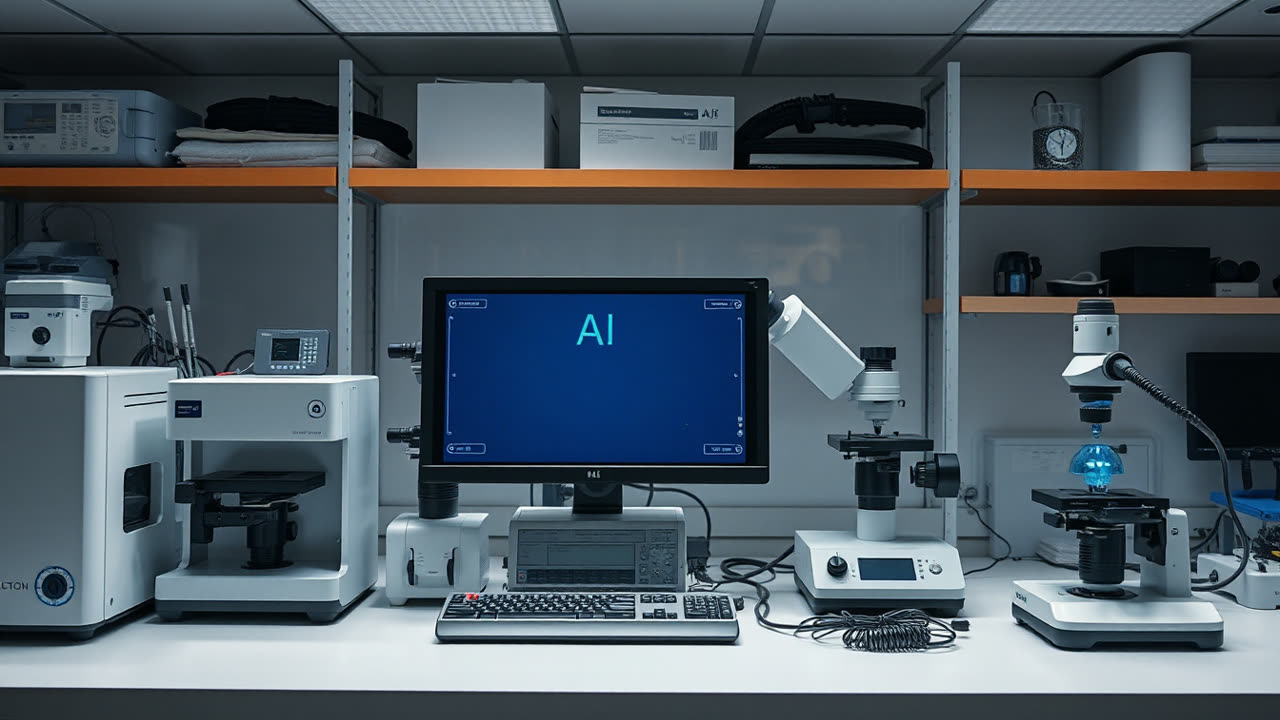
Anthropic has launched a research preview of its Model Hardware Standard (MHS), a groundbreaking shared driver specification designed to enable AI agents to discover and safely operate physical devices, promising to drastically cut instrument integration timelines from weeks or months down to mere minutes or hours. This initiative marks a pivotal step toward bridging the chasm between advanced AI models and the complex, fragmented world of physical hardware, addressing a critical bottleneck in the deployment of autonomous agents across various industries.
The immediate impact of MHS lies in its potential to dramatically accelerate the development and deployment cycles for AI-driven automation. Currently, integrating AI agents with novel hardware often requires extensive, bespoke engineering work, involving custom drivers, API adaptations, and rigorous testing for each new device or system. MHS aims to standardize this interaction, much like USB or Wi-Fi standardized peripheral connectivity, by providing a universal interface that allows AI agents to "understand" and control a wide array of instruments without needing specific prior knowledge of each device’s unique protocols. This standardization is not merely about convenience; it is a fundamental enabler for scaling AI applications in dynamic, real-world environments, from scientific laboratories and manufacturing floors to smart infrastructure and personal robotics.
For users, this means a future where AI agents can adaptively control new equipment with unprecedented ease, unlocking capabilities previously constrained by integration complexities. Imagine an AI research assistant seamlessly operating a newly introduced spectrometer or an industrial AI supervisor instantly integrating a new robotic arm into an existing workflow. This agility can significantly boost productivity, reduce operational costs, and foster innovation by democratizing access to complex hardware control for a broader spectrum of AI developers and researchers. The ability for AI agents to independently discover device capabilities and safety parameters through MHS could also lead to more robust and resilient autonomous systems, capable of self-configuring and recovering from hardware changes.
From an industry perspective, MHS represents a strategic move by Anthropic to cement its leadership in the nascent field of safe and reliable AI deployment. While other frameworks like the Robot Operating System (ROS) have provided foundational tools for robotics development, MHS specifically targets the *agent's* ability to interact with diverse hardware in a safe, generalized manner, rather than focusing solely on programmatic control for specific robotic platforms. Anthropic’s emphasis on "Constitutional AI" and safety principles is intrinsically woven into MHS, as the standard is designed to facilitate the safe operation of devices, presumably incorporating mechanisms for agents to understand and respect physical constraints and potential hazards. This focus on safety is paramount, as AI agents increasingly move from virtual environments into high-stakes physical domains. The existing landscape of device integration is characterized by proprietary protocols and fragmented ecosystems, creating significant barriers to entry and slowing the pace of innovation. MHS offers a potential antidote to this fragmentation, fostering an open ecosystem where hardware manufacturers can design devices with inherent AI compatibility, much as they design for human-readable interfaces today.
Looking ahead, the success of MHS hinges on broad industry adoption. Anthropic will need to cultivate strong partnerships with hardware manufacturers, instrument developers, and other AI companies to ensure MHS becomes a truly universal standard. Challenges will undoubtedly arise, including ensuring comprehensive compatibility across an ever-expanding array of device types, managing security implications of a standardized AI-hardware interface, and establishing robust governance for the standard's evolution. However, the potential rewards are immense. MHS could catalyze the emergence of an "internet of agents," where autonomous AI systems seamlessly interact with and control the physical world, leading to profound transformations in scientific discovery, industrial automation, healthcare, and everyday life. This standard could pave the way for a new generation of intelligent environments where AI agents are not just processing information, but actively shaping and interacting with their physical surroundings with unprecedented flexibility and safety. The research preview is merely the first step, but it signals a powerful trajectory towards a more integrated and autonomous future for AI.