Anthropic's Claude Challenges Google Gemini with New Docs and Slides Tools
Anthropic's Claude now directly generates and exports full documents and presentations from chat, intensifying its challenge against Google Gemini in the productivity suite market.
✨ This content was summarized and interpreted by AI; it may contain errors — please verify accuracy with the original sources. Learn more
Listen to this story
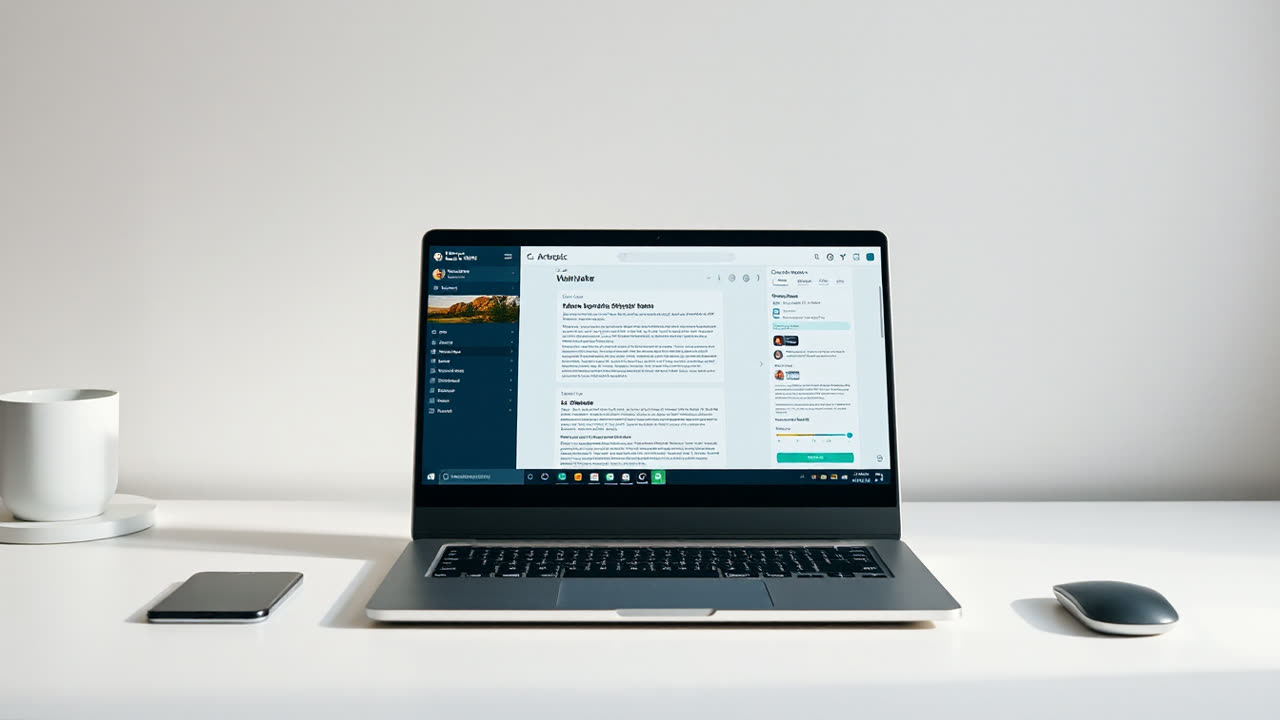
Anthropic's Claude is directly challenging Google's Gemini in the productivity suite arena with the introduction of new Docs and Slides tools, allowing users to generate and export full documents and presentations directly from Claude chats. This move, part of the broader "Co-Work" initiative unveiled by Anthropic, signifies a pivotal shift in how large language models (LLMs) are integrated into everyday enterprise workflows, moving beyond mere text generation to encompass structured content creation. The Co-Work suite, which includes these new capabilities, is designed to enable users to create, refine, and share complete files, marking Anthropic's aggressive push into the lucrative productivity software market currently dominated by Microsoft and Google.
This development matters profoundly because it democratizes sophisticated content creation, potentially reducing the time and specialized skills required to produce professional-grade documents and presentations. For users, it means a more integrated and efficient workflow, where an AI assistant can draft complex reports, marketing materials, or academic presentations from conversational prompts, then allow for direct export and further editing in standard formats. This capability could significantly boost productivity for knowledge workers, small businesses, and educational institutions, allowing them to rapidly prototype and iterate on content that previously demanded considerable manual effort and design expertise. For the industry, it intensifies the AI platform wars, pushing Google, Microsoft, and other AI developers to not only enhance their foundational models but also to build out a robust ecosystem of integrated applications that leverage their AI's unique strengths. The direct challenge to Google is particularly salient, given Gemini's existing deep integration within Google Workspace, where it offers features like drafting emails, summarizing documents, and generating images within applications like Docs, Gmail, and Slides.
Historically, AI's role in productivity software has evolved from basic grammar and spell-checking to sophisticated predictive text and content summarization. Tools like Grammarly and early iterations of AI writing assistants laid the groundwork, but these were largely augmentative. The current generation of LLMs, exemplified by Claude and Gemini, represents a leap to generative AI, capable of producing original, coherent, and contextually relevant content. Google's Gemini, for instance, has been deeply embedded across its Workspace suite, allowing users to brainstorm, write, and organize information directly within Docs, Sheets, and Slides since its rollout. Microsoft's Copilot offers similar deep integrations across its Microsoft 365 applications, assisting with everything from drafting emails in Outlook to generating presentations in PowerPoint and analyzing data in Excel. What sets Claude's new offering apart is its explicit focus on *file generation and export* as a core feature within its chat interface, potentially streamlining the creation process by moving the user directly from prompt to editable document without needing to navigate multiple application interfaces. While Gemini and Copilot offer AI assistance *within* existing applications, Claude is framing its AI as the *origin point* for these documents, a subtle but significant distinction that could shift user habits.
Looking ahead, this move signals a broader trend where AI models will increasingly become the central operating system for productivity, rather than just an add-on feature. We can anticipate further specialization and integration. Future iterations might see Claude, Gemini, and their rivals developing more nuanced understanding of document structure, design aesthetics, and brand guidelines, allowing for highly customized and on-brand content generation. Real-time collaborative AI editing, where multiple users and AI agents co-create and refine documents simultaneously, is another logical next step. Furthermore, the competition will likely shift towards not just the raw power of the underlying LLM, but also the seamlessness of its integration into diverse workflows, its ability to handle complex data inputs (e.g., generating a presentation from a spreadsheet), and its adherence to privacy and security standards, especially in enterprise environments. Anthropic's "Co-Work" initiative, by naming its new offering with a collaborative connotation, hints at a future where AI is not just a tool but a genuine digital coworker, capable of independent task execution and complex project contributions, pushing the boundaries of what a productivity suite can achieve. The ultimate winners in this rapidly evolving landscape will be those platforms that can best blend powerful AI capabilities with intuitive user experiences and robust ecosystem integrations.