Anthropic's Claude Integrates with Gmail with Mandatory Approval Feature
Anthropic's Claude now drafts emails directly within Gmail, featuring a crucial 'ask for approval' safeguard before sending.
✨ This content was summarized and interpreted by AI; it may contain errors — please verify accuracy with the original sources. Learn more
Listen to this story
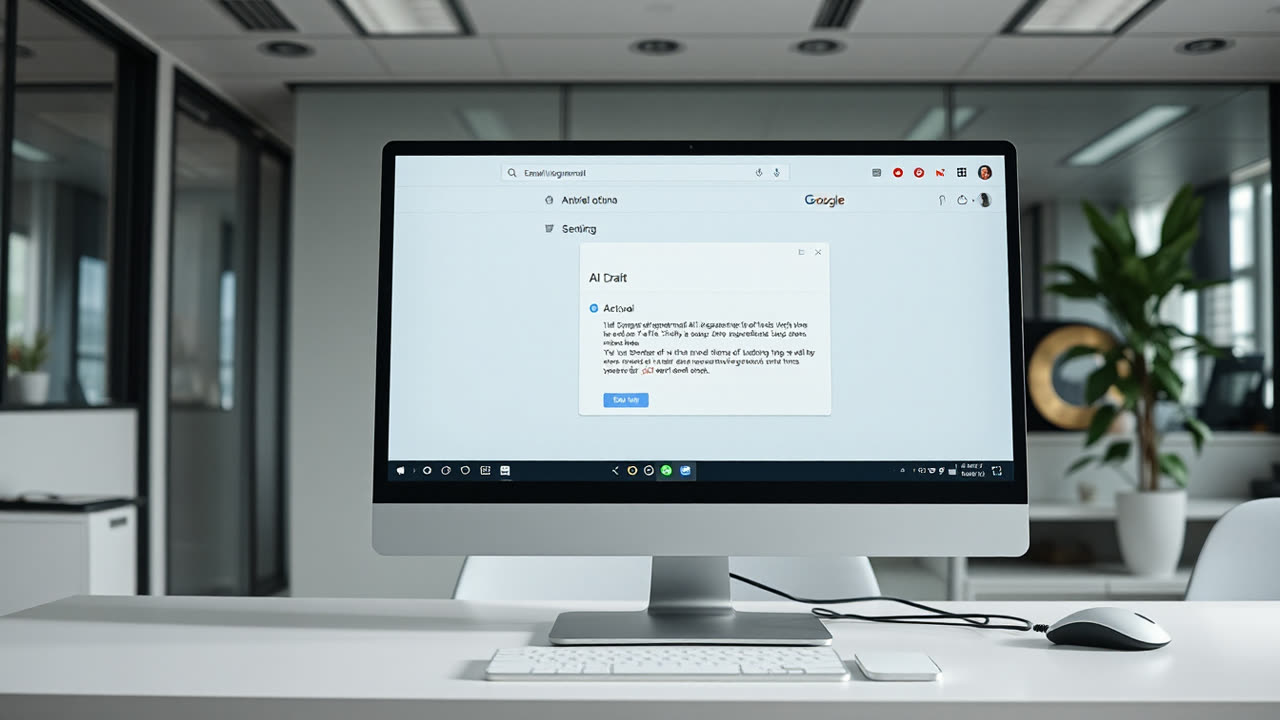
Anthropic's Claude, a leading large language model, has significantly enhanced its utility by integrating directly with Gmail, offering users the ability to draft and send emails with an essential safety net: a mandatory "ask for approval" feature before dispatch. This nuanced control mechanism addresses a primary user concern regarding AI-driven communication—the fear of errors or miscommunication—by empowering the AI to act as a sophisticated draftsperson while retaining ultimate human oversight. The integration, often facilitated through third-party tools or direct API connections, positions Claude as a powerful productivity enhancer, capable of processing complex prompts to generate contextually relevant, grammatically sound, and tone-appropriate email responses or new messages.
The "ask for approval" functionality is not merely a convenience; it is a critical design choice that underpins trust and adoption in enterprise and personal use cases. Unlike fully autonomous AI systems that might operate without direct human intervention, Claude's approach acknowledges the inherent stakes in email communication, where a single misstep can have professional or personal repercussions. This feature allows users to delegate the laborious task of drafting, often the most time-consuming part of email management, while retaining the final say on content, tone, and recipient list. For professionals inundated with correspondence, this could translate into substantial time savings, freeing up bandwidth for higher-level strategic tasks. The impact on industries reliant on rapid, accurate communication, such as customer service, sales, and public relations, is profound, enabling faster response times and more consistent messaging without sacrificing human quality control.
Comparing Claude's email capabilities to rivals reveals a competitive landscape where nuanced control is a differentiator. Google's own Gemini (formerly Duet AI) for Workspace offers similar "Help Me Write" features directly within Gmail, often pre-populating drafts based on context from previous emails or calendar events. Microsoft's Copilot for Outlook provides an analogous experience, generating email drafts, summarizing threads, and even suggesting follow-ups within the Microsoft 365 ecosystem. While both Google and Microsoft embed their AI directly into their respective email clients, offering a seamless native experience, Claude's strength lies in its broader accessibility and often its perceived conversational prowess and reasoning abilities, which some users find superior for generating more creative or complex drafts. The "ask for approval" mechanism, while conceptually similar across platforms, emphasizes user control as a core design principle for Claude, potentially appealing to users who prioritize explicit validation over implicit trust in AI. Previous generations of email tools, largely static templates or basic autofill, pale in comparison to these AI-driven systems that can understand context, synthesize information, and generate original content dynamically.
Looking ahead, the evolution of AI in email will likely see a deepening of these approval mechanisms, moving beyond simple "yes/no" prompts to more granular, AI-assisted editing suggestions. Future iterations might allow users to specify confidence thresholds for autonomous sending, where routine or low-stakes emails are dispatched automatically, while sensitive communications always require human review. We can anticipate AI models becoming even more adept at understanding corporate communication guidelines, brand voice, and individual user preferences, leading to highly personalized and compliant outputs. Furthermore, the integration will extend beyond drafting to proactive email management, such as intelligent prioritization, automated scheduling of follow-ups, and even cross-platform content generation for social media or internal communication based on email discussions. The underlying challenge for all AI developers, including Anthropic, will be to continuously refine these models to minimize "hallucinations" and ensure factual accuracy, especially in a world where AI-generated content becomes increasingly indistinguishable from human prose. The "ask for approval" feature, therefore, is not just a current safeguard but a foundational step towards building increasingly sophisticated, yet always accountable, AI assistants in the digital workspace.
FACTS: How to let Claude send emails for you — If you're interested in trying out Claude's Gmail capabilities but are worried it will make mistakes, just tell it to ask for approval before doing anything. (kaynak: Engadget, https://www.engadget.com/2249396/how-to-let-claude-send-emails/)