Anthropic's Claude Transforms into a Powerful Productivity Suite with Document Generation and Agentic 'Cowork' Capabilities
Anthropic's Claude now generates and edits editable documents like spreadsheets and presentations directly within its chat interface, challenging Microsoft Office and Google Workspace.
✨ This content was summarized and interpreted by AI; it may contain errors — please verify accuracy with the original sources. Learn more
Listen to this story
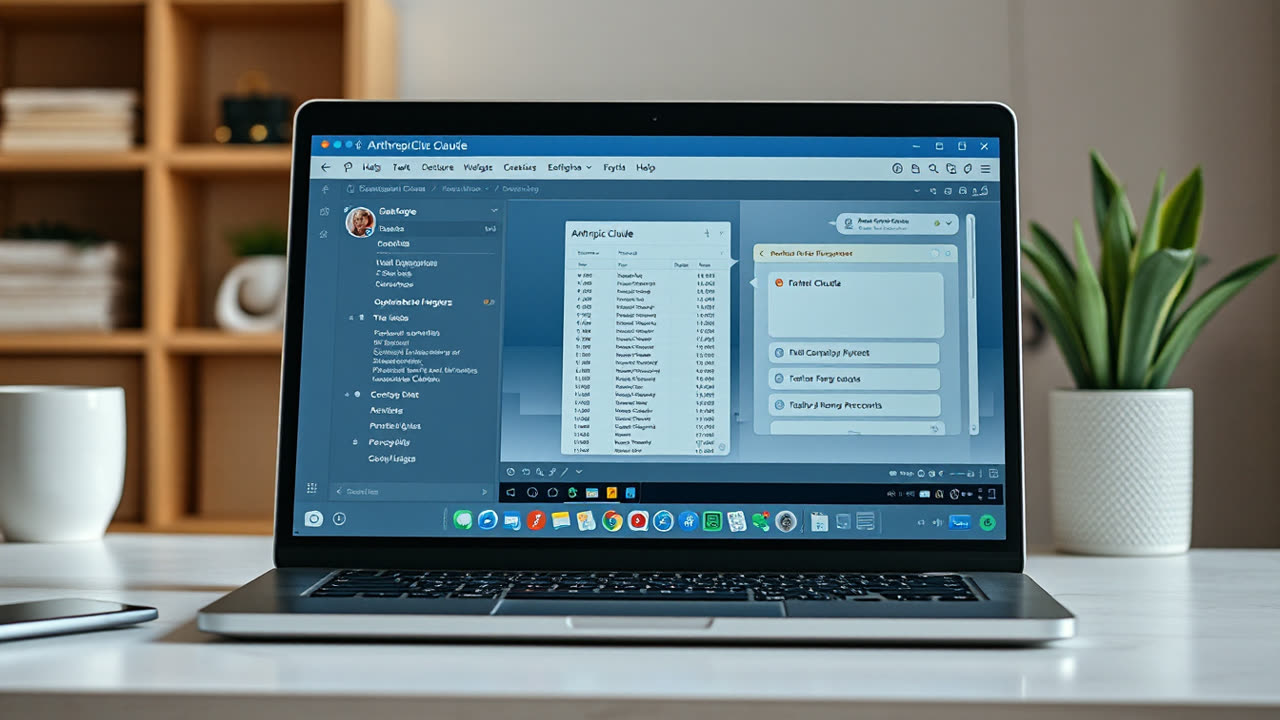
Anthropic's Claude is undergoing a significant transformation, evolving beyond a conversational AI into a powerful productivity tool capable of generating and editing a range of editable documents, including spreadsheets, presentations, and PDFs, directly within its chat interface. This substantial update, dubbed Claude Docs, also integrates "Cowork" capabilities, enabling agentic AI to tackle multi-step tasks and coordinate sub-agents for complex workflows, marking a strategic pivot for Anthropic into the competitive landscape of AI-powered productivity software. Initially rolling out to Pro and Max subscribers, with Team and Free plan users gaining access soon, this move positions Claude as a direct challenger to established players like Microsoft Office and Google Workspace.
The core news here is not merely the addition of document generation, but the seamless integration of these capabilities into Claude's existing conversational environment. Previously, users could upload and analyze files, but lacked the ability to create or manipulate them directly within the platform. Now, users can prompt Claude to create a one-page document, a sales forecast spreadsheet with working formulas, or a multi-slide presentation, and then edit these outputs within Claude or export them to Google Docs or Microsoft Word. This functionality significantly reduces friction in workflows, eliminating the need for constant copying, pasting, and reformatting. The integration of Cowork further amplifies this, allowing Claude to execute complex, multi-step tasks autonomously, such as reading work documents, performing analysis, and then generating various file types. This agentic approach, previously seen in Claude Code for developers, is now extended to knowledge-based workflows for a broader user base.
This development carries profound implications for both users and the wider tech industry. For users, it democratizes access to sophisticated document creation and data analysis, potentially leveling the playing field for individuals and small businesses without dedicated design or data science teams. Imagine a small food truck business owner uploading CSV sales data and asking Claude to generate a Google Doc with revenue analysis and visualizations—a task that previously required specialized software or expertise. The ability to generate complex financial models with scenario analysis or project trackers with automated dashboards from a simple prompt could drastically cut down on time and technical barriers. This shift transforms Claude from a mere informational assistant into an active, collaborative work partner, capable of handling the "technical work" and producing "ready-to-use files."
From an industry perspective, Anthropic is directly confronting giants like Microsoft and Google, whose productivity suites have long been cornerstones of the enterprise. Microsoft Copilot, integrated into Microsoft 365 apps like Word, Excel, and PowerPoint, already offers features like drafting documents, analyzing data, and creating presentations from natural language prompts. Similarly, Google Gemini can generate downloadable documents in various formats, including Google Workspace files (.docx, .xlsx, .csv, PDFs), and offers in-app integrations within Google Docs, Sheets, and Slides. OpenAI's ChatGPT also provides document generation, editing, and refinement across various formats, supporting uploads of DOCX, PDF, CSV, and PPT files for review or updates.
What differentiates Claude's approach is the emphasis on its agentic capabilities through Cowork, allowing it to manage and execute multi-step tasks with a shared understanding across files and conversations. While rivals offer robust document generation, Claude's integrated environment aims to provide a more holistic workflow where the AI not only generates but actively *works* with the content across different stages and formats. Anthropic's Pro plan costs $20 monthly, while Max tiers range from $100 to $200 for 5x or 20x the usage, respectively, offering distinct value propositions based on user intensity. This tiered pricing strategy reflects the increasing demand for higher usage limits, particularly for "agentic coding" and complex automations that consume tokens rapidly.
This strategic move by Anthropic signals a broader trend: the convergence of powerful large language models with practical productivity applications, moving beyond simple chatbots to intelligent co-workers. The company's internal data suggests significant productivity gains from AI adoption, with employees self-reporting using Claude in 59% of their work and achieving a 50% productivity boost, including an 8x increase in code merged per engineer per day in Q2 2026 compared to 2021-2024. This internal success likely fuels their external product development, aiming to replicate these efficiencies for a wider audience.
Looking ahead, the next phase will involve tighter integrations and increased autonomy for these AI assistants. We can anticipate further refinement in formatting accuracy, complex data handling, and the ability to seamlessly switch between document types while maintaining context. The battle for the "AI productivity suite" will intensify, pushing all major players to innovate rapidly. Anthropic's focus on agentic AI through Cowork could lead to more sophisticated, proactive assistance, where Claude anticipates user needs and even initiates tasks without explicit prompting. However, challenges remain, particularly in ensuring consistent output quality, managing user expectations regarding AI's "creativity" versus accuracy, and addressing potential ethical concerns surrounding autonomous content generation. The long-term outlook points to a future where AI isn't just a tool for generating text, but an indispensable partner in the entire document lifecycle, fundamentally reshaping how we create, collaborate, and consume information.