Anthropic's Custom AI Chip Initiative Challenges NVIDIA Dominance
The Claude-maker is building an in-house chip design team to co-design hardware and models, aiming for unprecedented speed, efficiency, and reduced reliance on general-purpose GPUs.
✨ This content was summarized and interpreted by AI; it may contain errors — please verify accuracy with the original sources. Learn more
Listen to this story
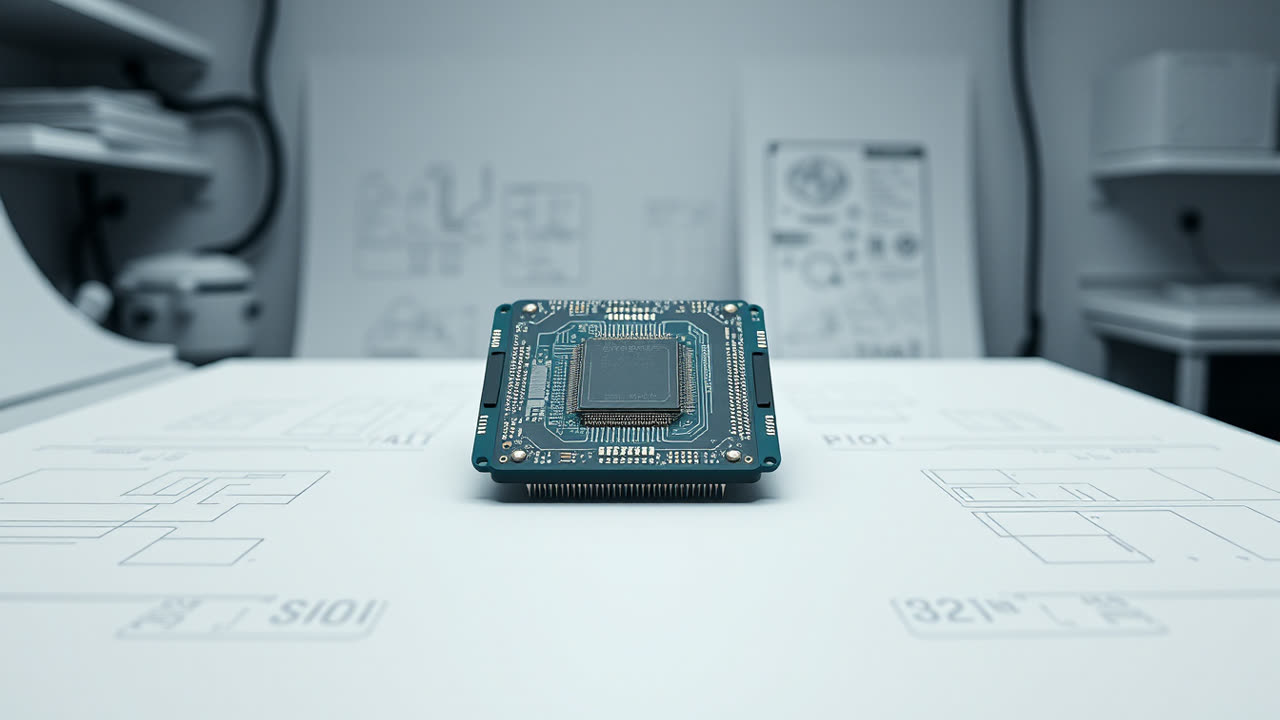
Anthropic's strategic move to establish an in-house AI chip design team signals a pivotal shift in the competitive landscape of large language model (LLM) development, directly challenging the prevailing reliance on general-purpose accelerators. The Claude-maker's stated intent to co-design hardware and models for enhanced speed and efficiency is not merely an optimization effort but a foundational re-architecture of its technological stack, aiming to unlock performance ceilings and cost efficiencies currently constrained by off-the-shelf silicon. This initiative, which began with active recruitment for specialized roles in silicon architecture, verification, and physical design, represents a significant capital investment and a long-term bet on vertical integration as the next frontier for AI innovation.
This vertical integration strategy is critical because the current generation of LLMs, like Anthropic’s Claude, are increasingly bottlenecked by the memory bandwidth and computational throughput of existing hardware, primarily NVIDIA's Graphics Processing Units (GPUs). Training and inferencing these massive models demand billions of parameters, translating into astronomical computational requirements and energy consumption. By designing custom Application-Specific Integrated Circuits (ASICs), Anthropic can tailor the silicon precisely to the unique computational patterns and memory access needs of its Claude models. This bespoke approach promises not just incremental gains but potentially exponential improvements in performance-per-watt and performance-per-dollar, directly impacting the economic viability of operating and scaling advanced AI systems. For users, this could manifest as faster response times, more complex reasoning capabilities, and potentially lower subscription costs as Anthropic passes on efficiency gains. For the industry, it intensifies the race for proprietary silicon, raising the barrier to entry for smaller players and solidifying the competitive moats of well-funded AI giants.
The decision places Anthropic squarely alongside tech titans like Google, Meta, and Amazon, all of whom have aggressively pursued custom AI silicon for years. Google's Tensor Processing Units (TPUs), first deployed in 2016, have been instrumental in powering its AI infrastructure, from Search to DeepMind, demonstrating the profound advantages of hardware-software co-design. Meta followed suit with its Meta Training and Inference Accelerator (MTIA) chips, designed to handle its vast recommendation systems and foundational AI models. Amazon Web Services (AWS) offers its Inferentia and Trainium chips, providing cloud customers with specialized hardware for both AI inference and training, respectively. Even Microsoft, while a major NVIDIA partner, has explored custom silicon for its Azure cloud services, underscoring a broad industry consensus on the strategic imperative of owning the silicon layer. Anthropic’s entry into this arena, particularly as a pure-play LLM developer, signifies a maturation of the AI industry where hardware differentiation is becoming as crucial as algorithmic innovation. Unlike its rivals, Anthropic's focus is singularly on optimizing for generative AI, potentially allowing for more specialized and efficient designs than multi-purpose accelerators.
Looking ahead, Anthropic’s custom chip initiative heralds a future where AI model development is inextricably linked with hardware innovation. The immediate challenge for Anthropic will be attracting top-tier chip design talent in a highly competitive market and navigating the immense capital expenditure and multi-year development cycles inherent in silicon engineering. Success will not only reduce Anthropic's dependence on third-party chip suppliers, mitigating supply chain risks and negotiating leverage, but also grant it a proprietary performance advantage that could allow Claude models to scale to unprecedented levels of complexity and efficiency. This could foster a new generation of AI capabilities, where the tight coupling of software and hardware enables breakthroughs in areas like multimodal understanding, advanced reasoning, and truly adaptive AI agents. The broader industry impact will likely be a further acceleration of custom silicon development, potentially leading to a more diverse and specialized AI hardware ecosystem, moving beyond the current GPU hegemony. This strategic pivot by Anthropic confirms that the next battleground for AI supremacy will be fought not just in algorithms and data, but deep within the silicon itself.