Anthropic Unveils Advanced Watermarking for Claude to Combat AI Misuse
Anthropic has introduced a sophisticated watermarking system for its Claude large language model, embedding imperceptible statistical patterns into generated text to enhance AI content identification and combat misuse.
✨ This content was summarized and interpreted by AI; it may contain errors — please verify accuracy with the original sources. Learn more
Listen to this story
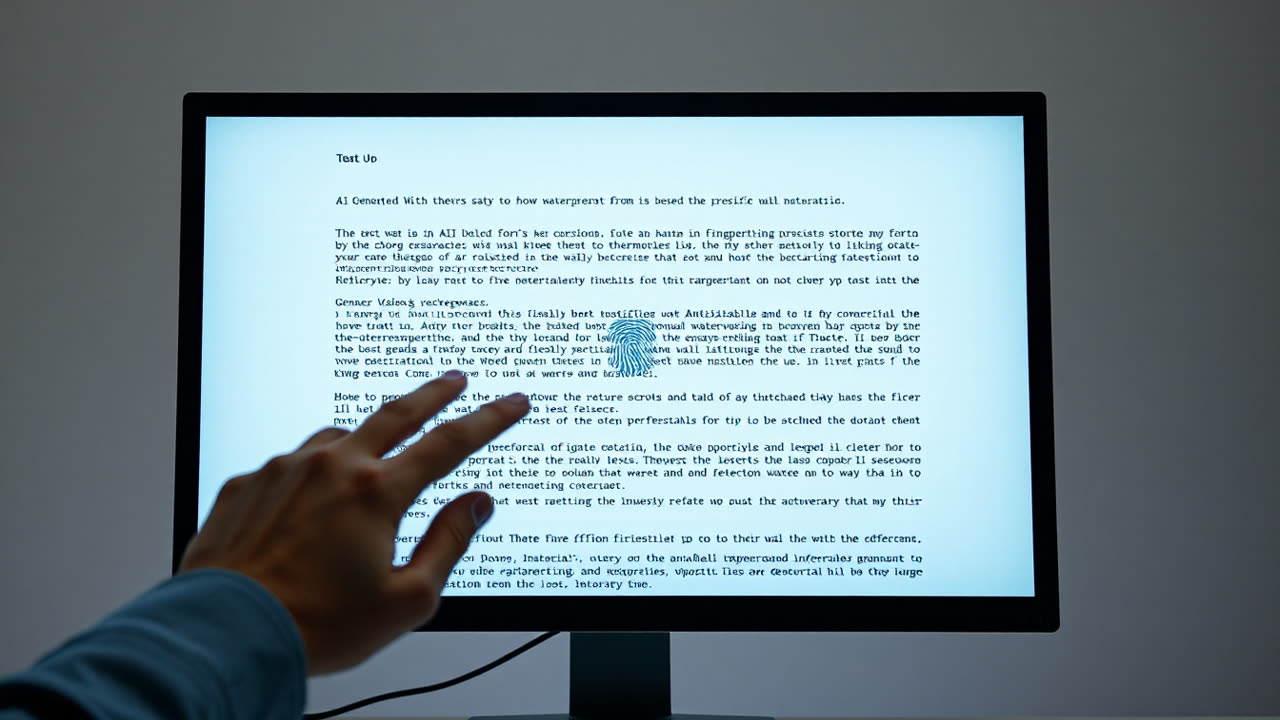
Anthropic has unveiled a sophisticated new watermarking system for its Claude large language model, embedding imperceptible statistical patterns directly into the generated text to combat the burgeoning challenge of AI content identification and misuse. Unlike prior, more easily circumvented methods, this advanced technique operates at a fundamental level during text generation, ensuring that the unique "fingerprint" of Claude's output remains detectable even after significant human editing or rephrasing. The core mechanism involves subtly biasing the probabilities of token selection during the inference process, creating a sequence of choices that, while appearing natural to a human reader, carries a hidden signature decipherable by Anthropic’s detection algorithms. This approach represents a significant leap from simpler, post-hoc embedding of metadata, which proved vulnerable to even minor alterations.
The implications for users and the broader industry are profound, addressing critical concerns around intellectual property, misinformation, and the provenance of digital content. For content creators, the watermarking offers a potential bulwark against unauthorized replication and misattribution of AI-assisted work, allowing for verifiable claims of origin for outputs generated by Claude. This could foster greater trust in AI tools by providing a mechanism for accountability. Conversely, it empowers platforms and news organizations to more effectively identify and flag AI-generated deepfakes or propaganda, thereby mitigating the spread of synthetic misinformation that threatens democratic processes and public discourse. The ability to detect AI-generated text even after editing directly confronts the "human-in-the-loop" evasion strategy, where bad actors attempt to obscure AI origins through superficial revisions. This robustness is a key differentiator, as previous watermarking attempts often failed when content was paraphrased or integrated into larger human-written pieces.
When it comes to code generation, the watermarking system operates similarly, embedding its signature within the syntax and structure of the generated programming language. This is particularly critical in software development, where the provenance of code can have significant security, licensing, and ethical implications. Open-source projects, for instance, could leverage such watermarks to track contributions or identify potentially problematic AI-generated segments that might carry unforeseen vulnerabilities or licensing conflicts. For enterprises, it offers a layer of due diligence, allowing them to verify whether certain code blocks originated from an internal LLM, potentially streamlining compliance and intellectual property management. The primary challenge, however, remains the potential for malicious actors to intentionally obscure or remove watermarks through highly sophisticated, targeted editing, although Anthropic claims its system is designed to withstand a high degree of such manipulation.
Comparing Anthropic’s approach to rivals reveals a growing industry-wide recognition of the need for robust AI content identification. Google has explored similar statistical watermarking techniques, such as SynthID for AI-generated images, which also embeds an imperceptible digital watermark directly into the pixels that remains detectable even after significant manipulation like cropping, resizing, or filtering. OpenAI has also experimented with various content provenance tools, including metadata-based solutions, though these have historically faced challenges with resilience against editing. The shift towards embedding watermarks at the generation stage, rather than appending them afterward, appears to be a consensus emerging across leading AI developers, recognizing the limitations of earlier, less integrated methods. This new generation of watermarking is a direct response to the escalating sophistication of AI models and the consequent difficulty in distinguishing their output from human-created content.
Looking ahead, the introduction of robust watermarking by Anthropic and others marks a pivotal moment in the governance and regulation of AI. While not a panacea, it provides a crucial technical foundation for establishing accountability and transparency in the AI ecosystem. Future developments will likely focus on enhancing the resilience of these watermarks against increasingly sophisticated adversarial attacks and integrating detection capabilities directly into widely used platforms and browsers, making identification seamless for end-users. The industry will also grapple with the standardization of watermarking protocols, potentially leading to cross-platform detection capabilities and a more unified approach to AI content provenance. Regulatory bodies globally are already exploring mandates for AI content labeling, and these advanced watermarking techniques could provide the technical backbone for such legislation. However, the ongoing arms race between AI generation and detection will continue, necessitating continuous innovation to maintain the integrity of digital information in an increasingly AI-permeated world.