Apple Confirms CarPlay Video Playback with iOS 27, Intensifying In-Car Entertainment Battle
Apple's iOS 27 update will bring native video playback to CarPlay, directly challenging Google's Android Auto and transforming in-car entertainment.
✨ This content was summarized and interpreted by AI; it may contain errors — please verify accuracy with the original sources. Learn more
Listen to this story
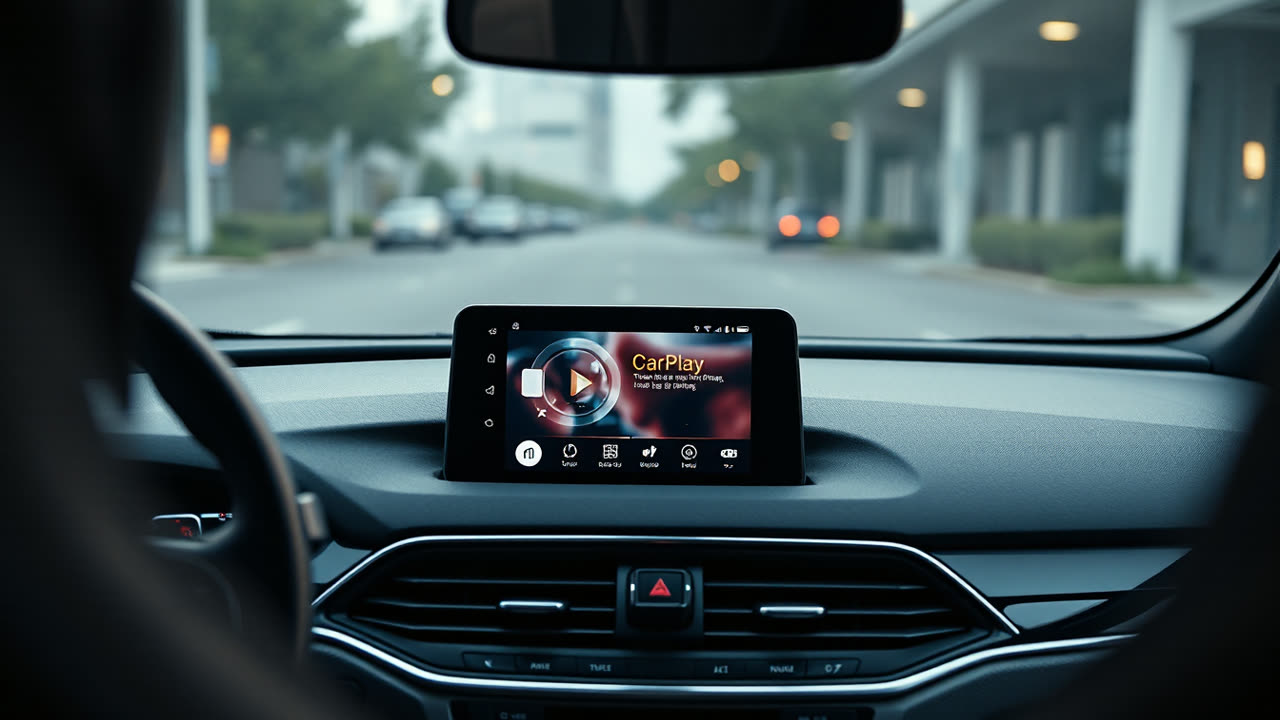
Apple has confirmed that iOS 27 will introduce native video playback capabilities to CarPlay, a significant evolution that was subtly unveiled following Google's own recent strides in bringing similar functionality to Android Auto. This long-anticipated feature, allowing users to stream video content directly through their vehicle’s infotainment screen, marks a pivotal moment for in-car entertainment, extending the smartphone experience deeper into the automotive ecosystem. The update is expected to leverage a new framework within iOS 27, enabling compatible apps to project video content, likely restricted to parked vehicles or rear-seat displays to adhere to safety regulations.
The integration of video playback within CarPlay is more than a mere feature addition; it represents a strategic move by Apple to maintain and expand its dominance in the connected car space. For users, the immediate impact is a richer, more versatile in-car experience. Long waits during EV charging, extended road trip breaks, or even just idle time in a parked car can now be filled with streaming content from services like Apple TV+, Netflix, or Disney+, assuming app developers embrace the new API. This directly addresses a growing consumer demand for seamless entertainment continuity between their personal devices and their vehicles, transforming the car into an extension of their digital living room. The convenience of not needing a separate device or mounting solution for video consumption could significantly enhance user satisfaction and drive further adoption of CarPlay-compatible vehicles.
From an industry perspective, this development intensifies the competition between Apple and Google in the automotive sector. Google had already begun rolling out video streaming capabilities for Android Auto, particularly through its "Built-in" experience in select vehicles, offering apps like YouTube and Tubi. Apple’s move to follow suit with iOS 27 ensures feature parity, preventing a potential competitive disadvantage and preserving CarPlay’s appeal. This arms race for in-car features pushes automotive manufacturers to invest more heavily in robust infotainment hardware and software integration, capable of handling high-bandwidth streaming and complex application environments. It also opens new revenue streams for app developers and content providers, who can now target a captive audience within the vehicle. Furthermore, the move could accelerate the adoption of larger, higher-resolution in-dash displays, turning them into true multimedia hubs rather than just navigation and audio interfaces.
Historically, CarPlay has focused primarily on navigation, communication, and audio, mirroring essential iPhone functions in a simplified, driver-friendly interface. The prior generation of CarPlay, while highly functional, largely avoided distracting visual elements beyond maps and album art. The shift to video playback marks a significant departure, reflecting a broader industry trend towards autonomous or semi-autonomous driving, where driver attention might be less exclusively tied to the road, or where passengers are explicitly catered for. This aligns with a future vision where cars become "third spaces" – extensions of home and office – for work, relaxation, and entertainment. The comparison to Android Auto's prior rollout underscores a reactive, yet critical, strategic decision by Apple to ensure its ecosystem remains comprehensive. While Android Auto often had an advantage in customization and broader device compatibility, CarPlay has consistently been lauded for its intuitive interface and tight integration with the Apple ecosystem. The addition of video brings a crucial entertainment layer that was previously a gap.
Looking ahead, the introduction of video playback in CarPlay with iOS 27 is likely just the beginning of a more immersive and personalized in-car experience. We can anticipate deeper integration with Apple's services, potentially offering exclusive content or enhanced features for Apple TV+ subscribers within the CarPlay environment. The next logical step might involve more sophisticated multi-zone entertainment, allowing front and rear passengers to consume different content simultaneously on dedicated screens, perhaps with spatial audio integration for a truly individualized soundscape. Furthermore, as advanced driver-assistance systems (ADAS) evolve towards higher levels of autonomy, the regulatory landscape around in-car video consumption for drivers may relax, potentially enabling video playback even while the vehicle is in motion, though this would require significant advancements in safety protocols and legislative changes. The true potential lies in a fully integrated digital cockpit where CarPlay and the vehicle's native systems seamlessly blend, offering a cohesive, intelligent, and entertaining environment that adapts to the occupants' needs and preferences. This evolution will not only redefine the driving experience but also solidify the car's role as a central hub in our increasingly connected lives.