Apple Escalates Spyware Defense with Direct Lock Screen Alerts
Apple now issues direct push notifications to iPhone lock screens, immediately alerting users to government-backed spyware attacks, marking a critical shift in its defense strategy.
✨ This content was summarized and interpreted by AI; it may contain errors — please verify accuracy with the original sources. Learn more
Listen to this story
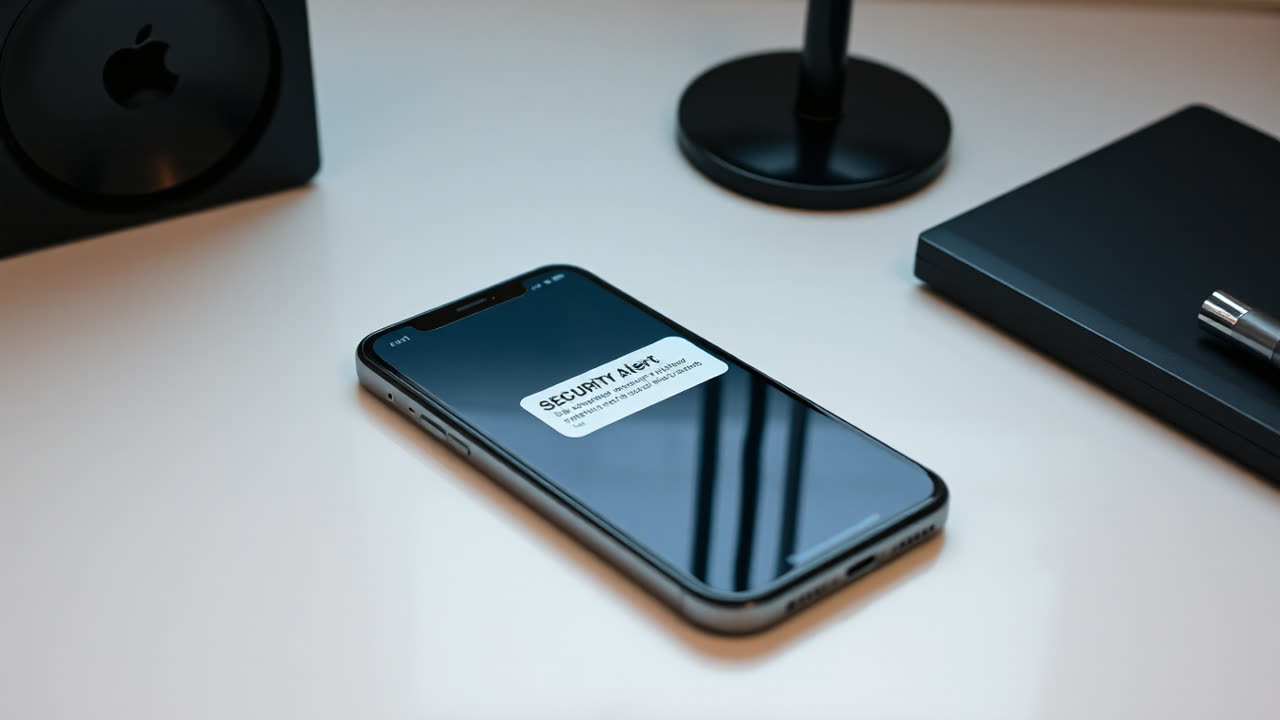
Apple has significantly escalated its defense against state-sponsored digital threats, now issuing direct push notifications to iPhone lock screens when it detects government-backed spyware targeting a user's device. This proactive measure, detailed in an August 13, 2026, TechCrunch report, marks a pivotal shift from previous, more discreet notification methods, making the threat immediately visible and undeniable to the user. The change underscores a growing urgency within Cupertino to arm its most vulnerable users—often journalists, activists, and dissidents—with real-time, unambiguous alerts against sophisticated and often devastating surveillance tools.
This direct-to-lock-screen approach is a profound development in mobile security, transforming what was once a behind-the-scenes security advisory into an urgent, front-facing warning. Previously, Apple might have sent an email or a notification within a user's Apple ID account, which could be easily overlooked or dismissed as a phishing attempt. The new push notification, however, bypasses potential email compromises and ensures immediate visibility, forcing users to confront the reality of a targeted attack. This immediacy is critical because state-sponsored spyware, such as those from the NSO Group or Candiru, can exfiltrate vast amounts of data—messages, photos, location, and even activate microphones and cameras—often without any user interaction (zero-click exploits). For individuals in high-risk professions or regions, a delay in recognizing such an attack could have severe personal and professional consequences, ranging from privacy breaches to physical danger. The starkness of a lock screen alert is designed to cut through digital noise, prompting immediate action like device isolation, data backup, and seeking expert security assistance.
The move also represents Apple's continued commitment to user privacy as a core differentiator, particularly against a backdrop of increasing state surveillance capabilities. While Apple has long touted its robust security architecture, the persistent emergence of advanced spyware has demonstrated that even the most secure consumer devices can be breached by determined, well-funded adversaries. This new notification system acknowledges that perfect prevention is elusive and shifts focus towards rapid detection and user empowerment. It implicitly places the onus on governments to justify their use of such invasive tools, as Apple is now effectively making their targeting efforts public, at least to the target. This transparency could lead to greater scrutiny of the global spyware industry and the ethics of its clients.
Compared to its rivals, Apple's direct lock-screen notification system sets a new benchmark for user-facing threat intelligence. While Google's Project Zero and other security research groups actively identify and report vulnerabilities, and Android devices receive security updates, a direct, unequivocal push notification for a *government-sponsored* attack on the lock screen is a more aggressive and user-centric approach. Historically, both iOS and Android have faced challenges from sophisticated spyware, but Apple's unified hardware and software ecosystem often allows for more rapid and comprehensive security patches. However, the sheer cost and sophistication of tools like Pegasus mean they often target vulnerabilities unknown to the public (zero-days), making detection after the fact a crucial line of defense. This new system leverages Apple's unique ability to monitor its vast network for anomalous activity indicative of such advanced threats, a capability that a fragmented Android ecosystem struggles to match consistently across all devices and manufacturers.
Looking ahead, this initiative is likely to have several ripple effects. For users, it provides an unprecedented level of awareness, but also potentially heightens anxiety. The challenge for Apple will be to ensure these notifications are highly accurate to avoid "cry wolf" scenarios that could lead to user complacency. False positives, while rare with state-sponsored attacks, could erode trust. For the industry, this could spur other platform providers to develop similar, equally visible threat notification systems, raising the bar for consumer device security across the board. Furthermore, it might force spyware vendors and their government clients to develop even stealthier methods to avoid detection, intensifying the ongoing cat-and-mouse game between attackers and defenders. We may see an increased focus on hardware-level exploits or supply chain attacks if software-based vulnerabilities become too risky to deploy due to rapid platform-level detection. Ultimately, Apple's new notification system is more than a security feature; it's a political statement, reinforcing the company's stance against unchecked government surveillance and empowering individuals with critical, actionable intelligence in an increasingly hostile digital landscape.