Apple Home's AI Video Summaries Come with a Steep $60/Month Price Tag
Apple is integrating its new Apple Intelligence features into HomeKit Secure Video, offering AI-powered video summaries, but at a premium that could reach up to $60 per month.
✨ This content was summarized and interpreted by AI; it may contain errors — please verify accuracy with the original sources. Learn more
Listen to this story
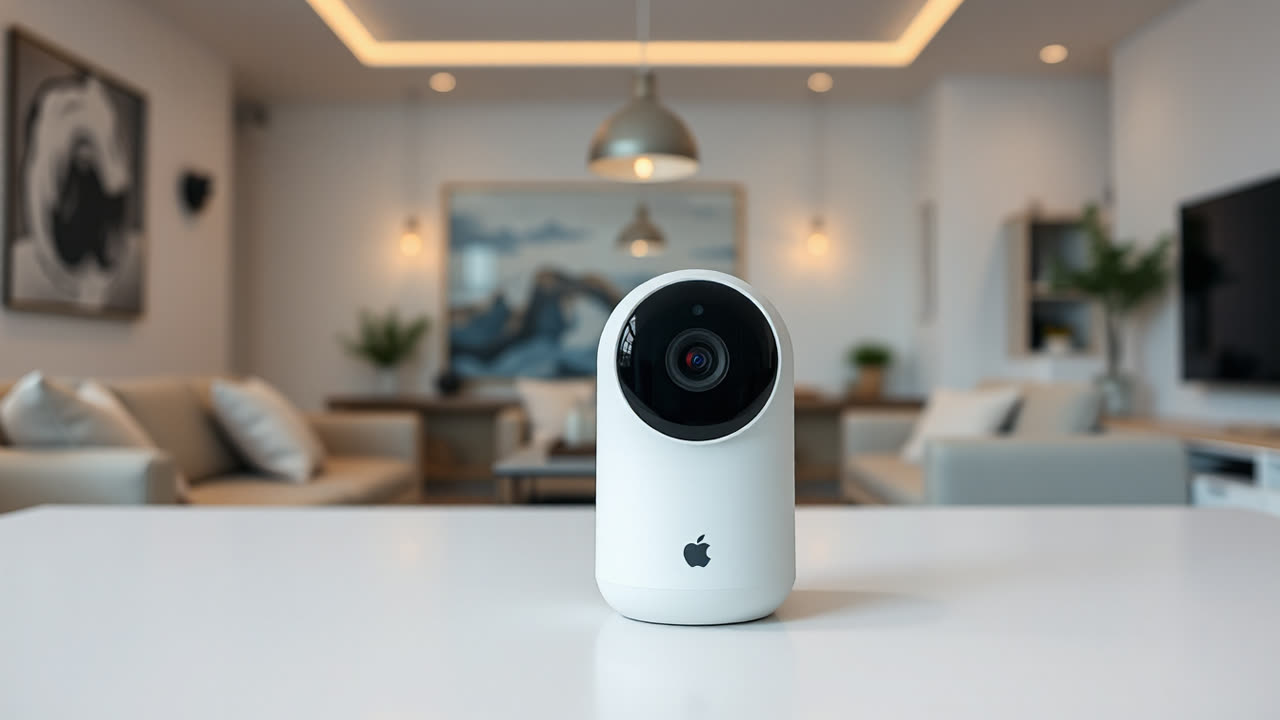
Apple Home's integration of Apple Intelligence, arriving with iOS 27 and tvOS 27, introduces AI-powered video summaries for HomeKit Secure Video, but at a premium that could reach up to $60 per month, marking a significant escalation in Apple’s smart home subscription strategy. This new tier, presumably building upon existing iCloud+ plans, aims to deliver a fundamentally more intelligent and proactive home security experience, moving beyond mere event recording to contextual awareness. The core offering, AI-powered video summaries, promises to distill hours of footage into concise, actionable clips, highlighting crucial moments like package deliveries, unfamiliar faces, or unusual activity without requiring users to scrub through extensive timelines. This capability leverages the on-device processing power of Apple Intelligence, potentially offering enhanced privacy by performing much of the analytical work locally before encrypted upload to iCloud.
The introduction of such a high-end subscription tier profoundly impacts users by shifting the value proposition of HomeKit Secure Video from a supplemental cloud storage and basic object recognition service to a sophisticated, AI-driven monitoring solution. For existing HomeKit users, the decision becomes whether the added convenience and advanced insights of AI summaries justify a potentially steep increase over current iCloud+ plans, which typically range from $0.99 for 50GB up to $19.99 for 2TB, with HomeKit Secure Video support for an unlimited number of cameras included in higher tiers. The "up to $60 a month" figure suggests a tiered structure, possibly based on the number of cameras, the duration of video history, or the depth of AI analysis available. This pricing could alienate a segment of the user base accustomed to Apple's more accessible ecosystem, potentially pushing them towards rival platforms that offer similar AI capabilities at a lower entry point or as part of a broader security package.
In the broader industry, Apple's move to a premium AI-centric subscription redefines the competitive landscape for smart home security. Rivals like Google Nest and Amazon's Ring have long offered advanced AI features, such as familiar face detection, intelligent alerts for people or packages, and activity zones, typically bundled within their respective Nest Aware and Ring Protect subscription plans. Google Nest Aware, for instance, starts at $8 per month for all cameras at one location, offering 30 days of event video history and intelligent alerts, with Nest Aware Plus at $15 per month extending to 60 days of event history and 10 days of 24/7 video history. Ring Protect plans similarly begin at $4.99 per month per device, or $10 per month for all devices at one location, including person and package alerts, and 180 days of video history. While these services provide robust AI, Apple's emphasis on on-device processing via Apple Intelligence, promising enhanced privacy and potentially faster analysis, could differentiate its offering despite the higher cost. The integration of these features directly into the Apple Home app also offers a seamless, unified experience that competitors, often operating with disparate apps for different devices, struggle to match.
The background of HomeKit Secure Video saw Apple initially offer a compelling privacy-focused alternative to competitor services. Introduced with iOS 13, HKSV allowed users to store encrypted video footage in iCloud+, counting against their storage limits only for the actual footage after on-device analysis had filtered out irrelevant motion. This privacy-first approach, coupled with end-to-end encryption, distinguished Apple from rivals who often rely more heavily on cloud-based processing. The "injection of Apple Intelligence" now signifies Apple's ambition to combine its strong privacy foundations with cutting-edge AI, moving beyond basic person, animal, and vehicle detection to genuine contextual understanding and summarization. This evolution mirrors the broader trend in AI, where summarization and natural language processing are becoming paramount, aiming to reduce notification fatigue and deliver only the most pertinent information to users.
Looking ahead, this premium tier for Apple Intelligence in HomeKit Secure Video sets a precedent for how Apple might monetize advanced AI features across its ecosystem. It suggests a future where deeper integration of Apple Intelligence, offering personalized and proactive insights, will increasingly reside behind subscription paywalls. This strategy could extend to other HomeKit accessories, potentially offering AI-driven energy management, predictive maintenance alerts for smart appliances, or even advanced environmental monitoring, each with its own associated cost or bundled into higher iCloud+ tiers. The success of this $60 per month offering will likely dictate the pace and scope of Apple's future AI monetization in the smart home. If adopted by a significant segment of its affluent user base, it could solidify Apple's position as a premium provider of intelligent home experiences, further entrenching users within its ecosystem through indispensable, AI-powered convenience and security. However, if the price point proves too high, it risks segmenting the HomeKit user base and creating an opportunity for competitors to capture the mid-to-high-tier market with more competitively priced, albeit potentially less private, AI solutions. Ultimately, Apple’s foray into high-cost, AI-powered home security underscores a strategic pivot towards monetizing intelligence itself, rather than just hardware or storage.