Apple HomeKit Undergoes Major AI Overhaul with iOS 27 and Ambitious Hardware Roadmap
Apple is set to profoundly transform its HomeKit ecosystem with iOS 27, integrating Apple Intelligence for context-aware automation, enhanced security, and a future roadmap of first-party AI-powered smart home hardware including a 'HomePad' display and security devices.
✨ This content was summarized and interpreted by AI; it may contain errors — please verify accuracy with the original sources. Learn more
Listen to this story
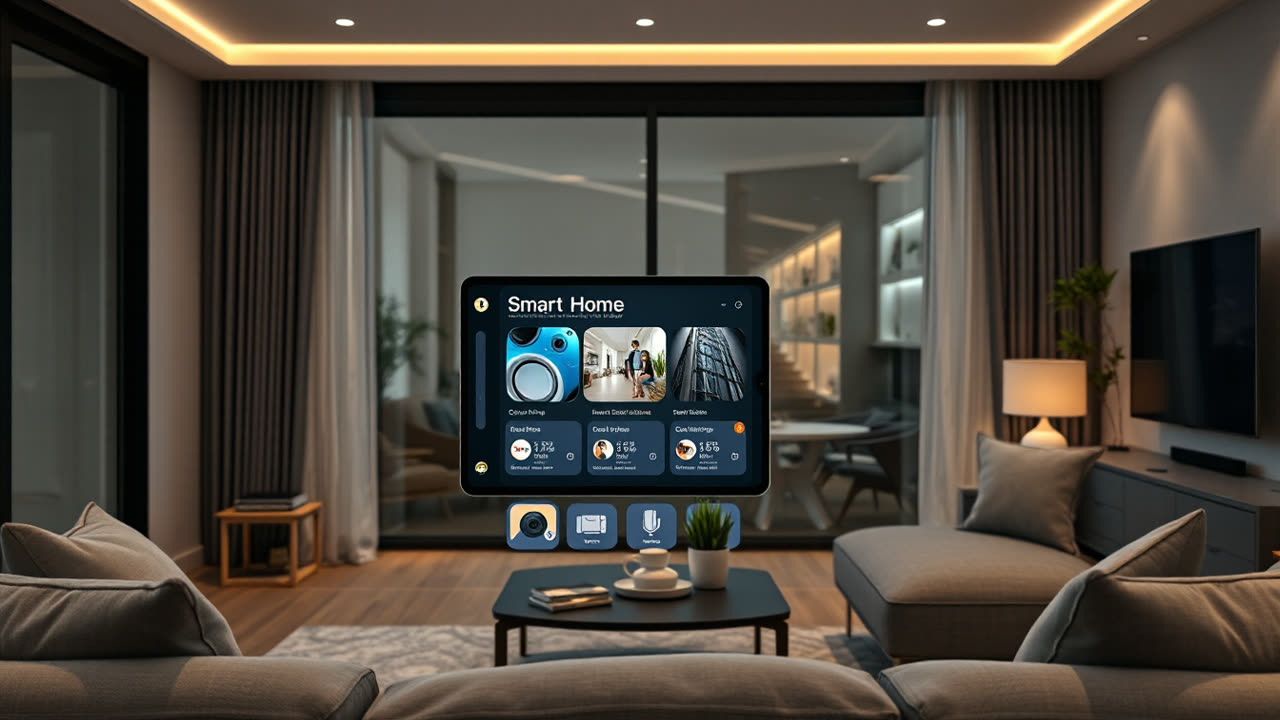
Apple's HomeKit ecosystem is on the cusp of a profound transformation, with iOS 27 poised to deliver a suite of AI-powered enhancements that fundamentally redefine smart home interaction and security. The upcoming software release, expected this fall following public betas this summer, integrates Apple Intelligence deeply into the Home app, ushering in an era of context-aware automation and intelligent monitoring that moves beyond mere commands to proactive assistance. This isn't merely an incremental update; it represents Apple's most significant push into the smart home market in years, signaling a strategic pivot to leverage its burgeoning AI capabilities and proprietary hardware to compete more aggressively with established rivals.
The core of iOS 27's HomeKit revamp lies in its sophisticated application of Apple Intelligence, particularly within security and notification management. Users can anticipate smarter notifications, with the Home app now capable of summarizing important alerts, such as a person detected at the door or smoke, preventing lock screens from being flooded with individual accessory pings. This intelligent grouping and summarization extend to security camera footage, where AI will generate concise descriptions of events, allowing users to quickly grasp what transpired without scrubbing through lengthy recordings. Furthermore, camera systems will gain enhanced AI capabilities for detecting faces or animals, and the Home app will intelligently combine footage from multiple cameras to provide a comprehensive, multi-angle view of an event, complete with short, AI-generated descriptions and natural-language search functionality for specific occurrences. A significant upgrade for HomeKit Secure Video is the introduction of 4K video recording support for compatible cameras, a substantial leap from the prevalent 1080p, promising greater detail for identifying people or objects. Beyond security, the Home app is also set to improve general reliability and gain the ability to update software on all connected Apple TVs simultaneously.
These advancements matter immensely for users, addressing long-standing pain points in smart home management. The reduction of notification fatigue, coupled with AI-powered summaries and search, will transform reactive monitoring into an efficient, insightful experience, saving users valuable time and enhancing peace of mind. For the industry, Apple's deeper foray into AI-driven smart home solutions, particularly with its emphasis on privacy and on-device intelligence, sets a new competitive benchmark. While Amazon Alexa and Google Home have historically led in AI-driven automation, Apple's distinct approach could make HomeKit the preferred platform for privacy-conscious consumers. The global autonomous AI in smart homes market is projected to experience robust growth, soaring from an estimated USD 22.66 billion in 2026 to approximately USD 171.29 billion by 2035, at a compound annual growth rate of 25.20%. This indicates a massive market opportunity that Apple is now aggressively targeting.
Historically, HomeKit has been perceived as lagging in AI features compared to rivals, with Apple relying heavily on third-party accessories for ecosystem breadth. Competitors like Amazon's Alexa boast over 140,000 compatible smart home devices, and Google Home supports over 50,000, while HomeKit has trailed with around 10,000 certified products. However, Apple's strategy is evolving. The company is now making a "major smart home push" with a wave of new, first-party AI-powered hardware designed to act as central hubs. This includes a refreshed HomePod mini and Apple TV 4K, both expected to feature faster processors (such as the S9 chip or better for HomePod mini and A17 Pro for Apple TV 4K) to support the advanced Siri AI capabilities. More notably, Apple is reportedly introducing a new smart display hub, internally dubbed "HomePad," slated for release between October 2026 and early 2027. This device is anticipated to feature a 7-inch square display running a tvOS-based operating system with elements from iOS and watchOS, complete with facial recognition for personalized content display. Furthermore, Apple is reportedly developing its own security camera and video doorbell, alongside a more ambitious "tabletop robot" with a movable limb and a larger display, integrating Siri and Apple Intelligence for context-aware interactions. This comprehensive hardware roadmap, combined with Siri's long-awaited AI overhaul (which was reportedly delayed until its rebranding and release with iOS 27), signifies Apple's intent to own more of the smart home experience directly.
Looking ahead, the integration of generative AI into smart home systems is expected to revolutionize user interaction, making voice assistants more conversational and capable of understanding nuanced requests, offering personalized responses and suggestions. The Matter standard, which simplifies interoperability across different brands, will be crucial, enabling AI systems to understand and coordinate devices using common data structures. This means that automations could become significantly smarter and more predictive, transcending brand boundaries to orchestrate lights, thermostats, blinds, and plugs into seamless, coherent routines based on observed user behavior and contextual data. Apple Intelligence is expected to reduce setup complexity by suggesting routines rather than requiring manual programming. The success of these ambitious plans hinges critically on the revamped Siri AI proving to be a genuinely capable and reliable assistant, capable of delivering on the promise of a truly intelligent, predictive, and private smart home ecosystem. With the smart home market projected to reach USD 887.4 billion by 2033, growing at a CAGR of 23.1% from 2026, Apple's concerted AI-driven push in iOS 27 and beyond positions it to capture a significant share of this rapidly expanding landscape.