Apple Intelligence's Granular User Control Redefines AI Privacy
Apple Intelligence introduces unprecedented user control over its generative AI features, directly addressing data privacy and algorithmic autonomy concerns by allowing granular management of data sharing and processing.
✨ This content was summarized and interpreted by AI; it may contain errors — please verify accuracy with the original sources. Learn more
Listen to this story
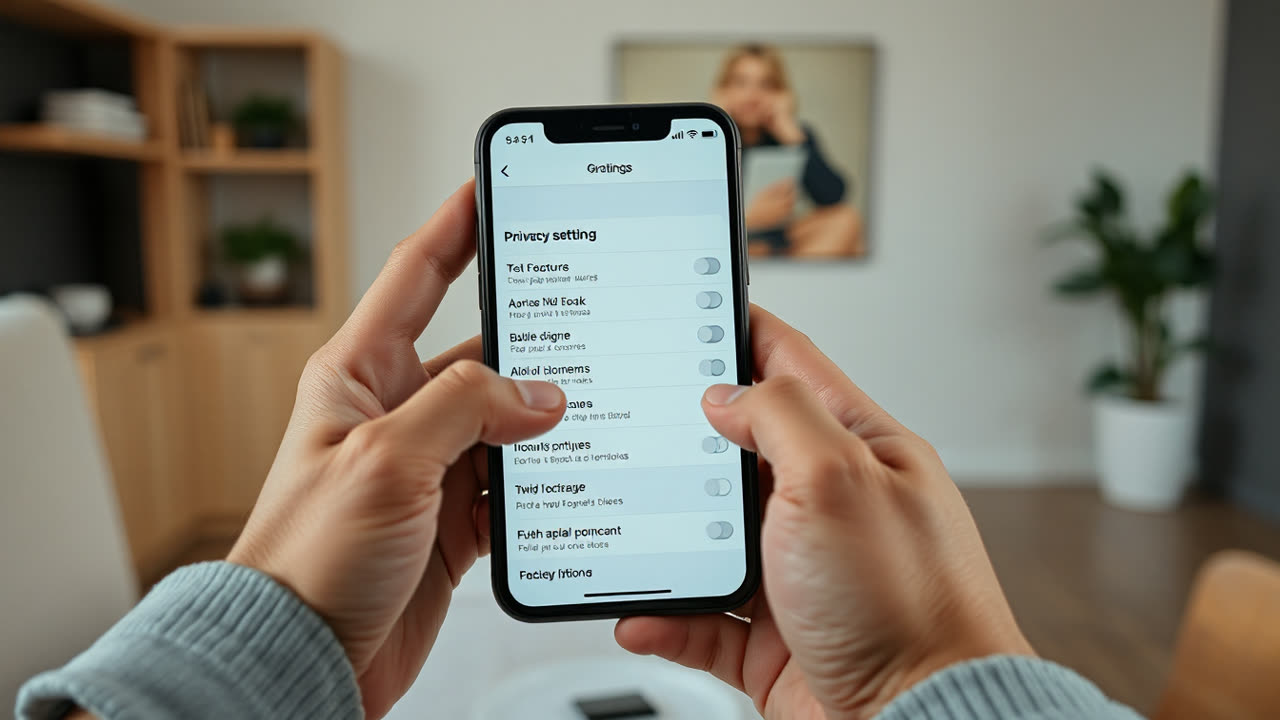
Apple Intelligence, Apple's personalized generative AI system, offers users an unprecedented degree of control over its features, directly addressing growing concerns about data privacy and algorithmic autonomy in the age of artificial intelligence. While deeply integrated into iOS 18, iPadOS 18, and macOS Sequoia, users are not forced into a one-size-fits-all AI experience; instead, they can disable or restrict various facets of the system, from core writing tools to Siri's enhanced capabilities and even the integration with ChatGPT. This granular control is a significant departure from typical blanket opt-ins for AI services, allowing individuals to manage data sharing and processing based on their comfort levels.
The ability to manage Apple Intelligence stems from its hybrid architecture, which leverages both on-device processing for personal context and Apple's Private Cloud Compute for more complex tasks, ensuring data remains private. Users can navigate to Settings to find options for disabling specific AI-powered writing tools across Mail, Notes, Pages, and other applications, which offer features like Rewrite, Proofread, and Summarize. Furthermore, Siri's expanded understanding and on-screen awareness, which allows it to comprehend personal context and take actions within apps, can be individually curtailed. A particularly notable control point is the ability to manage the direct integration with OpenAI's ChatGPT. While Apple has positioned this as an optional feature for queries beyond Apple Intelligence's scope, users must explicitly grant permission for their queries and documents to be sent to ChatGPT servers, with a clear option to decline or revoke this access at any time. This level of explicit user consent for third-party AI integration sets a new precedent for platform providers.
This user-centric approach to AI control holds substantial implications for both users and the broader tech industry. For users, it translates into enhanced digital sovereignty, allowing them to harness the power of generative AI without necessarily sacrificing privacy or feeling overwhelmed by automation. The choice to selectively engage with AI features empowers individuals to mitigate potential biases, reduce unwanted data collection, and maintain a sense of agency over their digital interactions. This is particularly crucial as AI becomes more deeply embedded in operating systems, touching sensitive personal data and communications. The privacy-first design, emphasizing on-device processing and "Private Cloud Compute" for complex tasks, seeks to rebuild trust in AI systems by ensuring that personal data is not used to train models or stored on Apple's servers.
Industrially, Apple's strategy could compel rivals to re-evaluate their own AI implementations. Historically, many AI services have operated with less transparent data handling practices, often requiring broad user consent to data processing for model improvement. By offering explicit, granular controls and emphasizing on-device processing for core functions, Apple is setting a high bar for privacy and user agency. This could spark a competitive shift, forcing companies like Google, Samsung, and Microsoft to offer similar levels of control for their respective AI suites (Gemini, Galaxy AI, Copilot). While these platforms also offer various privacy settings, Apple's integration directly into the operating system with clear consent mechanisms for cloud and third-party AI interactions establishes a new benchmark for transparency and user empowerment. The hardware requirement for Apple Intelligence—specifically the A17 Pro chip in the iPhone 15 Pro/Pro Max and M-series Macs/iPads—also underscores a commitment to on-device processing power as a foundational element of their privacy strategy. This contrasts with many cloud-first AI solutions that are accessible on a wider range of devices but potentially involve more extensive data transfers.
Compared to prior generations of Apple's AI, primarily Siri, Apple Intelligence represents a quantum leap in capability while paradoxically offering more user control. Earlier Siri iterations had limited contextual awareness and primarily relied on Apple's servers for processing, with less explicit user control over data retention or third-party integration. The new system's ability to understand personal context, generate text, and perform multi-application tasks marks a significant evolution, yet it is delivered with a stronger emphasis on user permission and data minimization. This blend of advanced capability with robust privacy controls directly challenges the notion that powerful AI must come at the cost of personal data.
Looking ahead, the emphasis on user control over Apple Intelligence is likely to intensify as AI capabilities expand and regulatory scrutiny grows. We can anticipate even more refined settings, allowing users to fine-tune AI behavior at an application level, or even dictate which types of data can be accessed by specific AI features. The ongoing debate about data ownership and algorithmic transparency will undoubtedly influence Apple's future iterations, potentially leading to publicly auditable components of its Private Cloud Compute or more detailed reporting on data usage. Furthermore, as Apple Intelligence evolves, its partnership model with third-party AI providers like OpenAI could serve as a blueprint for secure and consent-driven integration of external models, potentially expanding choice while maintaining Apple's stringent privacy standards. The success of Apple Intelligence, therefore, may not solely hinge on its raw computational power or feature set, but equally on its ability to empower users with genuine control, fostering trust in an increasingly AI-driven world.