Apple Issues Urgent Zero-Day Security Update for iOS, iPadOS, and macOS
Apple has released critical security updates for its devices to patch a zero-day vulnerability, CVE-2026-86950, actively exploited in 'extremely sophisticated' targeted attacks.
✨ This content was summarized and interpreted by AI; it may contain errors — please verify accuracy with the original sources. Learn more
Listen to this story
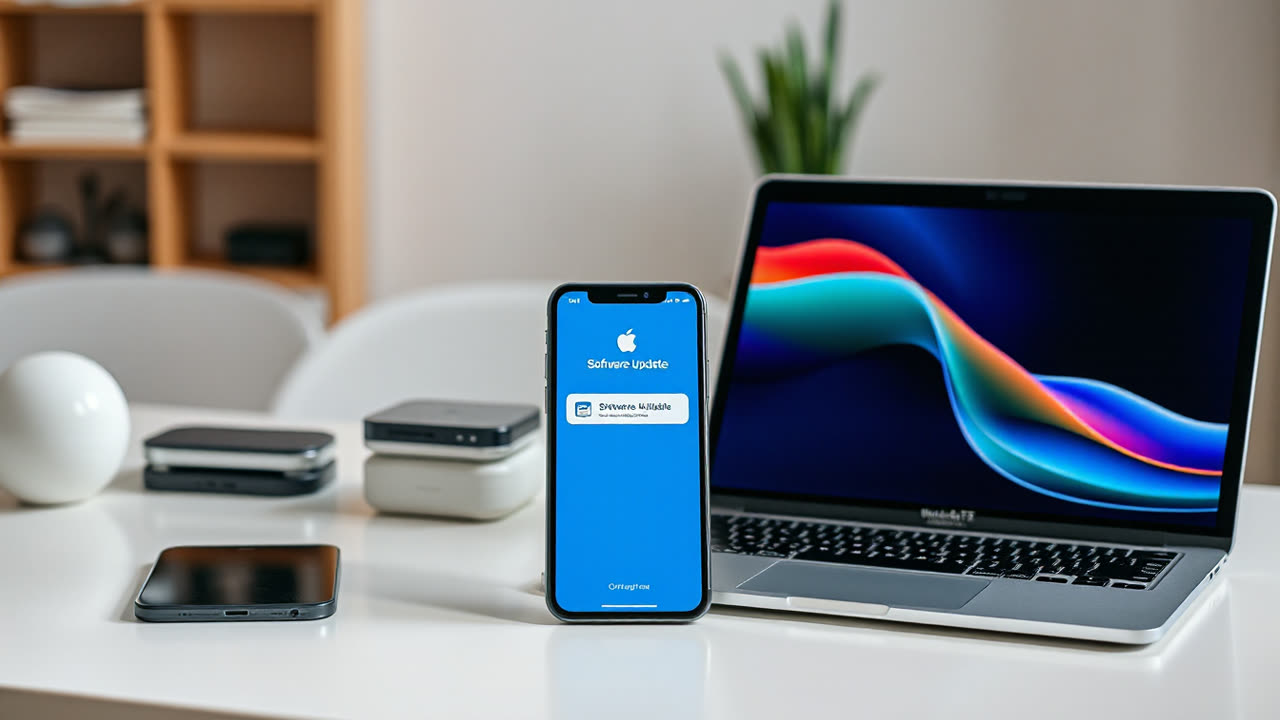
An urgent security update, iOS 26.7.1, iPadOS 26.7.1, macOS Tahoe 26.7.1, and macOS Sequoia 15.8.1, has been released by Apple to address a critical zero-day vulnerability, CVE-2026-86950, actively exploited in "extremely sophisticated" targeted attacks against specific individuals. This flaw, discovered and reported by Meta Product Security, resides within the CoreGraphics framework, a fundamental component responsible for rendering graphics, images, and documents across Apple's ecosystem. Successful exploitation of this out-of-bounds write issue could allow attackers to execute arbitrary code on a vulnerable device merely by convincing a victim to process a maliciously crafted file, such as an image or PDF. The vulnerability affects a wide range of devices, including iPhone 11 and later models, various iPad Pro, iPad Air, iPad, and iPad mini devices, and Macs running macOS Tahoe and Sequoia. While Apple has not disclosed details about the attackers, targeted victims, or the specific delivery method, the nature of "targeted individuals" often points to state-sponsored spyware operations or attacks against high-value targets like journalists, activists, and government personnel.
This vulnerability carries significant implications for user security and the broader tech industry. For users, the "zero-day" nature of the exploit means it was being actively used in attacks *before* Apple had a patch available, leaving users exposed to unknown threats. The fact that many Apple customers are still running iOS 26, despite iOS 27 having been released, exacerbates the risk. While Apple's adoption rates for new iOS versions are generally high, a substantial portion of the user base often remains on the prior major release for some time, making this specific patch critical for their ongoing protection. The prompt release of iOS 26.7.1 and related updates underscores Apple's commitment to rapid patching for critical vulnerabilities, even for older, but still supported, operating system branches. However, the existence of such a sophisticated flaw, likely linked to spyware similar to Pegasus, highlights the persistent threat landscape faced by even the most secure platforms. Zero-day exploits can lead to devastating consequences for enterprises, including data breaches, financial losses, and severe reputational damage.
Apple's security posture, generally lauded for its tight integration of hardware and software, provides a more consistent and often faster update rollout compared to the fragmented Android ecosystem. While flagship Android devices, like Google Pixel and recent Samsung Galaxy S models, now rival iOS in patch speed, the broader Android landscape still experiences delays ranging from weeks to months due to OEM and carrier testing. Apple's ability to push a single update to all supported devices simultaneously is a distinct advantage in mitigating widespread exploitation. However, even Apple's walled garden is not impenetrable, as evidenced by this CoreGraphics flaw and previous zero-days, such as a memory corruption issue in dyld (CVE-2026-20700) patched in February, also exploited in sophisticated targeted attacks. Furthermore, concerns arose in late 2025 with iOS 26, which altered the `shutdown.log` file, a critical forensic artifact previously used to detect Pegasus and Predator spyware, potentially hindering future investigations into targeted attacks. This move drew criticism from security researchers, who stressed the importance of preserving historical forensic data for reconstructing complex spyware campaigns.
Looking ahead, the ongoing cat-and-mouse game between attackers and platform defenders will intensify. The increasing sophistication of zero-day exploits, often leveraging AI to accelerate vulnerability discovery and weaponization, means that even robust security models like Apple's will face continuous pressure. Mobile security will continue to evolve with advancements in biometric authentication, AI-driven threat detection, and potentially quantum-safe encryption. However, the most critical defense remains user vigilance and prompt software updates. The current incident serves as a stark reminder that even with leading security, the human element of updating devices is paramount. Organizations, in particular, must ensure comprehensive patch deployment strategies and educate users on the importance of immediate updates to safeguard against targeted attacks that exploit known vulnerabilities once they are publicly disclosed. The industry will likely see further emphasis on hardware-based security enclaves and a continued push for transparent vulnerability reporting, even as vendors navigate the delicate balance of protecting user data while aiding forensic investigation.