Apple Redefines Siri with On-Device AI in iOS 27 and iPadOS 27
Apple's latest mobile operating systems, iOS 27 and iPadOS 27, launch today, transforming Siri into a proactive, context-aware conversational AI powered by a new on-device Neural Context Engine.
✨ This content was summarized and interpreted by AI; it may contain errors — please verify accuracy with the original sources. Learn more
Listen to this story
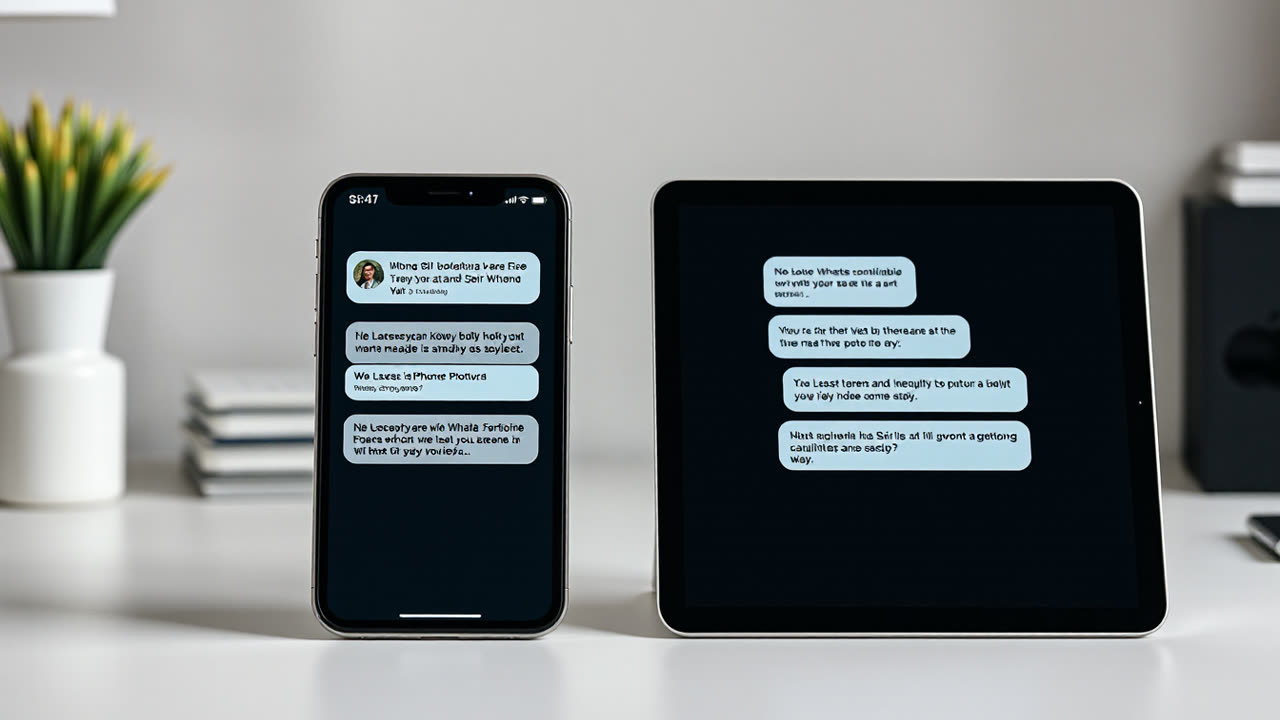
Apple's latest mobile operating system updates, iOS 27 and iPadOS 27, launched globally today, fundamentally redefining Siri from a command-driven assistant into a truly proactive, context-aware conversational AI, marking the most significant overhaul in its fifteen-year history. The transformation centers on what Apple terms "Neural Context Engine," a sophisticated on-device large language model (LLM) that allows Siri to maintain multi-turn conversations, understand nuanced requests, and recall previous interactions within a given session, delivering an unprecedented level of personalized intelligence directly on the user's device. This enhanced Siri can now seamlessly transition tasks across applications, for instance, drafting an email based on a recent message thread and then scheduling a follow-up calendar event, all through natural language prompts, a capability previously beyond its reach.
Beyond its foundational intelligence upgrade, Siri's integration extends deeper into system functions and third-party applications. Users can now perform complex actions like editing specific elements within a photo, summarizing lengthy documents, or even debugging simple code snippets purely through voice commands, with the Neural Context Engine providing instant, privacy-preserving processing. This on-device processing architecture, a hallmark of Apple's AI strategy, mitigates cloud dependency, significantly improving response times and reinforcing Apple's commitment to user data privacy, a stark contrast to many cloud-heavy AI solutions from competitors.
The intelligence infused by iOS 27 and iPadOS 27 permeates the entire operating system, extending far beyond Siri. A new "Adaptive Notifications" system leverages the Neural Context Engine to prioritize, summarize, and even suggest actions for incoming alerts, drastically reducing digital clutter and cognitive load. iPadOS 27, in particular, benefits from a "Pro-Workflow" suite, introducing true desktop-class window management with resizable, overlapping application windows, and robust external display support that treats connected monitors as extensions of the iPad's workspace rather than mere mirrors. This finally unlocks the iPad's full potential as a professional computing device, directly addressing years of user feedback regarding its multitasking limitations. Furthermore, Universal Control 2.0 introduces seamless drag-and-drop functionality for files and content not just between Apple devices, but now with select third-party peripherals, including smart displays and advanced input devices, expanding the ecosystem's interoperability.
These advancements fundamentally alter the user experience, transforming devices from reactive tools into intelligent partners. The profound shift in Siri's capabilities means users spend less time navigating interfaces and more time expressing intent, leading to a more intuitive and efficient interaction with their digital lives. For the industry, Apple's aggressive push into on-device LLMs sets a new benchmark for privacy-centric AI development, potentially influencing a broader industry trend towards edge computing for sensitive data processing. Developers gain access to new SiriKit and Core ML APIs, allowing them to integrate the Neural Context Engine's contextual awareness into their applications, fostering a new generation of intelligent app experiences. This could spark a wave of innovation, particularly in productivity, accessibility, and creative tools.
Compared to its prior generation, iOS 26, which saw incremental improvements to Focus Modes and Lock Screen customization, iOS 27 represents a monumental leap, especially in AI and system intelligence. Rival AI assistants, such as Google Assistant and Amazon Alexa, have long offered robust cloud-based capabilities, but Apple's on-device approach with Neural Context Engine provides a distinct advantage in terms of speed, privacy, and personalized context that is difficult for cloud-only models to replicate without significant data harvesting. While competitors have made strides in conversational AI, Siri's new ability to understand and act on complex, multi-step requests with local processing positions it as a formidable contender, particularly for users prioritizing data security. The iPadOS 27 multitasking overhaul also directly challenges the conventional laptop market, blurring the lines between tablets and traditional computers more effectively than ever before.
Looking ahead, iOS 27 and iPadOS 27 are clearly foundational releases, laying the groundwork for even deeper integration of generative AI across Apple's entire ecosystem, including macOS and watchOS. The focus on on-device processing suggests a future where Apple devices become even more self-sufficient and privacy-preserving, potentially leading to more advanced predictive capabilities that anticipate user needs before they are explicitly stated. Expect future updates to leverage this Neural Context Engine for sophisticated augmented reality experiences, particularly with the continued evolution of Apple Vision Pro, where real-time, context-aware AI will be paramount for seamless spatial computing. This release is not merely an update; it's a strategic declaration of Apple's vision for the next decade of personal computing, one where intelligence is deeply personal, profoundly proactive, and unequivocally private.