Apple Reportedly Developing Privacy-Focused Smart Home Camera with On-Device AI
Apple is reportedly developing a revolutionary smart home camera designed to analyze household activity solely through on-device AI, sidestepping traditional video recording entirely.
✨ This content was summarized and interpreted by AI; it may contain errors — please verify accuracy with the original sources. Learn more
Listen to this story
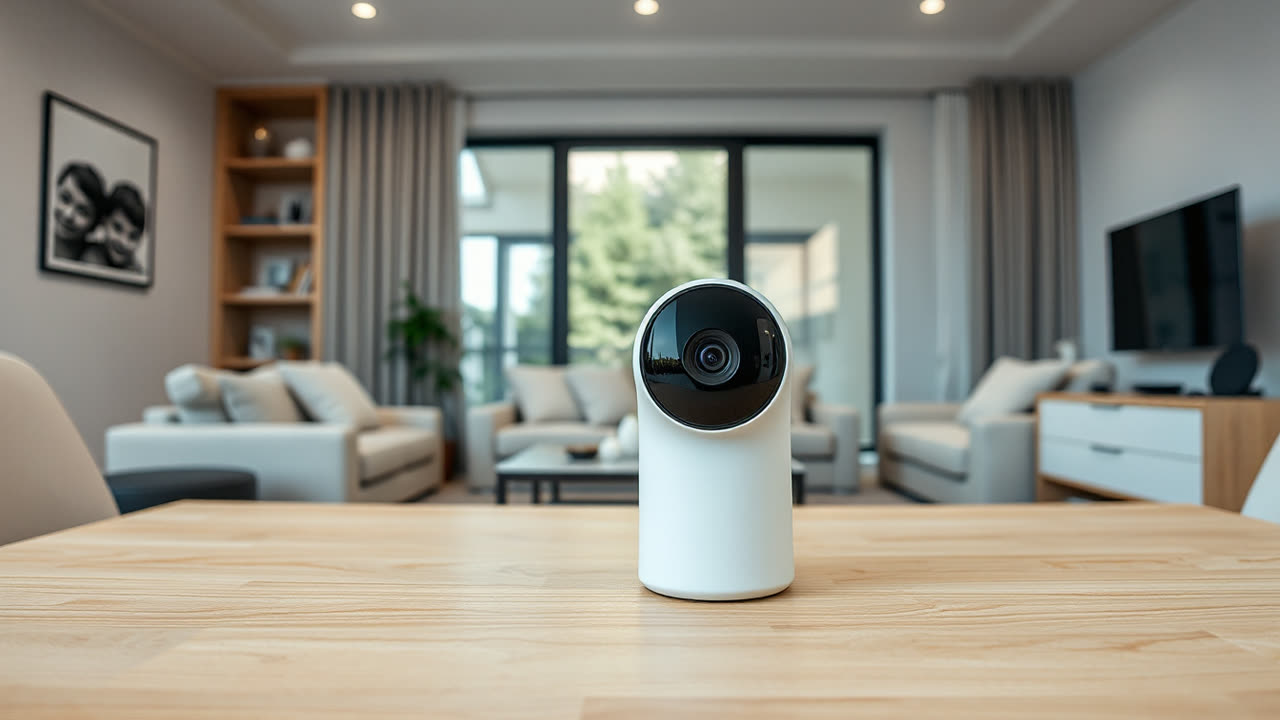
Apple is reportedly developing a revolutionary smart home camera designed to analyze household activity solely through on-device AI, sidestepping traditional video recording entirely—a move that could fundamentally redefine privacy expectations within the connected home ecosystem. This audacious approach, detailed in recent reports, suggests the device would process visual data locally to detect events like a package delivery or an intruder, or even monitor elderly residents, without ever capturing or storing discernible video footage of individuals. The core innovation lies in its reliance on advanced neural engines to interpret spatial changes and motion patterns, transforming raw pixel data into actionable insights rather than retrievable video files, effectively offering surveillance without direct observation.
This radical departure from conventional smart cameras, which typically record and often upload video to cloud servers, addresses the profound privacy concerns that have plagued the smart home sector for years. Users have consistently expressed discomfort with devices that perpetually record their private spaces, fearing data breaches, misuse of footage, or even unauthorized access by bad actors. Apple's proposed solution aims to eliminate the very source of this anxiety by ensuring that no personally identifiable video ever leaves the device, or perhaps is even generated in a human-readable format. The potential impact on user adoption could be significant, attracting a segment of the market previously hesitant to embrace smart home security due to privacy trade-offs. For the industry, this could spur a broader shift towards edge AI processing and privacy-by-design principles, forcing rivals to re-evaluate their own data collection practices and security architectures.
Currently, the smart home camera market is dominated by players like Google Nest and Amazon Ring, both of which offer robust video recording, cloud storage, and advanced features such as facial recognition and package detection. While these systems provide end-to-end encryption and various privacy settings, including activity zones and schedules, the fundamental premise remains video capture and storage, often in the cloud. Google Nest devices, for instance, leverage cloud-based AI for features like familiar face detection and sound alerts. Amazon Ring cameras integrate deeply with their security services, offering continuous recording options and extensive cloud storage plans. Even Apple's existing HomeKit Secure Video, while offering on-device analysis and encrypted iCloud storage for recorded footage, still fundamentally operates by recording video. This rumored device, however, would represent a generational leap, moving beyond mere encryption or selective recording to an entirely new paradigm where the camera "sees" but does not "show." The challenge for Apple will be to deliver comparable accuracy and utility in event detection and alerts without the rich visual context that traditional video provides. Its success would hinge on the sophistication of its on-device AI, which must reliably distinguish between benign activity and genuine threats using only abstract data representations.
Looking ahead, the success of Apple's privacy-centric smart home camera could usher in a new era of trust in connected devices, extending beyond security cameras to other sensors and appliances. If Apple can effectively market the "no video" promise while delivering robust functionality, it could become a powerful differentiator, particularly in regions with stringent data privacy regulations like the EU. This move aligns perfectly with Apple's long-standing corporate emphasis on privacy as a core user right and a competitive advantage, as evidenced by features like App Tracking Transparency and on-device Siri processing. However, the technical hurdles are considerable; developing AI models capable of high-fidelity environmental analysis without capturing identifiable imagery requires immense computational power and finely tuned algorithms, especially for complex scenarios like identifying specific individuals by gait or posture without facial recognition. Furthermore, educating consumers on the nuances of "no video recording" while still providing security assurances will be crucial. If successful, this device could force a re-evaluation across the entire smart home industry, prompting competitors to invest heavily in similar on-device AI capabilities and potentially shifting the battleground from feature parity to privacy supremacy, ultimately empowering users with greater control over their personal data within their own homes.