Apple's A20 Pro Shatters Mobile Performance Records, Outpaces High-End Desktop CPUs
Apple's A20 Pro 2nm chip fundamentally redefines mobile silicon performance, setting new benchmarks and significantly surpassing even top-tier desktop processors.
✨ This content was summarized and interpreted by AI; it may contain errors — please verify accuracy with the original sources. Learn more
Listen to this story
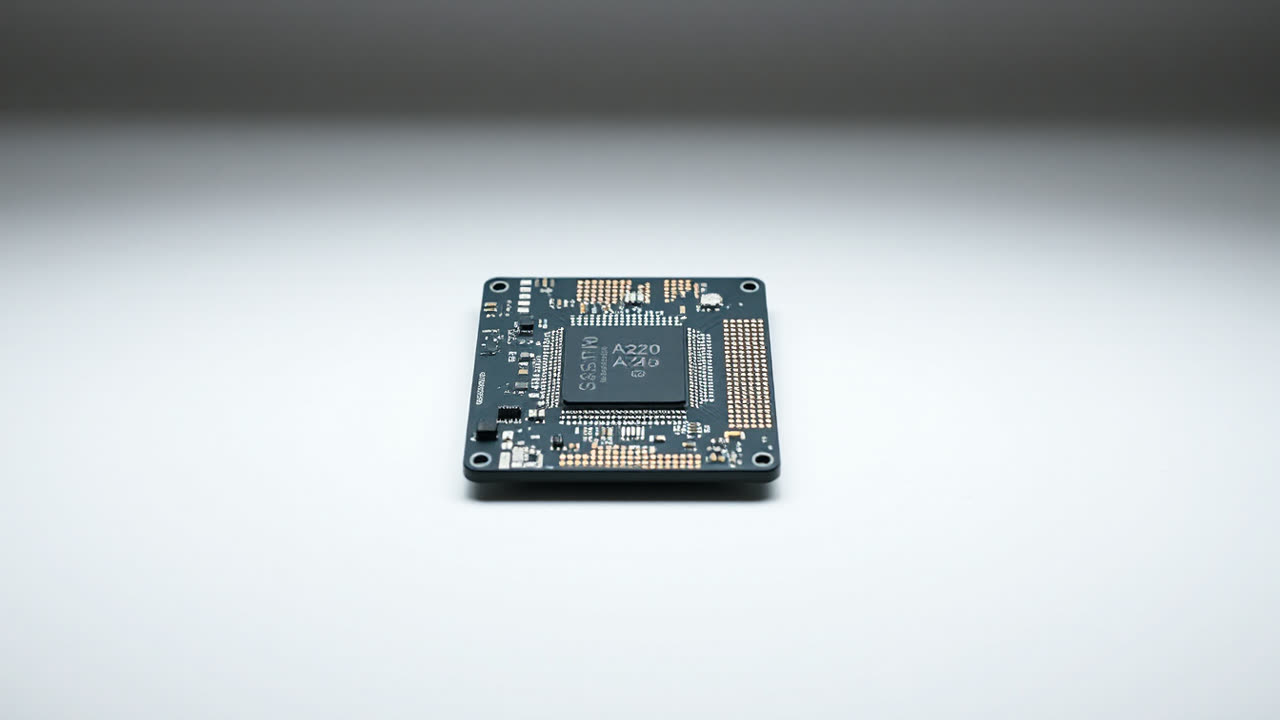
Apple's A20 Pro system-on-a-chip has fundamentally redefined performance expectations for mobile silicon, shattering the Geekbench 7 single-core record and demonstrating a staggering lead over both its smartphone contemporaries and current high-end desktop processors. This 2nm marvel reportedly outpaces flagship Intel Core i9 and AMD Ryzen 9 desktop CPUs by an astonishing margin of up to 32%, while leaving all other smartphone and even the latest laptop processors significantly behind. The sheer computational power packed into a smartphone form factor suggests a paradigm shift, not merely an incremental upgrade, signaling a future where the distinction between mobile and desktop processing power blurs even further.
The significance of this breakthrough extends far beyond raw benchmark numbers, fundamentally altering the competitive landscape for computing across all categories. For users, this translates into an unprecedented level of capability in their pockets, enabling experiences previously confined to dedicated workstations. Imagine professional-grade video editing, complex 3D rendering, or even high-fidelity PC gaming running natively and seamlessly on a device that fits in the palm of your hand. Augmented reality applications, already demanding, will find new headroom for realism and complexity, potentially ushering in a new era of immersive digital interaction without the constraints of tethered headsets or bulky external hardware. The A20 Pro's enhanced neural engine capabilities, a natural evolution of Apple's silicon, will also fuel more sophisticated on-device AI, delivering personalized experiences, advanced computational photography, and real-time language processing with unparalleled efficiency and privacy.
From an industry perspective, the A20 Pro's dominance is a critical inflection point. Apple's relentless pursuit of vertical integration, designing its own silicon specifically optimized for its hardware and software ecosystem, has created a formidable competitive moat. While Qualcomm, MediaTek, and Samsung continue to innovate in the mobile SoC space, and Intel and AMD push the boundaries of traditional desktop and laptop computing, none have yet matched Apple's ability to deliver such a concentrated burst of single-core performance. The move to a 2nm fabrication process, likely spearheaded by TSMC, represents the cutting edge of semiconductor manufacturing, granting Apple a significant power efficiency and transistor density advantage that competitors will struggle to replicate quickly. This technological lead allows Apple to dictate the pace of innovation, forcing rivals to either catch up or differentiate in other ways. The 2nm node is expected to offer substantial improvements in power efficiency and transistor density over the previous 3nm generation, leading directly to these dramatic performance gains.
Compared to its predecessors, the A20 Pro’s leap is monumental. The A17 Pro, introduced in the iPhone 15 Pro, already delivered a substantial performance boost, particularly in single-core tasks, often rivaling entry-level desktop CPUs. However, the A20 Pro's reported 32% lead over top-tier desktop chips moves it into an entirely new league. This isn't just a generational improvement; it's a redefinition of what a mobile chip can achieve. Historically, desktop processors, with their larger power envelopes and cooling solutions, held an undeniable advantage. The A20 Pro’s ability to surpass them, even in specific benchmarks like single-core performance, indicates an optimization level and architectural efficiency that challenges long-held assumptions about computing hierarchies. This also puts immense pressure on laptop manufacturers, particularly those relying on x86 architecture, to justify their form factor with multi-core advantages or specialized features, as the raw speed of a smartphone chip now rivals, or exceeds, their own.
Looking ahead, the implications are profound. Apple's success with the A-series and M-series chips suggests a continued convergence of its mobile and desktop platforms. The distinction between an iPad Pro and a MacBook Air becomes increasingly semantic when both are powered by chips of comparable, or even superior, performance. We could see future iPhones capable of driving external displays with full desktop-class operating system experiences, blurring the lines between phone, tablet, and traditional computer. This also fuels the potential for Apple to further distance itself from reliance on external CPU suppliers for its entire product stack, expanding the M-series into more demanding professional workstations, leveraging the architectural learnings and manufacturing prowess gained from the A-series. The competitive pressure on Intel and AMD will intensify, pushing them to accelerate their own architectural innovations and fabrication roadmaps to maintain relevance in a market increasingly dominated by custom ARM-based silicon. The race to achieve further miniaturization beyond 2nm, potentially towards 1.4nm or even 1nm, will only accelerate, promising even more astonishing performance leaps in the coming years. This technological arms race, spearheaded by breakthroughs like the A20 Pro, promises a future where computational power is ubiquitous, highly efficient, and increasingly tailored to specific user experiences, fundamentally reshaping how we interact with technology.