Apple's 'Apple Upgrade' Program Redefines Device Acquisition with Leasing Model
The new program, launched July 28, 2026, replaces traditional ownership with a true lease for iPhones, Macs, iPads, and Apple Watches, fundamentally altering consumer relationships with premium technology.
✨ This content was summarized and interpreted by AI; it may contain errors — please verify accuracy with the original sources. Learn more
Listen to this story
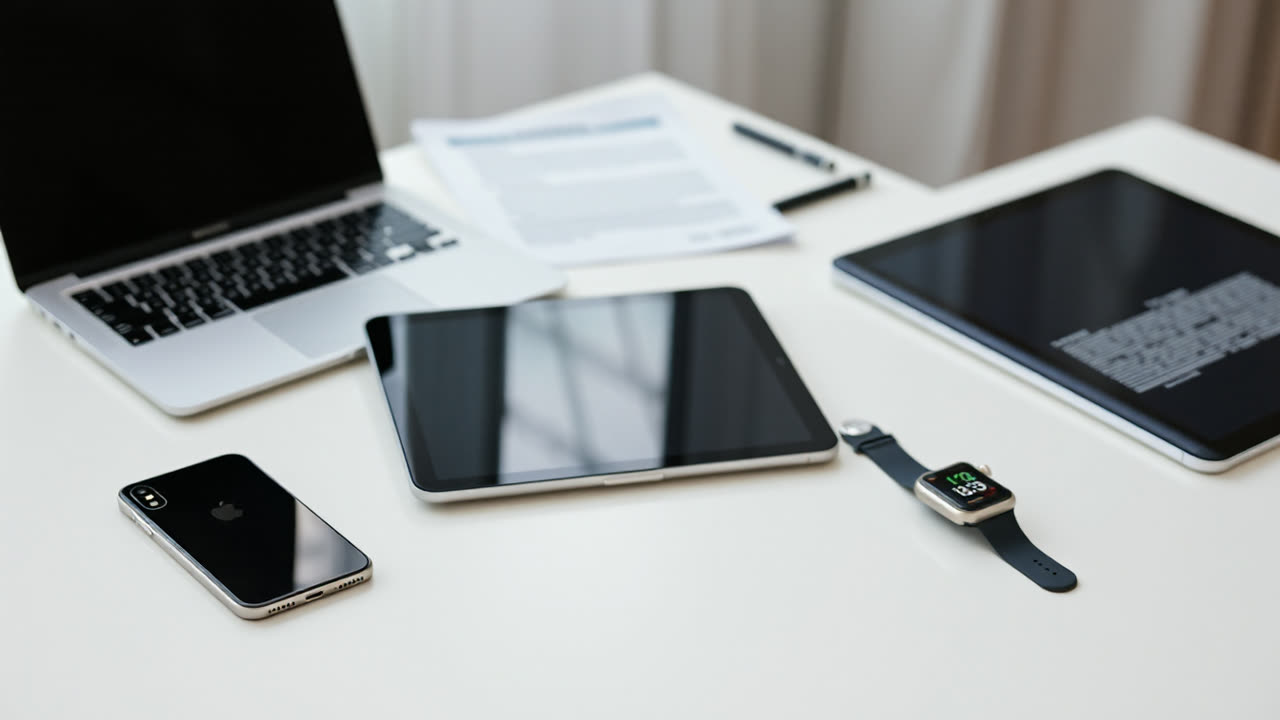
The recent launch of Apple's "Apple Upgrade" program on July 28, 2026, marks a significant pivot in how consumers acquire premium technology, shifting from outright ownership or traditional financing towards a leasing model for iPhones, Macs, iPads, and Apple Watches in the United States. This new program, facilitated by Klarna, fundamentally redefines the relationship between users and their devices, replacing the previous iPhone Upgrade Program and its financing structure with a true lease. Monthly payments for an iPhone start as low as $17.99, an Apple Watch at $11.99, an iPad at $11.99, and a Mac at $24.99, offering a seemingly more accessible entry point to Apple's ecosystem. However, unlike the former program where customers eventually owned the device after 24 payments, Apple Upgrade functions as a rental: at the end of the 12- or 24-month (for iPhone/Apple Watch) or 24- or 36-month (for Mac/iPad) lease term, users must either return the device, pay an additional fee to purchase it, or upgrade to a new model by starting a new lease. This critical distinction means ownership remains with Klarna unless a buyout is exercised, and AppleCare is not included by default, requiring an additional monthly cost.
This strategic shift by Apple is a direct response to several converging market forces. Flagship smartphone prices have consistently climbed, often exceeding $1,000, driven by advanced mobile AI chips, sophisticated camera systems, and broader supply-chain pressures, including rising memory costs due to AI data center demand. As consumers retain their devices for longer periods due to these higher price points and diminishing leaps in year-over-year hardware innovation, manufacturers face the challenge of sustaining upgrade cycles and maintaining revenue streams. The Apple Upgrade program aims to lower the upfront financial barrier, making it easier for users to consistently access the latest technology, thereby cementing loyalty within Apple's lucrative ecosystem. The program also allows Apple to offload the financial responsibility of lending to Klarna, streamlining its operations while retaining the core customer relationship and upgrade cycle.
The implications for users are multifaceted. For those who habitually upgrade their devices every one to two years, the leasing model presents a compelling option, offering predictable monthly payments and regular access to the newest hardware without the hassle of resale. This aligns with a broader societal trend towards "access over ownership" seen in streaming services, car leases, and software subscriptions. However, for consumers who prefer to keep their smartphones for three, four, or even five years, purchasing outright remains a more economical choice in the long run, as ongoing lease payments never cease, and a buyout fee is required to eventually own the device. The exclusion of AppleCare in the base lease also adds an unforeseen cost for many, potentially negating some of the perceived savings. Furthermore, while the program facilitates easy upgrades, it implicitly encourages a perpetual payment cycle, akin to a "pay forever" model, which could trap consumers in an endless loop of monthly expenses. This could lead to a feeling of being "nickel and dimed" if users perceive little added value beyond the device itself.
Apple is not alone in exploring these evolving ownership models. Rivals like Samsung have also embraced similar strategies to maintain demand. Samsung's "Annual Upgrade Program" and "Forever Program" in markets like India offer flexible payment options and guaranteed buyback values, enabling users to upgrade to new Galaxy phones more frequently. These programs often include benefits like Samsung Care+ for a year, offering a more comprehensive package than Apple's new base lease. Google, while not yet offering a direct hardware subscription for its Pixel phones, provides Google One membership trials with new Pixel devices, emphasizing a service-oriented approach to its hardware ecosystem. The broader wireless industry has seen an increase in smartphone financing volumes, with more customers opting for monthly payment plans over upfront purchases, a trend expected to continue in 2026. Globally, smartphone revenue grew 7% year-on-year in Q2 2026, reaching a record $109 billion, despite a decline in shipments, underscoring the shift towards value creation over volume growth.
Looking ahead, the landscape of smartphone ownership is likely to become even more diversified. The success of Apple Upgrade will undoubtedly influence other manufacturers to refine or introduce their own leasing programs, potentially expanding beyond premium devices to include lower-cost options. The industry may see a stronger emphasis on bundling hardware leases with software subscriptions, services (like AppleCare or cloud storage), and even carrier plans to create more attractive, all-encompassing packages. This could lead to a future where true ownership of a smartphone becomes a niche choice, with leasing or subscription models becoming the default, particularly as devices integrate more advanced AI capabilities and become more integral to daily life. However, for this model to truly resonate with consumers, transparency regarding total costs, end-of-term options, and included services will be paramount. Companies that can offer greater clarity and perceived value, perhaps by integrating residual-value credits at lease-end or making AppleCare standard, will likely gain a competitive edge over models that feel like an endless financial commitment. The shift from capital expenditure to operating expenditure for personal tech is here, and its evolution will continue to reshape consumer expectations and industry strategies.