Apple's Lighter, Touchscreen OLED MacBook Pro Set for Imminent Unveil
Apple is poised to unveil a significantly lighter, touchscreen OLED MacBook Pro as early as next month, marking a pivotal shift in the company's long-standing design philosophy for its high-end laptops.
✨ This content was summarized and interpreted by AI; it may contain errors — please verify accuracy with the original sources. Learn more
Listen to this story
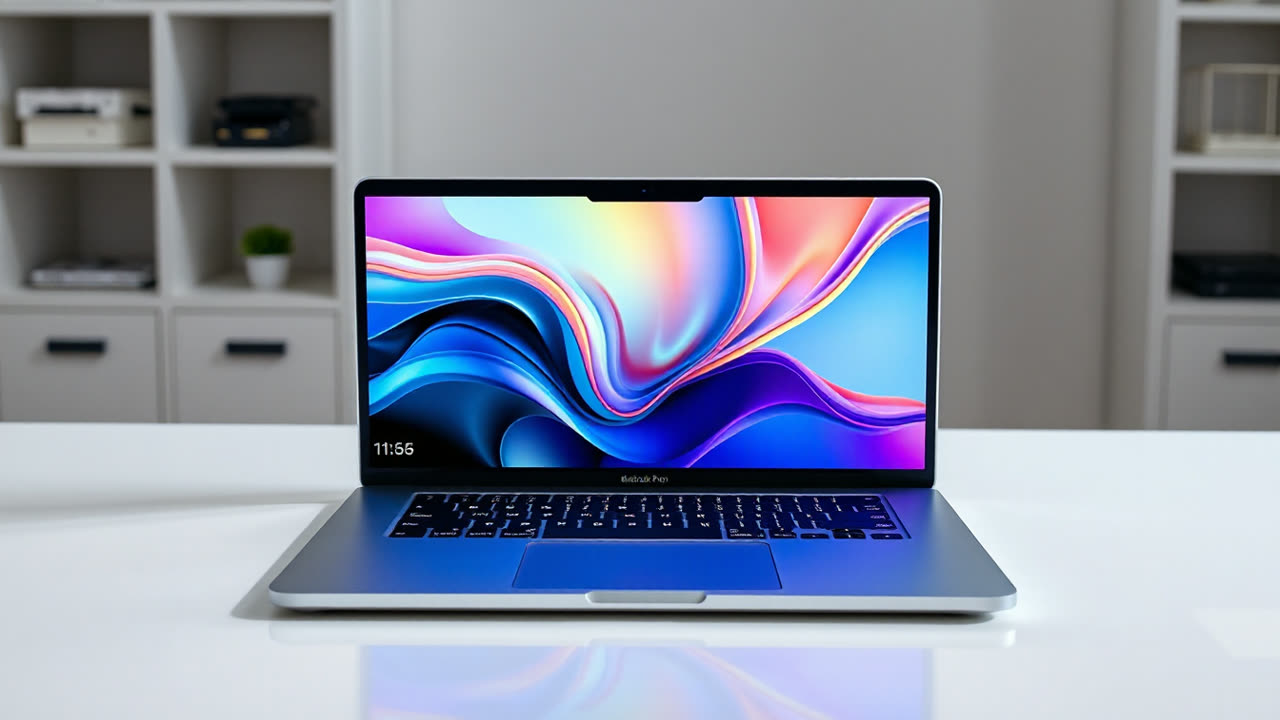
Apple is poised to unveil a significantly lighter, touchscreen OLED MacBook Pro as early as next month, marking a pivotal shift in the company's long-standing design philosophy for its high-end laptops. This long-rumored iteration, expected to debut in November 2026, promises not only a superior visual experience but also a substantial improvement in portability for professional users, directly addressing a common critique of previous generations.
The introduction of a touchscreen OLED panel on a MacBook Pro represents a monumental strategic pivot for Apple, which has historically maintained a clear distinction between its touch-first iPad line and its mouse-and-keyboard-centric Mac computers. This move could signal a softening of Apple's hardline stance, potentially blurring the lines between its tablet and laptop ecosystems and offering a more versatile user experience. OLED technology itself brings unparalleled contrast ratios, true blacks, and vibrant color reproduction, making it ideal for creative professionals in video editing, graphic design, and photography. The enhanced visual fidelity will likely be a major draw, providing a more immersive and accurate display for content creation and consumption.
Beyond the display, the 'significantly lighter' chassis is a critical development, particularly for a machine that often serves as a mobile workstation. Current 16-inch MacBook Pro models, for instance, weigh around 4.8 pounds (2.18 kg), making them substantial devices to carry regularly. While specific weight reductions are yet to be confirmed, a significant reduction would place the new MacBook Pro more competitively against ultralight professional Windows laptops that already feature OLED and touch, such as certain configurations of the Dell XPS 16 or HP Spectre x360, which can weigh under 4.5 pounds (2.04 kg) while offering comparable performance and premium displays. This emphasis on reduced weight, coupled with the power of Apple's M-series silicon, suggests a design optimized for maximum mobility without compromising on performance, a balance that has been increasingly sought after by mobile professionals.
For the industry, Apple's embrace of touchscreen OLED in its flagship laptop could accelerate broader market adoption of these technologies. While many Windows OEMs have offered touchscreen OLED laptops for years, Apple's entry often legitimizes and popularizes features, leading to increased demand and potentially driving down component costs across the board. The impact on user interaction paradigms within macOS will also be closely watched. Apple has previously integrated the Touch Bar, which ultimately proved to be a transitional feature, and has refined trackpad gestures extensively. A full touchscreen implementation will necessitate significant software adaptations and UI/UX refinements within macOS to genuinely leverage touch input without feeling like an afterthought or merely a scaled-up iPad experience. This could involve new gesture sets, redesigned application interfaces, and enhanced multi-touch capabilities that seamlessly coexist with traditional keyboard and trackpad inputs.
Looking ahead, the debut of a touchscreen OLED MacBook Pro could herald a new era for Apple's entire computing lineup. Should this integration prove successful, it's plausible that touchscreen functionality could eventually trickle down to other Mac models, such as the MacBook Air or even iMacs, creating a more cohesive and versatile product family. Furthermore, this move could intensify the subtle convergence between macOS and iPadOS, potentially paving the way for more unified app development and cross-device functionality that leverages both touch and traditional input methods. The ongoing evolution of Apple's M-series chips will undoubtedly play a crucial role in enabling these advancements, providing the necessary power efficiency and thermal management to integrate cutting-edge display and input technologies into increasingly thinner and lighter form factors. This strategic evolution underscores Apple's commitment to innovation in the premium laptop segment, challenging rivals and setting a new benchmark for performance, display quality, and user interaction.