Apple's M6 and M5 Ultra Chips Deliver Extraordinary AI Leap for Mac
Apple's new M6 and M5 Ultra chips introduce an extraordinary leap in performance and AI compute for the Mac mini and Mac Studio, fundamentally shifting AI processing from the cloud to the desktop and solidifying Apple's strategic intent to dominate the on-device AI era while intensifying pressure on competitors.
✨ This content was summarized and interpreted by AI; it may contain errors — please verify accuracy with the original sources. Learn more
Listen to this story
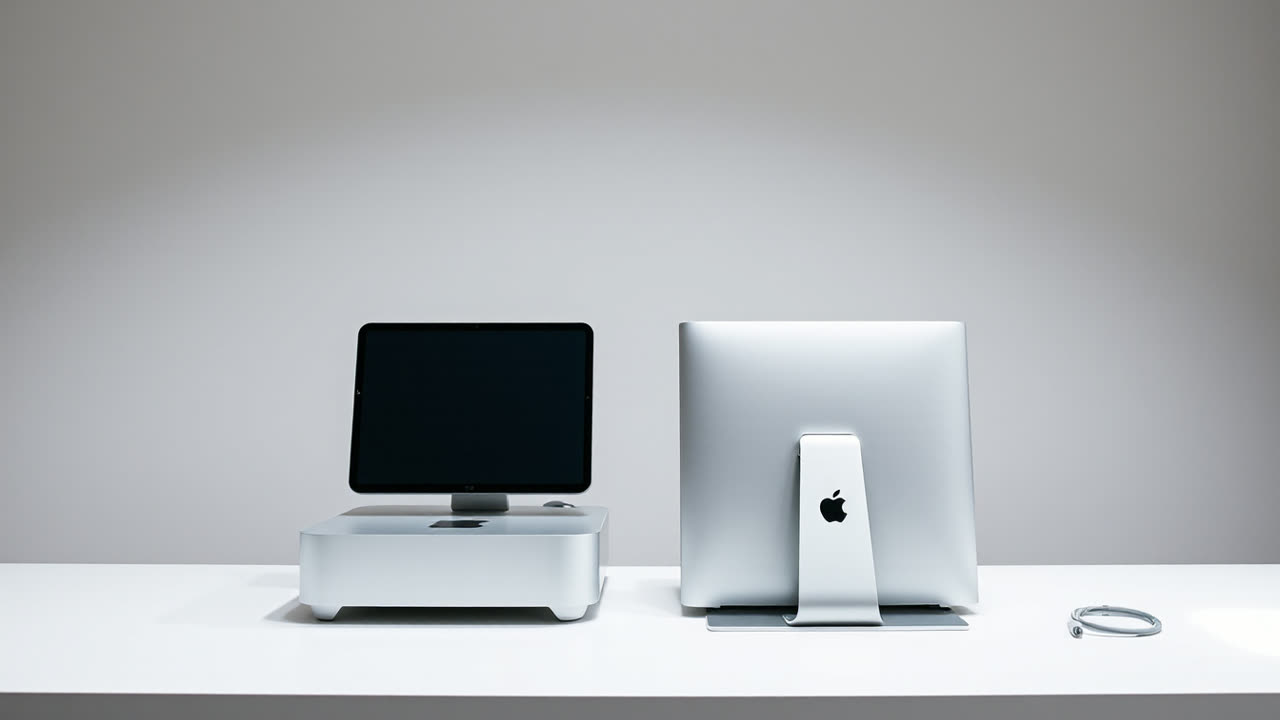
Apple's latest silicon innovations, the M6 and M5 Ultra chips, mark a pivotal moment for the Mac ecosystem, delivering an "extraordinary leap" in raw performance and, crucially, AI compute capabilities across the new Mac mini and Mac Studio lineups. The M6, debuting in the Mac mini, reportedly boasts a 35% increase in CPU performance and a 40% uplift in GPU power compared to its M4 predecessor, while its integrated Neural Engine now delivers a staggering 70 TOPS (trillions of operations per second) for AI workloads, nearly doubling the M4's capacity. Meanwhile, the M5 Ultra, powering the refreshed Mac Studio, scales even higher, achieving an unprecedented 250 TOPS for AI, coupled with a 50% CPU and 60% GPU performance boost over the M4 Ultra, positioning it as a formidable workstation contender. These figures, if validated by independent benchmarks, signal Apple's aggressive intent to dominate both mainstream and professional computing, particularly as the industry pivots towards pervasive on-device AI.
This generational leap fundamentally alters the user experience, moving AI from a cloud-centric paradigm to the desktop. For everyday users with the M6-powered Mac mini, tasks like real-time image generation, advanced video conferencing enhancements, and highly personalized system interactions will become instantaneous and privacy-preserving, as data remains local. Creative professionals leveraging the M5 Ultra in the Mac Studio will find their workflows revolutionized; complex 3D rendering, multi-stream 8K video editing, and large-scale machine learning model training can now be executed with unprecedented speed directly on their desks. The substantial increase in Neural Engine TOPS means that AI-driven features in applications like Final Cut Pro, Logic Pro, and even third-party creative suites will operate with a fluidity previously unattainable, reducing reliance on costly cloud subscriptions and mitigating latency issues. This push towards powerful on-device AI compute is not merely an incremental upgrade; it represents a strategic re-platforming of the Mac for the AI era, making sophisticated AI tools accessible and efficient for a broader user base.
Historically, Apple's M-series chips have consistently delivered significant performance gains over their Intel predecessors and maintained a strong lead in power efficiency against many x86 competitors. The M4 chip, for instance, already offered a substantial performance increase over the M3, particularly in its Neural Engine capabilities, which saw a 50% improvement over the M3's 18 TOPS. The M6 and M5 Ultra continue this trajectory, but with an accelerated focus on AI. Compared to rivals in the PC space, the M6's 70 TOPS in the Mac mini places it well ahead of current-generation "AI PCs" typically featuring NPU performance in the 10-45 TOPS range, such as those powered by Qualcomm's Snapdragon X Elite or Intel's Lunar Lake, which are projected to reach around 48 TOPS. The M5 Ultra's 250 TOPS, meanwhile, enters territory previously dominated by dedicated AI accelerators from Nvidia or high-end server-grade CPUs, albeit in a desktop workstation form factor. While Nvidia's discrete GPUs still offer higher raw theoretical FLOPS for certain AI training tasks, Apple's unified memory architecture and optimized software stack often translate to superior real-world performance for many on-device inference and fine-tuning workloads, especially within its own ecosystem. This integration advantage is a key differentiator, allowing Apple to extract maximum performance per watt and per silicon area.
Looking ahead, the introduction of the M6 and M5 Ultra solidifies Apple's vertical integration strategy, further entrenching the Mac as a premier platform for both traditional high-performance computing and the burgeoning field of local AI. The scale of the M5 Ultra's Neural Engine suggests that Apple is not only preparing for the next generation of creative applications but also potentially laying groundwork for more ambitious professional AI development directly on the Mac, perhaps even challenging specialized AI workstations. We can anticipate an even deeper integration of AI across macOS, with system-level AI agents becoming more sophisticated and context-aware, leveraging the M6's capabilities for seamless, intelligent assistance. Furthermore, the performance headroom provided by these chips hints at future Mac Pro iterations potentially scaling the M5 Ultra architecture even further, or introducing a new class of even more powerful "Extreme" chips for data centers or specialized enterprise AI applications. The pressure on competitors to match Apple's performance-per-watt and integrated AI capabilities will intensify, driving innovation across the entire semiconductor industry. This release is more than just a chip upgrade; it's a clear statement of intent for Apple's AI-centric future.