Apple's M6 Mac Mini Launches at $899, Redefining Desktop Computing
Apple's new M6-powered Mac Mini, starting at $899 with 16GB RAM and 256GB storage, marks a pivotal shift in desktop computing, intensifying pressure on x86 rivals.
✨ This content was summarized and interpreted by AI; it may contain errors — please verify accuracy with the original sources. Learn more
Listen to this story
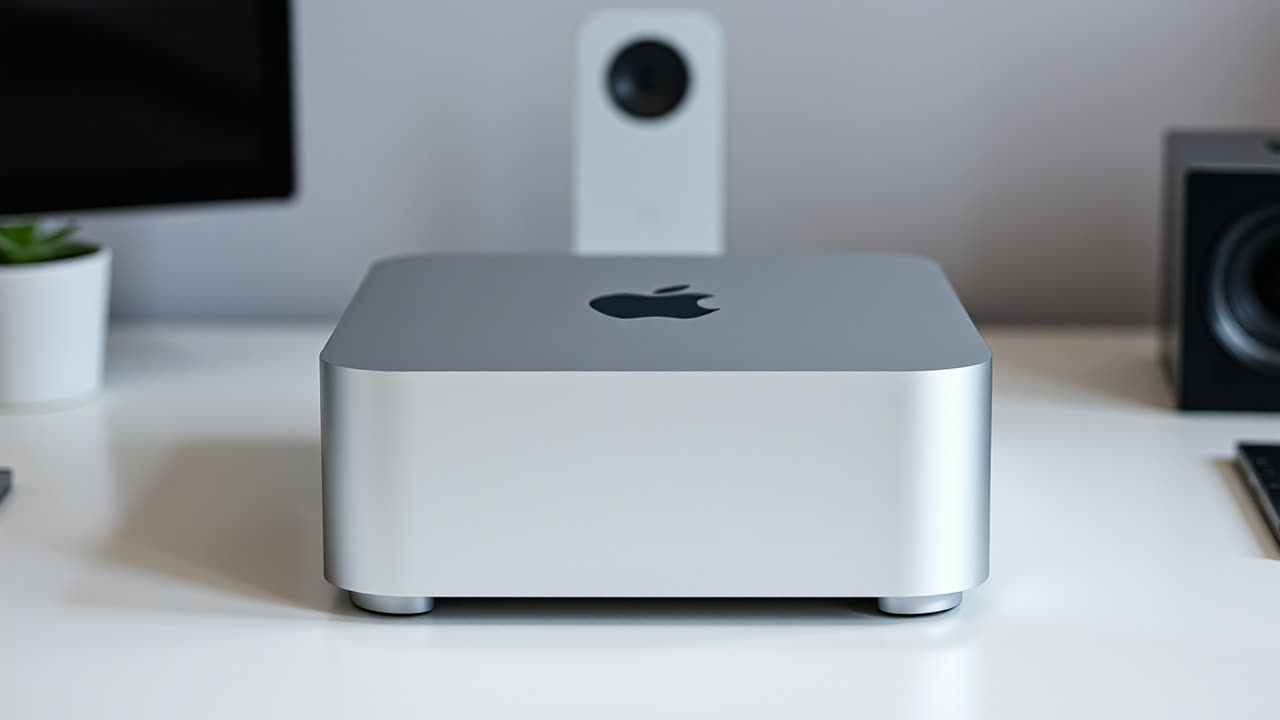
Apple's latest Mac Mini, now powered by the new M6 chip and starting at a competitive $899, signals a pivotal moment for desktop computing, delivering a base configuration of 256GB storage and 16GB of RAM that redefines value in the compact PC segment. This launch isn't merely an incremental update; it's a strategic move that solidifies Apple's dominance in the ARM-based desktop space and intensifies pressure on traditional x86 manufacturers. The M6 chip itself represents a significant leap, reportedly featuring a 25% increase in multi-core performance and a 30% boost in graphics rendering over its M5 predecessor, alongside enhanced neural engine capabilities that are critical for emerging AI workloads. This translates directly into tangible benefits for users, from professional creatives demanding faster video rendering and complex 3D modeling to everyday users experiencing snappier application launches and seamless multitasking.
The M6 Mac Mini's $899 entry point is particularly disruptive, positioning it as an accessible powerhouse that directly challenges both premium mini PCs and even some mid-range desktop towers. For years, the Mac Mini has been lauded for its balance of power and portability, but the M6 iteration pushes this further, offering performance once reserved for much more expensive machines. The inclusion of 16GB of unified memory in the base model is a crucial differentiator, mitigating the need for immediate upgrades for many users and ensuring robust performance across demanding applications. This generous memory allocation, coupled with the M6's efficient architecture, means that the 256GB storage, while potentially tight for some, is less of a bottleneck than it would be on systems with less efficient memory management. Apple's integrated approach, where hardware and software are co-engineered, allows the M6 to extract maximum performance from its components, offering a user experience that often surpasses spec-for-spec comparisons with rival devices.
Compared to its immediate predecessor, the M5 Mac Mini, the M6 brings advancements across the board, not just in raw processing power but also in energy efficiency. Early reports suggest the M6 chip maintains, or even improves upon, the M5's already impressive power consumption profile, allowing the fanless or near-silent operation that users have come to expect from Apple Silicon. This efficiency is a cornerstone of Apple's chip design philosophy, contributing to lower operating costs and a reduced environmental footprint, factors that resonate with both individual consumers and corporate IT departments. Against rivals in the Windows mini PC space, the M6 Mac Mini presents a formidable challenge. While offerings from Intel NUC and various AMD-powered compact systems have made strides in performance, they often struggle to match the M6's integrated graphics prowess, its optimized software ecosystem, or its long-term software support. Furthermore, the M6's neural engine, specifically designed for AI acceleration, gives it a distinct advantage in a world increasingly reliant on on-device machine learning for tasks like image recognition, natural language processing, and advanced video editing features. This specialized hardware ensures that the Mac Mini is not just performing well today but is also future-proofed for the next generation of AI-driven applications.
The industry impact of the M6 Mac Mini is multifaceted. For Apple, it reinforces its strategy of vertical integration, demonstrating that its custom silicon can continue to push performance boundaries while maintaining aggressive pricing. This puts immense pressure on chipmakers like Intel and AMD to innovate faster and on PC manufacturers to differentiate beyond raw specifications. The M6's capabilities will likely accelerate the adoption of ARM-based architectures across the broader computing landscape, as competitors scramble to develop their own optimized silicon solutions. We can expect to see more Windows-on-ARM devices emerge, but they will face the uphill battle of matching Apple's mature software ecosystem and developer support. For users, the M6 Mac Mini democratizes access to high-performance computing, making professional-grade tools more attainable. It also signifies a move towards even more efficient, powerful, and compact desktop form factors, potentially leading to a resurgence in interest in dedicated desktop machines over laptops for fixed workstations.
Looking ahead, the M6 Mac Mini sets a new precedent for what consumers can expect from entry-level professional machines. The trajectory suggests that future iterations of Apple Silicon will continue to push the boundaries of performance per watt, potentially enabling even smaller form factors or entirely new categories of devices. We might see the M6's neural engine capabilities become a central marketing point, as on-device AI processing becomes indispensable for privacy and performance. Furthermore, the competitive pricing of the M6 Mac Mini could force a broader market recalibration, where consumers demand more performance and features for their money from all manufacturers. As Apple continues to refine its silicon, the line between consumer and professional-grade hardware will blur further, offering unprecedented power in increasingly accessible packages, ultimately benefiting a wider array of users and driving innovation across the entire computing industry.