Apple's Next-Gen CarPlay: A Full Digital Cockpit Takeover
Apple's next-generation CarPlay, initially previewed in 2022, is set to fundamentally re-imagine in-car infotainment by deeply integrating with a vehicle's core functions and taking over multiple displays, including the instrument cluster.
✨ This content was summarized and interpreted by AI; it may contain errors — please verify accuracy with the original sources. Learn more
Listen to this story
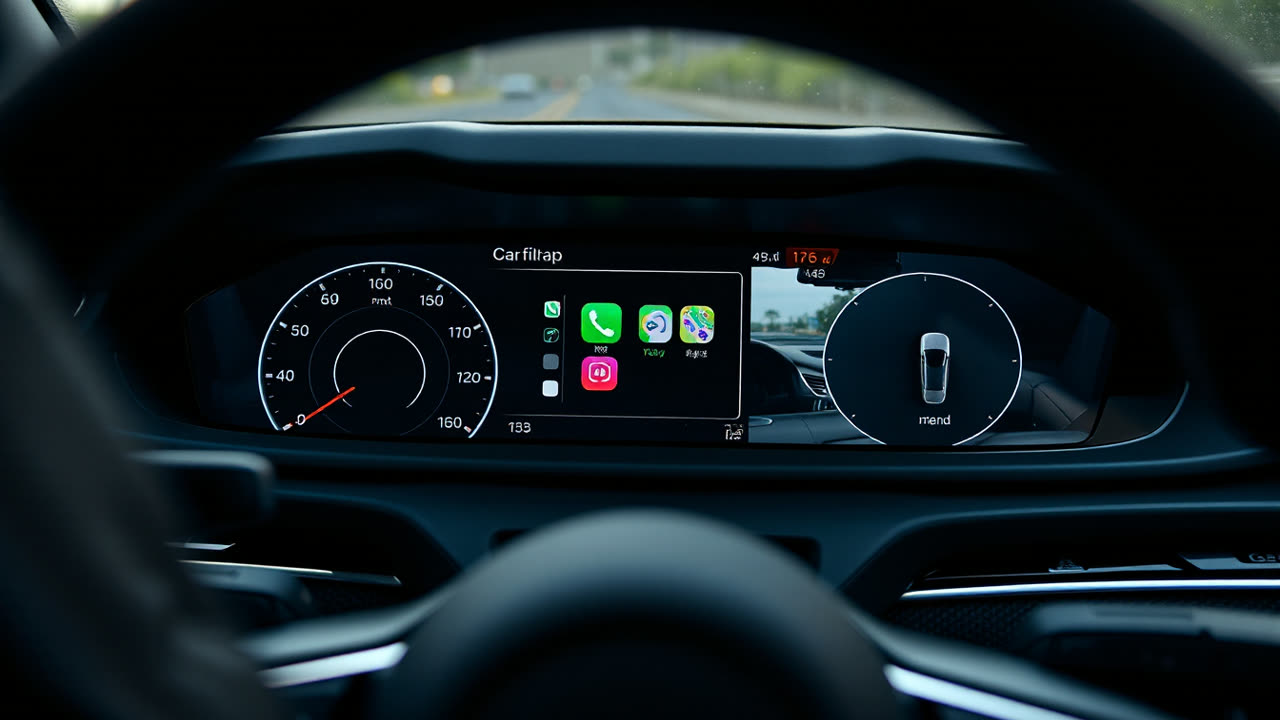
Apple's next-generation CarPlay, initially previewed in 2022 and further detailed in 2023, represents a fundamental re-imagining of in-car infotainment, extending far beyond the current system's mirroring capabilities to deeply integrate with a vehicle's core functions and displays. While the traditional CarPlay projects an iOS-like interface onto a car's central screen, primarily for navigation, media, and communication, the upcoming iteration transforms the entire digital cockpit, taking over multiple screens, including the instrument cluster, and providing direct control over vehicle features like climate, radio, and even potentially driving modes. This profound shift from a mere smartphone projection to a comprehensive operating system for the vehicle itself signifies Apple's most aggressive move yet to establish a pervasive presence in the automotive sector, challenging established native infotainment systems and the growing influence of Android Automotive.
The significance of this evolution for users is multifaceted, promising an unprecedented level of personalization and a seamless, consistent Apple ecosystem experience within the vehicle. Instead of a disjointed experience where users switch between CarPlay and a car's native system to adjust temperature or view fuel levels, the new CarPlay integrates these functions directly into its interface. This means a unified design language across all screens – the main infotainment display, the digital instrument cluster, and potentially even passenger screens – with customizable gauge clusters, widgets for various vehicle functions, and access to vehicle data such as speed, RPM, fuel level, and climate controls directly within the CarPlay environment. The ability to tailor the look and feel of the digital dashboard, choosing from different designs and layouts, moves beyond simple app access to a truly personalized driving environment, potentially reducing driver distraction by consolidating information and controls into a familiar interface.
For the automotive industry, this deep integration presents both a compelling opportunity and a significant challenge. On one hand, car manufacturers can leverage Apple's renowned user experience design and robust software ecosystem to enhance their vehicles' appeal, particularly to tech-savvy consumers. The promise of an always up-to-date, feature-rich infotainment system, maintained by Apple, could reduce the burden on carmakers for long-term software development and updates. However, it also means surrendering a substantial degree of control over the in-car user experience and, critically, access to valuable vehicle data. The extent to which Apple will share anonymized or aggregated data back with manufacturers, and the terms under which this deep integration operates, will be crucial negotiation points. This shift also intensifies the competition with Google's Android Automotive, which is a full operating system built into the car, offering similar deep integration and control over vehicle functions, as seen in vehicles from brands like Volvo and GM. Unlike the current CarPlay, which largely operates as a secondary display, the next-generation CarPlay positions itself as the primary interface, potentially relegating the car manufacturer's own software to a background service.
Compared to its predecessor, the upcoming CarPlay moves from an "app-on-screen" model to an "OS-for-car" paradigm. The current CarPlay, launched in 2014, primarily offers access to a curated set of iOS apps like Maps, Music, Messages, and Phone, displayed on the central infotainment screen. It relies on the car's native system for basic vehicle controls and instrument cluster information. The new version, however, effectively replaces the car's native digital dashboard, displaying speedometers, tachometers, fuel gauges, and other critical driving information, all rendered with Apple's distinct aesthetic. This level of integration was previously only achievable through a car manufacturer's proprietary system or a full Android Automotive implementation.
The adoption timeline remains a critical factor for the next-generation CarPlay. While Apple announced commitments from a dozen carmakers, including Aston Martin, Porsche, Mercedes-Benz, and Volvo, at WWDC 2022, specific vehicle models and release dates have been slow to materialize. As of late 2023, Porsche and Aston Martin were among the first to confirm vehicles supporting the new system, with models expected to launch in late 2024. This phased rollout underscores the complexity of integrating such a comprehensive software system across diverse automotive hardware architectures. The slow initial adoption suggests a cautious approach from manufacturers, likely navigating the technical challenges, data sharing agreements, and strategic implications of ceding significant control to Apple.
Looking ahead, the success of the next-generation CarPlay will hinge on several factors: the seamlessness of its integration across various vehicle models, the robustness of its performance, and Apple's ability to maintain a strong privacy stance regarding vehicle data. Should it gain widespread traction, it could fundamentally alter consumer expectations for in-car technology, making the digital cockpit a key differentiator in vehicle purchases, much like smartphone operating systems influence phone choices. This could pressure other manufacturers to adopt similar deeply integrated third-party solutions or invest heavily in their own advanced infotainment platforms to remain competitive. The long-term implications could see the automotive industry increasingly resembling the smartphone market, with software and user experience becoming as crucial, if not more so, than traditional hardware specifications, and Apple positioned to be a dominant player in this evolving landscape.