Apple's Privacy-First AI: On-Device Audio Intelligence and Private Cloud Compute
Apple unveils 'Audio Intelligence' for Siri, featuring on-device processing and Private Cloud Compute to ensure user privacy with new iPhone and Apple Watch models.
✨ This content was summarized and interpreted by AI; it may contain errors — please verify accuracy with the original sources. Learn more
Listen to this story
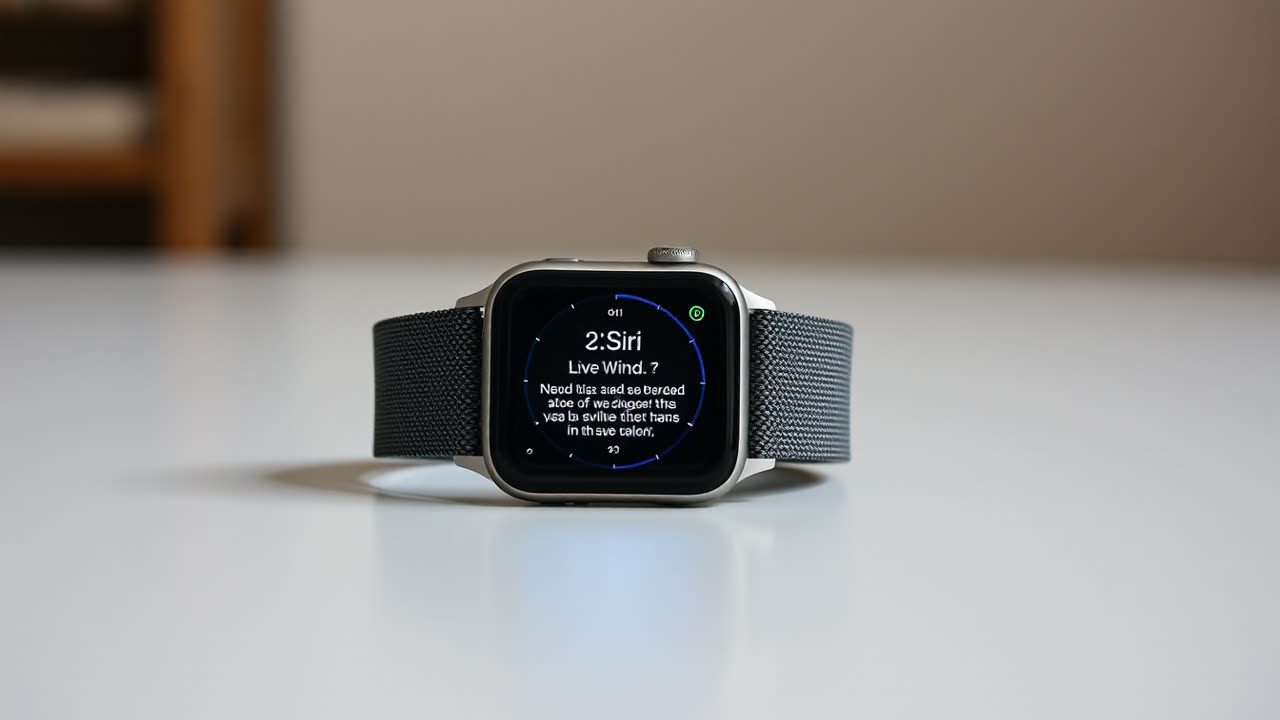
Apple has ushered in a new era of personal intelligence, not with a bold declaration of limitless AI, but with a nuanced emphasis on privacy, a move underscored by its recent iPhone Duo launch event on September 9, 2026. This launch introduced a suite of "Audio Intelligence" features for Siri AI, including Siri Recap, Live Rewind, Sound Recognition, and Music Recognition, all underpinned by an architecture designed to keep sensitive user data local and secure. The company's accompanying technical document details how raw audio from these new functionalities is processed within a dedicated hardware component, the Secure Exclave of the S11 chip found in the new Apple Watch Series 12 and Apple Watch Ultra 4, ensuring it is never saved as a file nor accessible to the operating system, other apps, or even Apple itself.
This commitment to "on-device processing" is the cornerstone of Apple's strategy, allowing the AI to be deeply aware of personal data without ever collecting it on external servers. For more complex requests that exceed local computational capacity, Apple introduces "Private Cloud Compute" (PCC), a hybrid approach that extends the iPhone's privacy and security into the cloud. Crucially, data processed via PCC is never stored, is used solely to fulfill the user's request, and remains inaccessible to Apple, with independent experts even able to inspect the server software to verify these privacy assurances. This stands in stark contrast to many cloud-first AI models from rivals like Google Assistant and Amazon Alexa, which often transmit and store user data on remote servers, raising inherent risks of data breaches and unauthorized access. While competitors offer privacy settings, Google, for instance, has an incentive to use data for targeted advertising, a business model Apple largely avoids.
The new Audio Intelligence features themselves are designed to seamlessly integrate into daily life while upholding these privacy principles. Siri Recap automatically generates titles and key points from conversations within the new Siri app, requiring manual activation to ensure user consent. Live Rewind offers a compelling ability to transcribe the last 15 seconds of a conversation directly on the Apple Watch face with a double-press of the Digital Crown, providing immediate context without persistent recording. Sound Recognition proactively alerts users to critical environmental noises like sirens, alarms, or a baby crying, even when the iPhone isn't nearby. Music Recognition leverages Shazam to identify songs and display details on a wrist widget. These capabilities represent a significant leap in ambient intelligence, transforming devices from reactive tools to proactive, context-aware companions.
The "why it matters" here extends beyond mere feature convenience. This privacy-first approach is Apple's defining differentiator in the burgeoning AI landscape, aiming to build user trust in an era rife with data privacy concerns. The average company, according to recent statistics, sees a return of 1.6 times their privacy investment, underscoring the financial as well as ethical value of such a stance. By processing sensitive audio data on-device and isolating raw audio within the Secure Exclave, Apple minimizes the "attack surface" for potential breaches and ensures that personal context, such as message content or calendar details, remains local. This architectural choice allows for personalized AI experiences without the inherent trade-off of relinquishing personal information to a remote server. The emerging concept of "Presence ID," where Siri leverages voice, context, and proximity across the Apple ecosystem to intelligently determine the privacy needs of an interaction, represents a significant evolution beyond traditional explicit privacy controls.
Apple's journey towards this advanced privacy framework is an evolution of its longstanding commitment, which dates back to at least 2019 when it minimized data collection, used random identifiers instead of Apple IDs for server-side processing, and allowed users to opt out of audio recording retention. The integration of Apple Intelligence, powered in part by Google Gemini models for enhanced conversational capabilities, marks a strategic partnership that further expands Siri's understanding and ability to interact with on-screen content and across apps. This deep integration, coupled with on-device processing, allows Siri to draft documents, provide writing feedback, and proofread system-wide, all while maintaining privacy.
Looking ahead, this dual reliance on robust on-device processing and cryptographically verifiable Private Cloud Compute sets a high bar for the industry. The global on-device AI market, valued at $14.87 billion in 2024, is projected to reach $174.19 billion by 2034, indicating a clear industry shift towards local processing. As AI capabilities become more deeply embedded in daily life, from smart homes to health monitoring, the ability to deliver personalized intelligence without compromising data security will be paramount. Apple's strategy suggests a future where AI privacy isn't a static policy but a dynamic, "living system" that adapts in real-time based on context, identity, and user interaction. However, the ongoing challenge will be maintaining transparency and independent verification as these complex systems evolve, particularly concerning integrations with third-party AI tools like ChatGPT, which introduce varying privacy policies. Apple's bold bet on privacy as a core AI feature could solidify its position, not just as a technology leader, but as the trusted guardian of personal data in an increasingly intelligent world.