Apple's Revamped 'Siri AI' Set for iOS 27 Debut, Challenging Rivals
Apple's significantly revamped 'Siri AI' is launching with iOS 27 on September 14, 2026, introducing a dedicated app and profound conversational intelligence across its ecosystem.
✨ This content was summarized and interpreted by AI; it may contain errors — please verify accuracy with the original sources. Learn more
Listen to this story
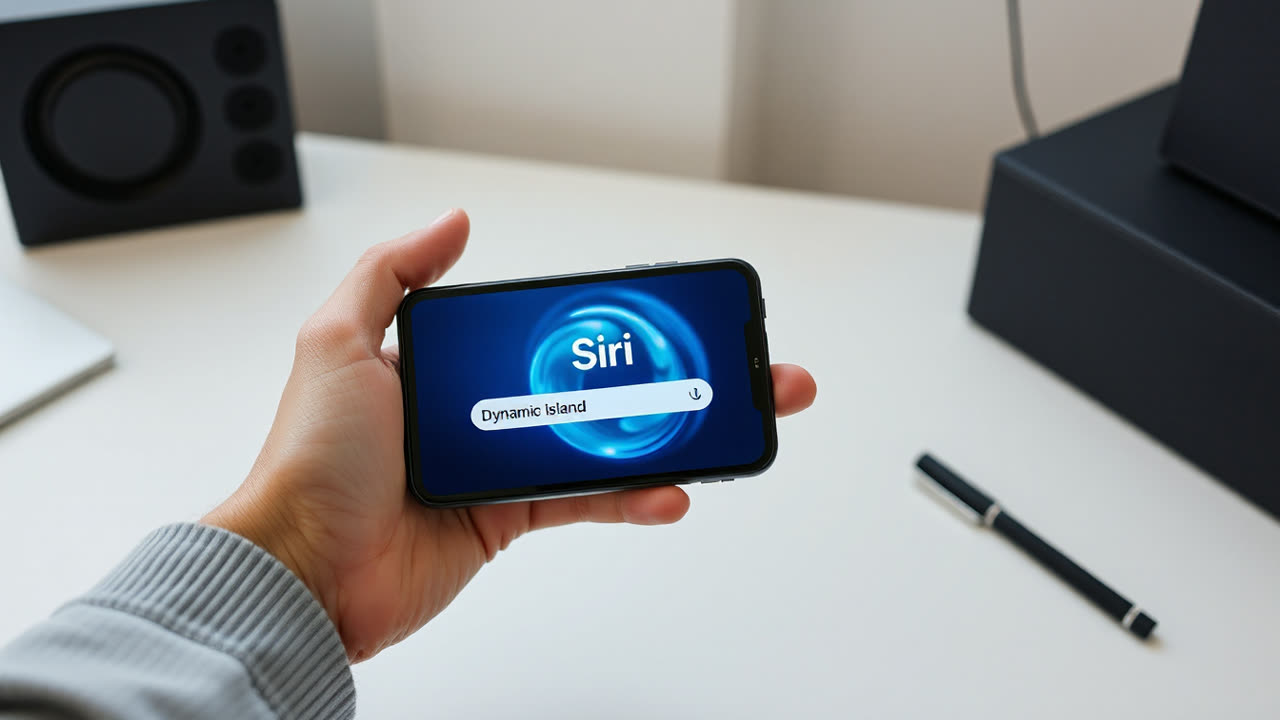
Apple's long-awaited and significantly revamped virtual assistant, "Siri AI," is poised to debut with the public release of iOS 27 on September 14, 2026, marking a pivotal moment in the company's artificial intelligence strategy. This ambitious overhaul, first unveiled at WWDC 2026, introduces a dedicated Siri application alongside a profoundly more capable, context-aware assistant deeply integrated across the Apple ecosystem. The new Siri app itself represents a fundamental shift, consolidating the traditionally ephemeral voice assistant experience into a tangible interface featuring a glowing text search bar, unifying Siri and Spotlight search, and crucially, retaining a history of past conversations, akin to popular large language model (LLM) chatbots like ChatGPT or Google Gemini.
The core of this transformation lies in Siri AI's newfound conversational depth and system-wide intelligence. Apple has engineered the assistant to handle multi-turn conversations, draw upon real-time world knowledge, and seamlessly interact with personal data spanning various applications. Demos at WWDC 2026 showcased Siri AI identifying concert details, setting reminders, pinpointing landmarks in photos, and even synthesizing information from Messages to draft emails or compile event menus. The assistant is now embedded directly within the Dynamic Island on compatible iPhones, accessible via a swipe down, the side button, or the familiar "Hey Siri" invocation, complemented by a revamped, more expressive voice engine with customizable settings. This enhanced on-screen awareness and ability to act across apps positions Siri AI as a proactive agent rather than a mere command processor, fundamentally altering user interaction with their devices.
This renewed focus on Siri carries substantial implications for user experience, promising a more intuitive and personalized digital assistant. The ability to maintain conversational context and access personal data across apps could unlock unprecedented levels of productivity and convenience, transforming mundane tasks into fluid interactions. However, the rollout may not be entirely seamless; code discovered in iOS 27 betas suggests Apple could implement a waitlist for Siri AI access upon public launch, with some beta testers reporting wait times of one to two weeks. Furthermore, the full suite of Siri AI features may be gated to newer hardware, with reports indicating that the iPhone 18, for instance, might be required for Apple's most advanced on-device models due to increased RAM requirements, potentially frustrating users with slightly older, though still recent, devices.
Industrially, Siri AI signals Apple's aggressive, albeit delayed, entry into the burgeoning generative AI landscape, challenging rivals who have long outpaced its previous iterations. Apple's strategy diverges from many competitors by emphasizing ambient, private, and on-device intelligence, rather than solely focusing on a standalone chatbot. The underlying architecture leverages Apple Intelligence and next-generation Apple Foundation Models, utilizing a tiered processing model: on-device inference for local tasks and Private Cloud Compute for heavier workloads. Apple asserts that Private Cloud Compute offers verifiable privacy guarantees, ensuring personal data is neither stored nor accessible by the company or third parties. This privacy-first approach is a key differentiator against competitors like Google Assistant and Amazon Alexa, which often rely more heavily on cloud processing. Notably, Apple is reportedly adopting Google's Gemini models to power certain aspects of Siri's refresh, reflecting a pragmatic decision to leverage leading third-party LLM technology where beneficial. This strategic partnership underscores the competitive pressure Apple faces to deliver a cutting-edge AI experience.
Siri's journey to this point has been marked by significant challenges and delays. Prior iterations of Siri have consistently lagged behind competitors in capability and reliability, leading to public acknowledgments of shortcomings and postponed feature rollouts. The rebranding to "Siri AI" and the introduction of a dedicated app are direct responses to these criticisms, aiming to elevate the assistant to parity, and in some areas, potentially exceed the capabilities of its rivals. However, recent reports of over 100 layoffs from Apple's Siri and machine learning teams just prior to the iOS 27 launch raise questions about the internal dynamics and resource allocation behind this critical initiative. Despite these hurdles, Apple's integrated ecosystem, encompassing hardware like the iPhone 18 and potentially future AirPods with built-in cameras, provides a unique platform for pervasive AI integration that competing AI companies, often reliant on standalone apps or web services, struggle to replicate.
Looking ahead, the success of Siri AI will hinge not only on its initial performance but also on Apple's continued commitment to its development and expansion. The company's emphasis on developer frameworks like Foundation Models and App Intents, which enable third-party applications to participate in the AI layer, will be crucial for fostering a rich and diverse ecosystem of intelligent features. Further integration with other Apple hardware, such as the rumored camera-equipped AirPods, could unlock entirely new modes of interaction and context-aware assistance, pushing the boundaries of wearable AI. However, the global rollout faces immediate challenges, as Siri AI will not launch initially in the European Union or China due to regulatory and privacy concerns, potentially limiting its immediate impact in significant markets. The true measure of Siri AI's success will be its ability to consistently deliver on its promises of a "profoundly more capable" and personal assistant, transforming everyday interactions for millions of users while navigating the complex landscape of AI development and global regulation.