Apple to Launch First Foldable iPhone in 2026, Reshaping Market
Apple is set to finally enter the foldable smartphone market on September 9, 2026, with its 'iPhone Ultra' or 'iPhone Fold,' a move expected to significantly disrupt the segment and challenge Samsung's dominance.
✨ This content was summarized and interpreted by AI; it may contain errors — please verify accuracy with the original sources. Learn more
Listen to this story
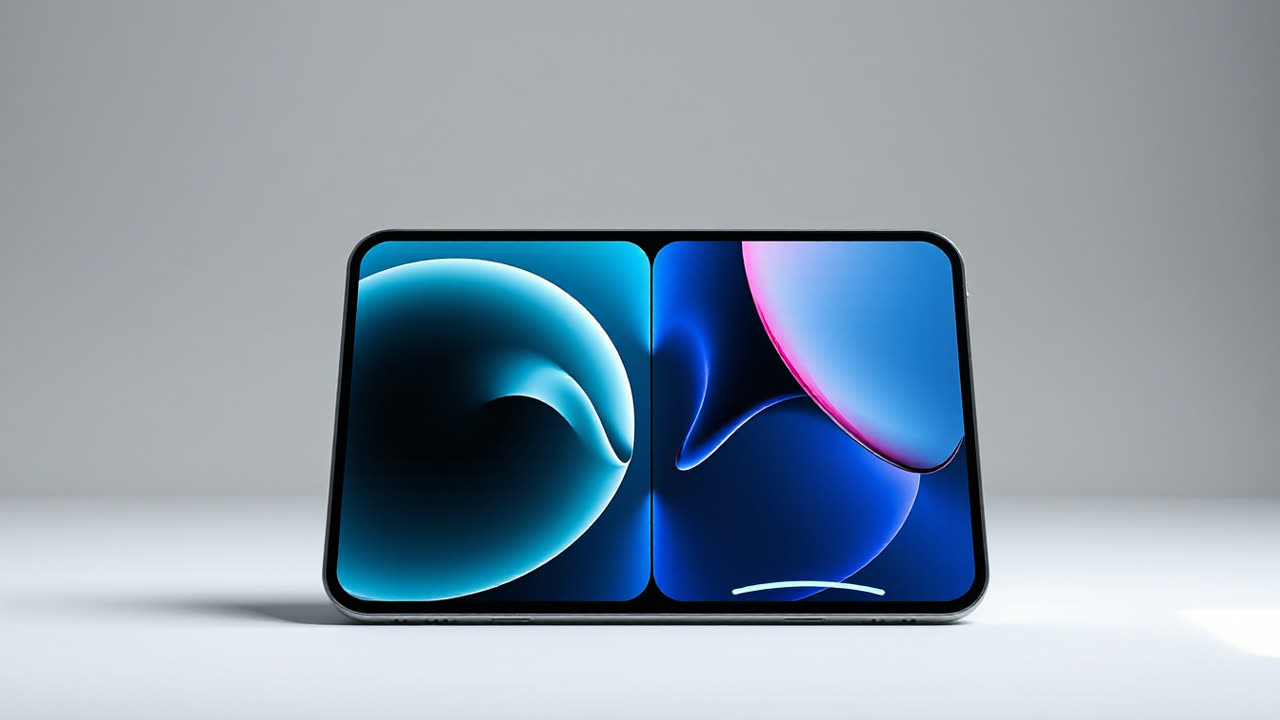
After years of speculation and competitors’ market dominance, Apple is poised to introduce its first foldable iPhone on September 9, 2026, at its highly anticipated "Surprise and Shine" event, marking a pivotal moment for the tech giant and the nascent foldable market. This launch, nearly seven years after Samsung initially unveiled its Galaxy Fold in February 2019 and released it in September 2019, signals Apple’s calculated entry into a segment it has long observed from the sidelines. The device, widely rumored as the "iPhone Ultra" or "iPhone Fold," is expected to feature a book-style design that unfolds to reveal a 7.8-inch internal display, complemented by a 5.5-inch outer screen, aiming for a nearly invisible crease through proprietary material technology. Powering this ambitious device will be Apple’s latest A20 chip and 12GB of RAM, with a premium price tag anticipated to exceed $2,000, potentially ranging from $2,099 to $2,299 for base models. Notably, the foldable will forgo Face ID in favor of a Touch ID power button, a design choice necessitated by the form factor.
This delayed but impactful entry is more than just a new product; it's a strategic move designed to shake up a market that, while growing, still represents a niche segment of the overall smartphone industry. The global foldable smartphone market, valued at $36.43 billion in 2025, is projected to grow to $41.43 billion in 2026, with a compound annual growth rate of 13.72% through 2034. Apple's arrival is forecast to be a significant catalyst, boosting overall foldable shipments by over 40% in the second half of 2026 alone and contributing to an estimated 24% full-year growth. Analysts predict Apple could capture 25% of the global foldable unit share and a remarkable 34% of the total foldable market revenue in its inaugural year, immediately positioning it as the second-largest player behind Samsung, which is expected to hold 38% in 2026. In North America, Apple's dominance is projected to be even more pronounced, potentially securing a 46% market share in 2026. This anticipated market capture underscores Apple's unparalleled ability to drive mainstream adoption for new technologies, a phenomenon previously observed with the Apple Watch and AirPods. For users, this means a likely surge in innovation across the board as competitors respond, along with the assurance of Apple's renowned software-hardware integration and robust ecosystem, potentially justifying the device's high cost.
Apple's strategy to "watch and learn" from its rivals has been evident throughout its history, and the foldable market is no exception. While companies like Samsung, Huawei, Xiaomi, and Google have spent years iterating through various foldable generations—Samsung's Galaxy Fold 8, for instance, launched in August 2026 and features a wider 4:3 aspect ratio, similar to Apple's rumored design—Apple has focused on refining its approach. The company has amassed a substantial patent portfolio since 2011, detailing solutions for common foldable pain points such as hinge durability, crease mitigation, and screen protection, even exploring features like heated flexible displays to prevent cold-induced damage. This meticulous development suggests Apple aims to launch a product that addresses many of the durability concerns and user experience compromises that have somewhat limited broader foldable adoption. The rumored "nearly invisible crease" is a direct competitive response to existing devices where the fold line remains a visible imperfection. However, Apple's late entry also means it faces an established landscape with seasoned players and a user base already accustomed to various foldable form factors and software adaptations.
The launch also marks the first major product announcement under Apple’s new CEO, John Ternus, who officially took the helm on September 1, 2026, succeeding Tim Cook. Ternus, previously the Senior Vice President of Hardware Engineering, is known for his meticulous approach and played a key role in the transition to Apple silicon for Macs. His leadership will be crucial as Apple navigates not only the foldable market but also the broader challenges of the artificial intelligence boom, an area where Apple has been perceived as lagging behind rivals despite pioneering Siri. The success of the foldable iPhone will be a significant early test of Ternus's vision and ability to innovate beyond Apple's traditional product lines. Looking ahead, while initial availability for the iPhone Ultra might be limited, particularly in markets outside the U.S., Apple’s entry is expected to trigger a substantial upgrade cycle across the smartphone industry. This will likely spur further innovation in foldable display technology, hinge mechanisms, and software optimization from all manufacturers, ultimately benefiting consumers with more refined, durable, and integrated foldable experiences. The question for competitors is no longer if Apple will enter, but how quickly they can adapt to the new standard of polish and ecosystem integration that the "iPhone Ultra" is poised to establish.